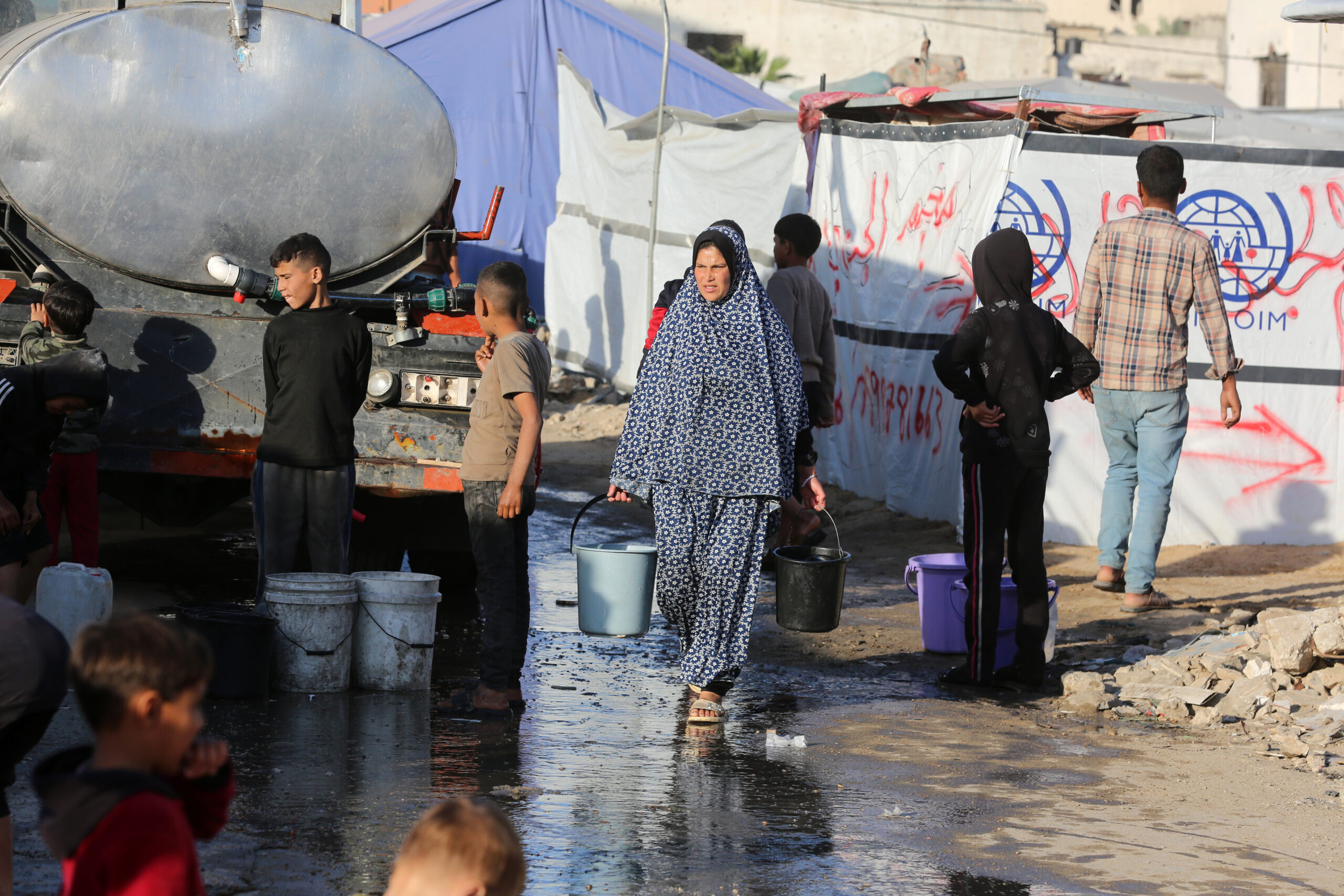
More than two million Palestinians in the Gaza Strip are facing an unprecedented water crisis that threatens their lives and undermines their human dignity. The crisis is driven by Israeli restrictions on the entry of fuel, equipment, and maintenance materials needed to rehabilitate and operate water facilities, as well as by the catastrophic consequences of the Israeli offensive that began on 7 October 2023 and the widespread destruction it has caused to water wells, desalination plants, transmission pipelines, distribution networks, water reservoirs, and pumping stations. The ongoing siege and widespread destruction have severely undermined the capacity of local service providers to produce, transport, and distribute water, disrupting its regular delivery to the population, particularly in areas overcrowded with displaced people. As a result, access to sufficient and safe water has become an exhausting daily struggle for Palestinians in Gaza, forcing them to travel long distances and wait for hours to obtain only limited quantities of water that fall far short of meeting even their most basic needs.
The water crisis in the Gaza Strip has gone beyond an emergency shortage of supplies, developing into a policy of systematic and calculated deprivation affecting one of the most essential requirements for the survival of the civilian population. The consequences of the collapse of the water system extend far beyond the deprivation of drinking water itself. They also impede food preparation, the sterilization of medical equipment, the operation of healthcare facilities, and the maintenance of even the most basic standards of personal hygiene. Together, these conditions have made the water crisis a major factor in worsening starvation, the spread of disease, malnutrition, and rising mortality among children, patients, and older persons.
Field monitoring by the Palestinian Centre for Human Rights (PCHR) indicates that the Gaza Strip is experiencing an alarming water crisis, with approximately 85% of the population deprived of regular access to clean water.1 As a result, families are forced to rely on unsafe and unreliable water sources, including water delivered by private tankers and commercially operated wells that are not subject to regulatory oversight. This places an additional financial burden on households amid the worsening economic and humanitarian conditions.
According to data from the Palestinian Water Authority (PWA) and the Environment Quality Authority (EQA), as documented by PCHR’s field researchers, the following indicators demonstrate the structural collapse of the water sector in the Gaza Strip:2
Municipalities and the CMWU continue to face unprecedented operational challenges due to the acute shortage of energy sources, reliance on aging generators that operate only for limited hours, and the lack of fuel, engine oil, chlorine for water disinfection, spare parts, and heavy equipment. Although more than 1,000 days have passed since the outbreak of the war, and despite limited interventions by international organizations, water services have yet to recover even the minimum pre-war levels in terms of quantity, quality, and reliability.
Husni Mhanna, spokesperson for Gaza Municipality, 4told PCHR’s field researcher that the city is facing an alarmingly critical water shortage. Only about 30,000 cubic meters of water are currently available each day, compared with an estimated summer demand of approximately 100,000 cubic meters, meaning that the available supply meets no more than 30% of the city’s actual needs. Mhanna explained that the current water supply are distributed as follows: approximately 12,000 cubic meters per day from the Israeli Mekorot water pipeline (covering 40% of the available supply), 12,000 cubic meters per day from the municipality’s remaining groundwater wells (40%), and 6,000 cubic meters per day from private and commercial wells(%20). He attributed this massive shortfall to the destruction of water facilities by the IOF. According to Mhanna, military attacks and the bulldozing of infrastructure across the city have destroyed the seawater desalination plant in the al-Sudaniyah area, eliminating around 10% of the city’s water needs. They have also destroyed 85% of the city’s main water wells and more than 150 kilometers of primary and secondary water distribution networks within the municipality’s jurisdiction. Mhanna warned that the remaining water facilities are at risk of complete shutdown at any moment due to the acute shortage of engine oil, spare parts, filters, and pipes. He stressed that this threatens the collapse of what remains of the city’s water services under the growing pressure of population overcrowding and the high concentration of displaced people in shelters across the city.
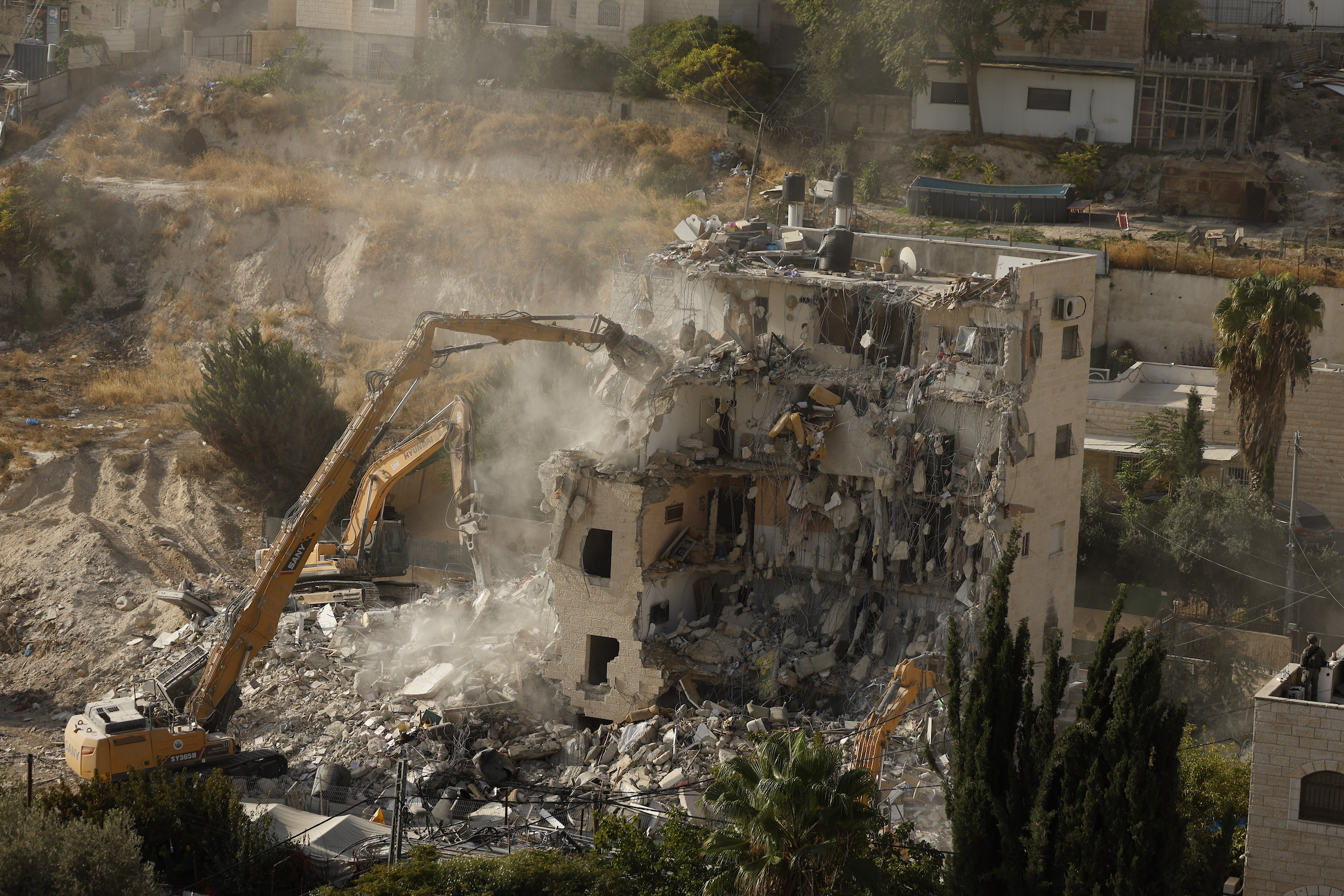
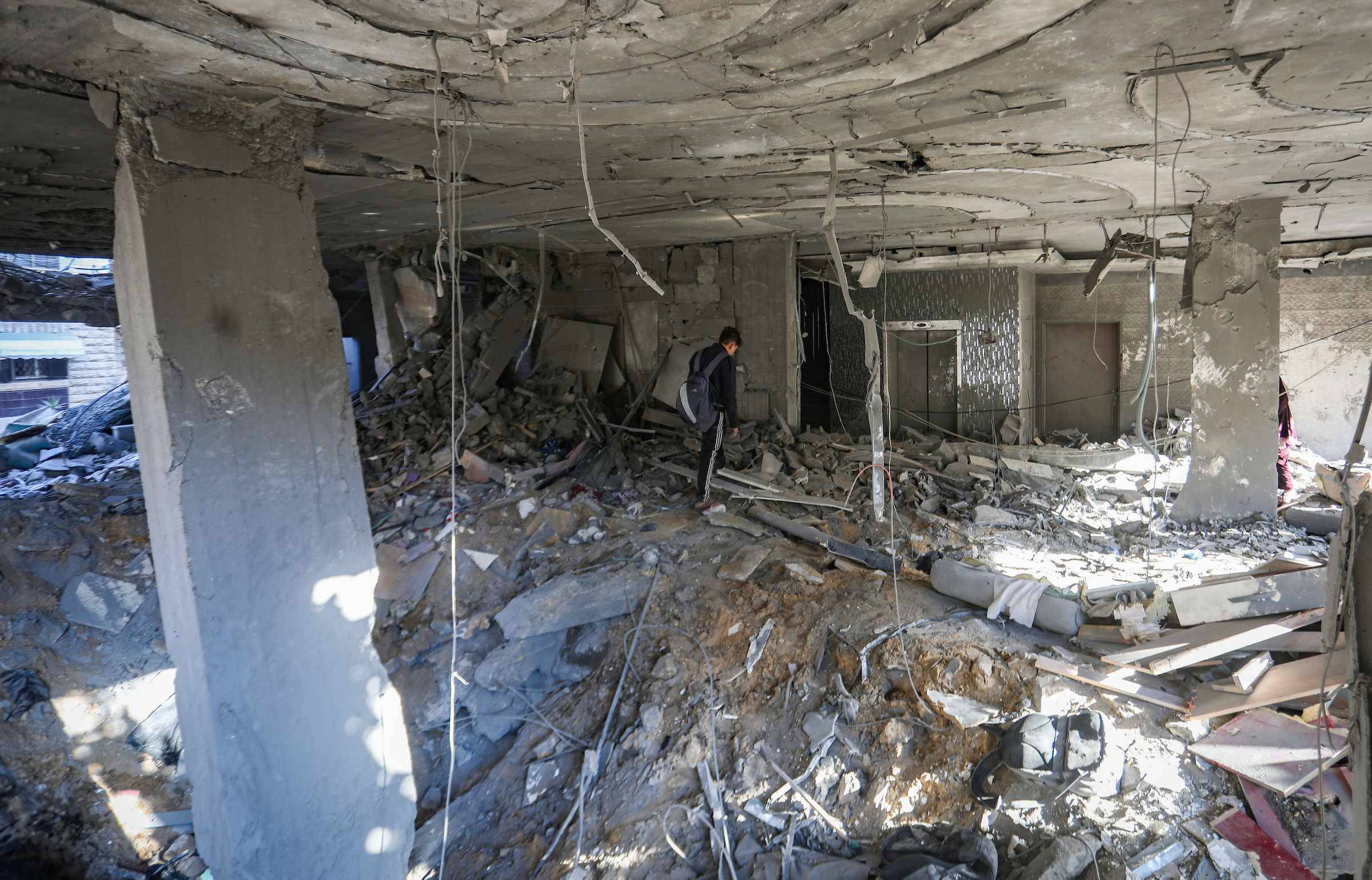
Since the onset of the Israeli military offensive on 7 October 2023, the water system in the Gaza Strip has been subjected to widespread and systematic destruction, affecting 89% of its core infrastructure. Bombardment and bulldozing have destroyed more than 330 kilometers of water distribution networks, while military attacks have forced 71% of municipal desalination plants out of service—a figure that rises to 100% in North Gaza and Gaza City. In addition, 69% of water production wells have been destroyed or damaged, with the level of damage reaching as high as 88% in some areas. Around 66% of water tanks have also been damaged. As a result, the operational capacity of the water sector has been severely undermined throughout the Gaza Strip. This destruction has left 91% of the Gaza Strip’s population without water security since the outbreak of the war. Approximately 65% of the population has been forced to survive on less than six liters of water per person per day—a quantity that falls far below the minimum required to meet basic survival needs.5
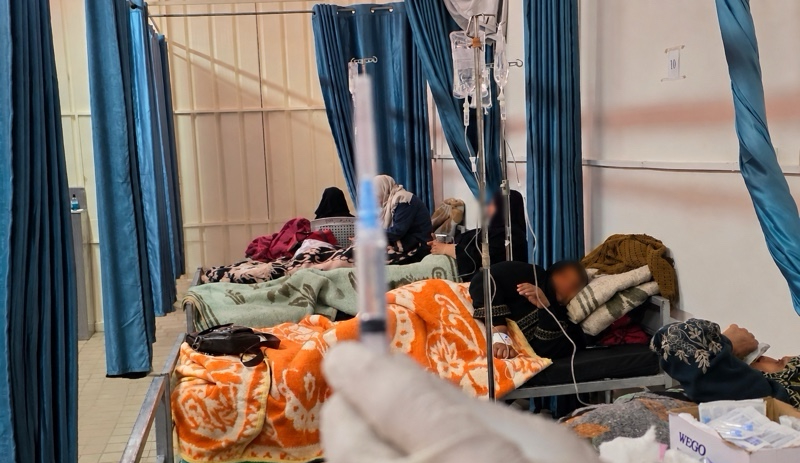
Hundreds of thousands of Palestinians, particularly displaced people, are living in extremely harsh conditions due to the severe shortage of available water. Many are forced to wait for hours or even days to obtain small quantities of water that fall far short of meeting their basic needs. Meanwhile, thousands of families have no choice but to purchase water from private suppliers at high prices, despite having lost their sources of income, further deepening their economic hardship and rendering access to water an unaffordable daily burden for many households. The continued decline in the availability of safe drinking water and water for domestic use, coupled with the collapse of sanitation services, the accumulation of solid waste, and environmental pollution, has led to an unprecedented increase in the risk of disease outbreaks, including acute diarrhea, gastrointestinal infections, skin diseases, and parasitic infections. It has also heightened the risk of epidemics spreading in overcrowded displacement areas, where living conditions fall far below the minimum standards of public hygiene.
In this context, So’ad Fares al-Sayed (37),6 a resident of Jabalia who is currently displaced with her six children in a tent in western Gaza City, told PCHR’s field researcher about her daily struggle to obtain water following the killing of her husband while he was attempting to obtain food amid the starvation crisis. She explained that her family relies on water tankers that arrive only irregularly, and that her daughters face great difficulty filling jerrycans because of the intense overcrowding and pushing among hundreds of displaced people. In most cases, the family manages to obtain only one or two jerrycans of water per day—an amount that is insufficient to meet even their basic drinking and personal hygiene needs. She added that her family has been forced to ration their water consumption and go for days without bathing, causing her children to develop skin diseases. According to doctors, these conditions are primarily due to the inability to maintain basic personal hygiene. Her testimony reflects just one aspect of the daily suffering endured by thousands of Palestinian families across the Gaza Strip.
Nahedh Mohammed al-Koumi (64),7 a displaced person who returned with his children to their damaged home in the Sheikh ‘Ejleen neighborhood in Gaza City, told PCHR’s researcher that the area remains without access to the public water supply due to the destruction of the main distribution network. As a result, his family is forced to purchase water from private wells, have it delivered by tanker, and then manually pump it to the roof of their home, imposing costs that they cannot afford to sustain. He added that the lack of water has affected every aspect of daily life, forcing the family to strictly ration water for drinking, cooking, bathing, and washing clothes and dishes. The repeated interruption of water supplies for days at a time has further deepened the crisis, contributing to the spread of skin diseases and insects among children and preventing the family from meeting even the most basic standards of hygiene and health.
These testimonies demonstrate that the water crisis in the Gaza Strip has evolved beyond a temporary emergency into a deepening humanitarian crisis that directly affects civilians’ lives and dignity, forcing them to endure conditions that fall far below the minimum requirements for human survival. They also reflect a widespread pattern of deprivation affecting millions of people and contributing to the rapid deterioration of health and living conditions amid ongoing restrictions that prevent the repair and rehabilitation of water infrastructure and its return to operation, while local authorities and humanitarian organizations remain unable to meet even the population’s most basic water needs.
The right to sufficient, safe, and potable water is a fundamental and inalienable human right. It is inherently linked to a range of other fundamental rights, foremost among them the rights to life, health, food, and adequate housing. Accordingly, the deliberate and continued destruction of water facilities in the Gaza Strip, coupled with the obstruction of their rehabilitation, constitutes a grave breach of international humanitarian law. In the context of the ongoing armed conflict, such conduct amounts to a war crime and, when viewed in light of the pattern of conduct and the surrounding circumstances, constitutes one of the underlying acts of genocide.
International humanitarian law affords special protection to water facilities as objects indispensable to the survival of the civilian population. Article 54 of the 1977 Additional Protocol I to the Geneva Conventions explicitly prohibits attacking, destroying, removing, or rendering useless objects indispensable to the survival of civilians, including drinking water installations and water supply networks. Likewise, Article 14 of Additional Protocol II prohibits attacks against or the destruction of objects indispensable to the survival of the civilian population, including drinking water facilities, thereby reinforcing the legal protection afforded to such infrastructure in all armed conflicts.
The Fourth Geneva Convention of 1949 further obliges an occupying power to ensure the provision of the basic needs of the population under occupation. Article 55 requires the occupying power to ensure the provision of food, medical supplies, and other essential necessities, while Article 56 obliges it to ensure and maintain public health services and to adopt the preventive measures necessary to combat the spread of disease and epidemics. Israel has failed to fulfil these obligations through its policy of using thirst as a weapon.
International humanitarian law also prohibits the use of starvation or the deprivation of essential supplies as a method of warfare. The Rome Statute of the International Criminal Court classifies the intentional starvation of civilians by depriving them of objects indispensable to their survival or by impeding the delivery of humanitarian relief supplies as a war crime falling within the Court’s jurisdiction.
Moreover, the prolonged and systematic deprivation of access to water, together with the destruction of 89% of the Gaza Strip’s water infrastructure, falls within the scope of Article II(c) of the 1948 Convention on the Prevention and Punishment of the Crime of Genocide, which criminalizes the deliberate infliction on a protected group of conditions of life calculated to bring about its physical destruction in whole or in part. This is applicable to the situation in the Gaza Strip, where the population is being deprived of the basic necessities required for survival.
The continued ban on the entry of materials necessary for the water facilities, as well as the obstruction of the operation of water wells, constitutes a blatant violation of and open defiance of the binding provisional measures ordered by the International Court of Justice on 26 January, 28 March, and 24 May 2024, as well as the Order issued on 16 May 2025. These measures require Israel to take immediate steps to ensure the provision of basic services and humanitarian aid, including access to water and healthcare.
The UN Committee on Economic, Social and Cultural Rights further affirmed in its General Comment No. 15 that the right to water is an independent human right derived from Article 11 of the International Covenant on Economic, Social and Cultural Rights, requiring that everyone have access, without discrimination, to sufficient, safe, acceptable, physically accessible, and affordable water. The UN General Assembly likewise affirmed, in Resolution 64/292 (2010), that access to safe and clean drinking water is a human right essential to the full enjoyment of life and all human rights.
In light of the above, PCHR calls on the international community, the United Nations, the International Committee of the Red Cross (ICRC), and the High Contracting Parties to the Geneva Conventions to take immediate action and exert prompt pressure on Israel to: