Amirah ‘Emad Rezeq al-‘Arabiyah (35), a resident of al-Zaytoun neighborhood, Gaza City
When the war on the Gaza Strip began on 7 October 2023, I was living with my children in our home in al-Zaytoun neighborhood of Gaza City. We remained there until 29 October 2023, when the bombardment of the area intensified and nearby residential buildings came under attack, including Hijji Building, at the beginning of our street, and al-Sarhi Building, at the other end. With the attacks drawing closer, I had no choice but to flee our home with my children. As we made our way out, we saw bodies lying in the streets, including people whose limbs had been severed.
I sought refuge at my brother’s home in the al-Tuffah neighborhood. On 27 December 2023, I was forced to move again, this time to an empty plot of land in New Nuseirat Camp. While we were there, the Israeli Occupation Forces (IOF) dropped leaflets ordering residents to evacuate the area and head south. I was therefore forced to flee once more, making my way to Rafah, where I sought shelter at al-Salam School for around 40 days.
Afterwards, on 4 February 2024, I returned to al-Nuseirat, where I remained throughout Ramadan and ‘Eid al-Fitr, hoping that I would soon be able to return home and reunite with my husband, who was still in Gaza City. However, as the bombardment continued and the situation became increasingly dangerous, I was forced to flee once again with my children, overwhelmed by fear for our safety. My husband, meanwhile, decided to remain in Gaza City with his widowed mother, as he did not want to leave her alone or abandon her there. This was how we became separated during our repeated displacement, holding on to the hope that we would soon return to each other and reunite our family.
On 13 April 2024, I heard that the route to Gaza City had been reopened to allow people to return. Exhausted by repeated displacement and the prolonged separation from my husband, I decided to make the journey in the hope of reaching him. I set out with my children and my cousin, Mohammed Mustafa al-N’eizi (23), heading towards Gaza City. When we reached Wadi Gaza, however, we came under fire and bombardment, witnessing horrific scenes of people being killed and others wounded. Unfortunately, my cousin Mohammed was among those killed. Unable to continue our journey or reach Gaza City, I had no choice but to turn back to al-Nuseirat.
On the morning of 14 April 2024, at around 07:00, I made several attempts to find out whether the route to Gaza City had reopened, after hearing that some people had managed to return the previous day. I waited until around 11:00 but was unable to cross. I therefore returned to the place where I was staying in New Nuseirat Camp.
After returning, I bathed my children and got them ready for the ‘Asr prayer. We were staying on the first floor of a three-storey residential building, along with my grandfather, my maternal aunt, her husband and son, and my cousin. At the time, I went to the kitchen to prepare sandwiches for my children, who had not yet eaten lunch.
At around 15:00 on 14 April 2024, the residential building where we were staying was struck by explosive barrels, as I later learned from my relatives. The attack caused the building to collapse, burying us beneath the rubble. I lost consciousness for around three hours and regained consciousness shortly before sunset. When I came to, I found myself trapped beneath concrete slabs and a massive amount of debris, bleeding from wounds to my forehead and eyebrows.
I tried to stop the bleeding by tearing off a piece of my gown and wrapping it around my wound. As I gradually regained my senses, I began hearing voices around me, including my uncle’s voice and that of another person reciting the Shahada (the Islamic declaration of faith). I began reciting it too.
For hours, I struggled to free myself from the rubble and find a way out. At one point, I noticed a faint ray of light sneaking through a gap in the debris, so I tried to crawl towards it. I managed to remove some of the rubble covering my abdomen and used my left leg to push the debris away, as my right leg appeared to be injured. However, my body was trapped near the kitchen sink, making it difficult for me to move. I kept struggling to change my position and crawl backwards in an attempt to free myself.
Between 21:00 and 22:00, I was still struggling to free myself from beneath the rubble when the area was struck by another missile, which I believed had been fired by a drone. The explosion filled the place with dust and the smell of gunpowder, leaving me struggling to breathe and feeling as though I was suffocating.
At around 05:00 on 15 April 2024, I heard a man calling out and asking whether anyone was still alive beneath the rubble. I shouted back, telling him that I was trapped underneath and still alive. He immediately called on other men to help rescue me and told ambulance crews that a woman was still alive beneath the collapsed building. They began removing the rubble and digging through the debris until they finally managed to pull me out. However, as soon as I was exposed to fresh air, I lost consciousness again.
Those hours were the hardest of my life. I was overwhelmed by fear as I lay trapped beneath concrete slabs, injured and bleeding, with no idea when anyone would reach me or whether I would make it out alive. I could hear people around me reciting the Shahada, while my sense of helplessness grew with every passing hour as breathing became increasingly difficult. Despite the fear and pain, I continued struggling to find a way out, clinging to every glimmer of hope that I might survive.
Afterwards, I was taken to al-Aqsa Martyrs Hospital, which was overcrowded with injured people and had no beds enough. I therefore had to lie on the floor. I had sustained serious injuries to my face, including a severe wound around my mouth and nose, as well as another wound to my forehead and eyebrow. I had also suffered severe bruising to my left leg and an injury to my right leg. Because of my facial injuries, I had difficulty speaking. I also needed intravenous fluids and medical care, but the hospital was struggling to provide adequate treatment amid severe overcrowding and a lack of medical resources.
I remained in the hospital for 20 days before being discharged, despite not having fully recovered from my injuries amid difficult medical conditions and a shortage of resources at the hospital. Throughout my stay, I repeatedly asked about my family, particularly my children, desperately trying to find out what had happened to them in the bombing.
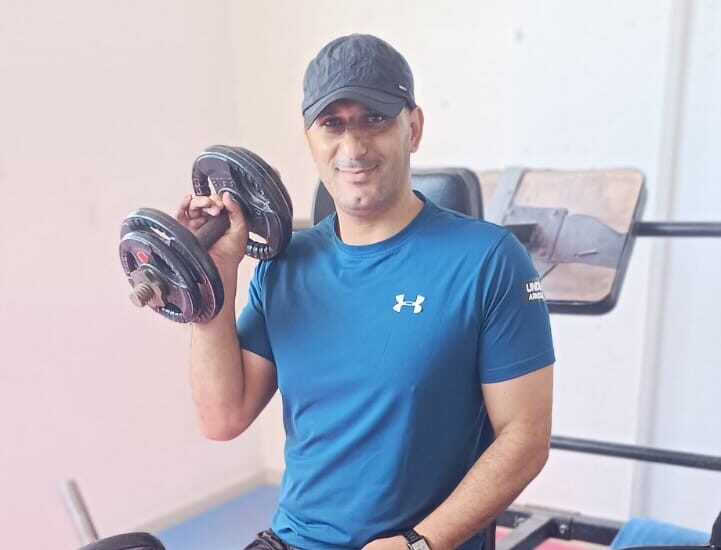
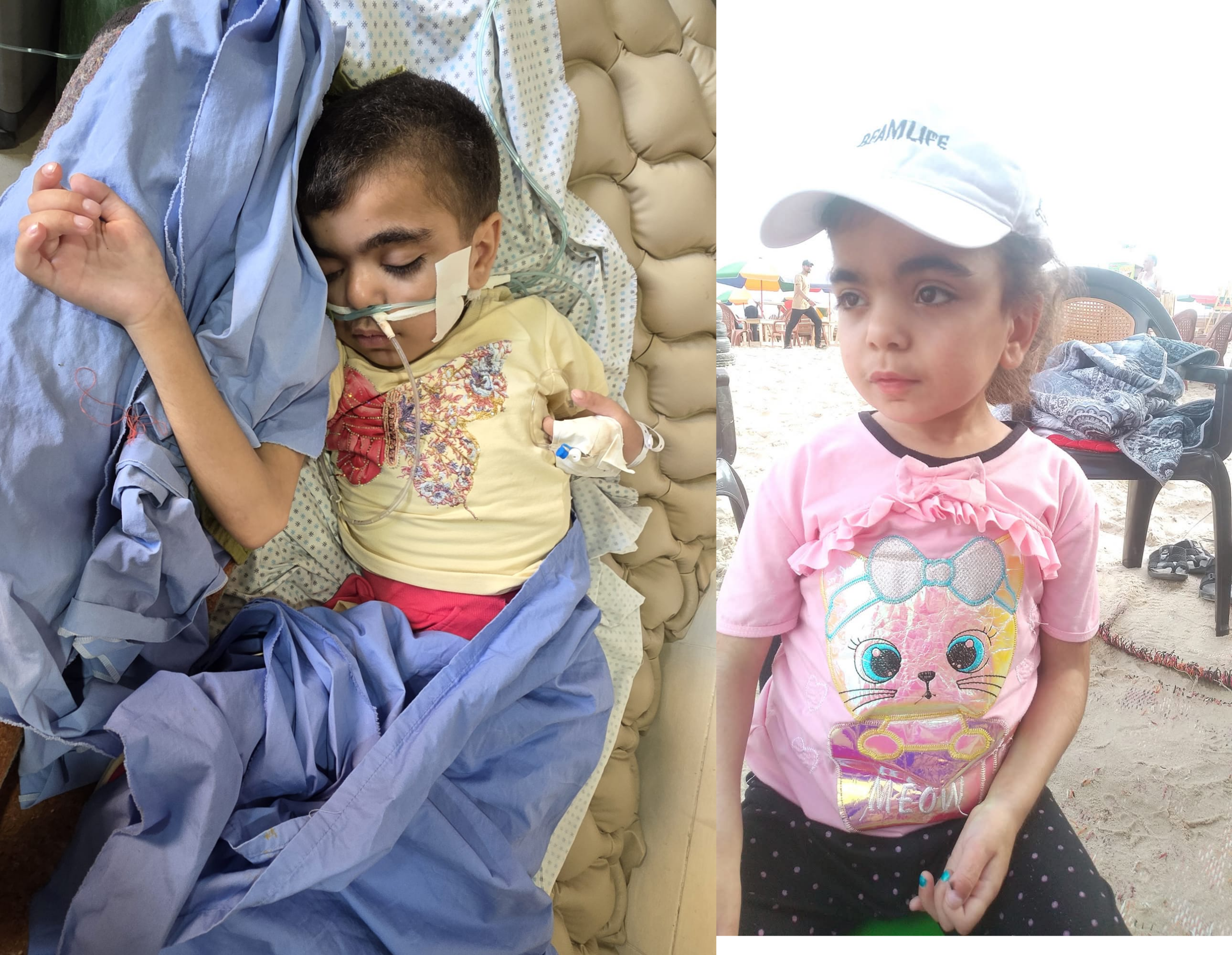
My relatives later informed me that my son, Yamen Ahmed Na’im ‘Ashour (9), had been killed instantly in the strike. At the time of the attack, he was in his aunt’s arms. His body was recovered from beneath the rubble, still in her embrace, with severe burns. When they tried to bring him to me to the hospital, I could not bear to see his body wrapped in a white shroud, as he had sustained severe burns across his body. I fainted and was unable to say goodbye to him.
As for my two other children, Adham (12) and Na’im Ahmed Na’im ‘Ashour (14), their bodies remained buried beneath the rubble. Because the building had completely collapsed and the rubble was so extensive, and no equipment was available to remove it, it was impossible to recover their bodies at the time. Civil Defense crews told my family that they would continue working to recover the bodies of my two children.
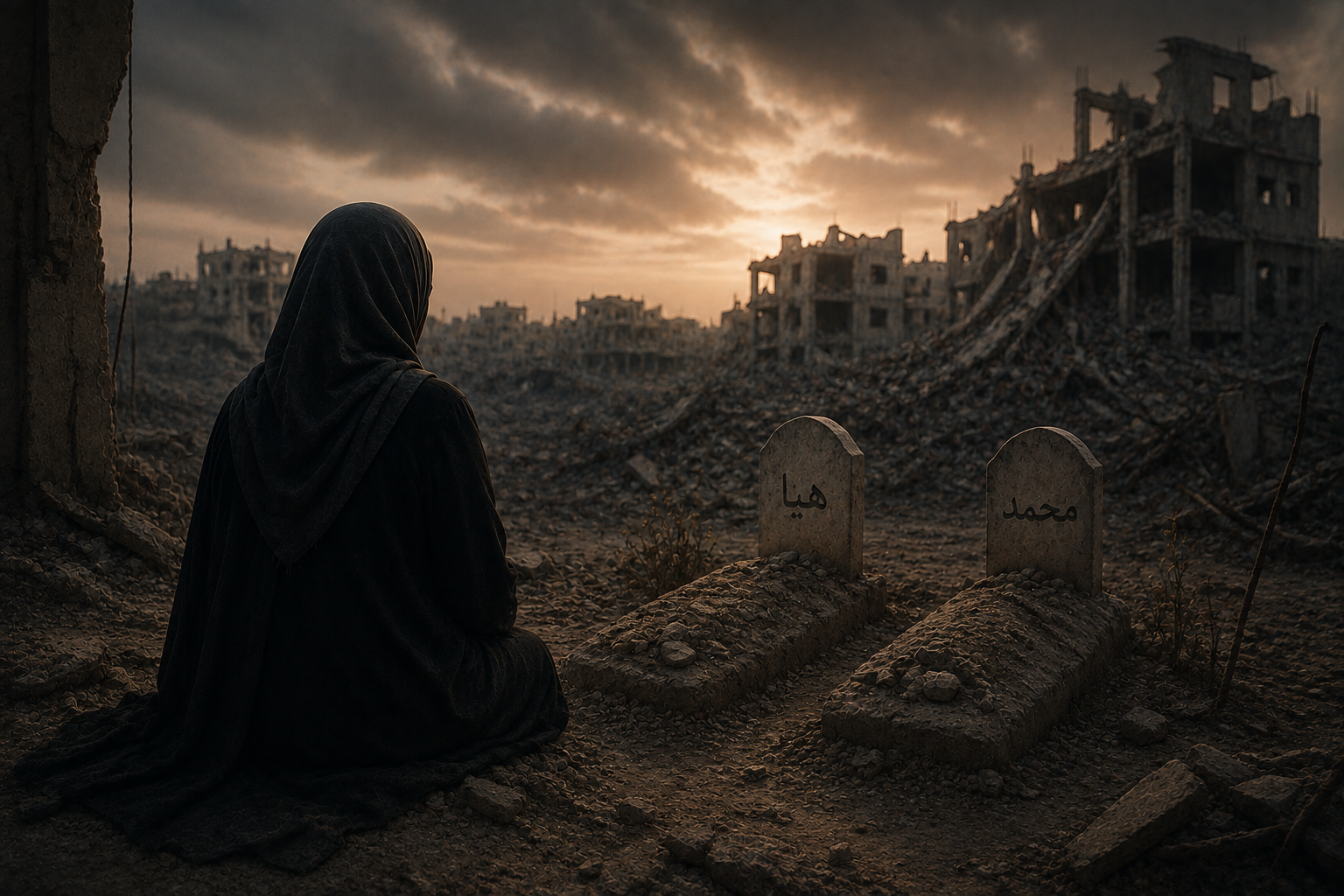
Their bodies remained trapped beneath the rubble for nearly two and a half years, from the time the building was bombed on 14 April 2024 until 11 October 2026, when I was informed that their remains had finally been recovered and buried. Throughout that period, I endured the pain of losing my children, compounded by the knowledge that their bodies were still buried beneath the rubble. I was unable to say goodbye to them or lay them to rest. As time passed, the pain of this loss only deepened, as I had been denied the final farewell that every mother wishes to have with her children.
When I was informed that their bodies had been recovered, I learned that only skeletal remains had been found. I could not bear the thought of seeing them in that condition. I wanted to preserve the beautiful image of them in my memory, as I had known and loved them throughout their lives, rather than have my last image of them be their skeletal remains after they had lain buried beneath the rubble for so long. My two children were buried together in the same grave at al-Nuseirat Cemetery. The long wait for their recovery and burial did nothing to ease the pain of losing them; instead, it only deepened my suffering and sorrow.
After being discharged from the hospital, I went to stay in my father’s tent in al-Nuseirat Refugee Camp, as our family home had also been destroyed and I had nowhere else to go. Two days after I arrived, my brother Mohammed told me that my husband, Ahmed Na’im Ramadan ‘Ashour (34), had been killed on 8 May 2024 in an Israeli airstrike targeting a residential building in the northern Gaza Strip. My husband had been on his way to visit people staying in the building, accompanied by his brother. They had just entered the building when it was struck, killing them both and 12 other residents. At the time, I was displaced in the southern Gaza Strip.
When I received the news of my husband’s death, I fainted from shock. I could not bear the fact that I had lost my three children and then my husband within such a short period of time. I fell into an extremely distressing psychological state that lasted for 40 days, during which I repeatedly lost consciousness. My family was eventually forced to take me to psychiatrists.
In addition to the loss of my family, I found myself having to cope with the consequences of my physical injuries, repeated forced displacement, and the destruction of the places where I had sought shelter and the loss of any sense of safety and stability, all amid extremely dire humanitarian and living conditions.
I currently live with my brother and his family in their home in al-Tuffah area of Gaza City, having lost my three children and my husband and been left without a home of my own. I work now as a teacher at an educational point near my brother’s house. I chose to stay with him in particular because of its proximity to my workplace, which allows me to continue working and meet my basic needs. I have had to work and support myself financially, as I do not want to become a financial burden on anyone or have to ask others for assistance. As a widow, I receive a small payment once every four months, but it is insufficient to cover my basic needs. Working has therefore become a necessity, despite the physical and psychological toll of everything I have endured and the loss of my family.
Although I survived, my suffering has never truly ended. The pain of losing my family remains with me every day, and memories of the life we shared continue to live on in every detail of my life. I have tried to rebuild some sense of stability and find a way to carry on with a life I never chose, but I still struggle to come to terms with what happened and to accept the absence of the people who meant everything to me and were my entire world. Today, I have no choice but to keep going, to work and provide for my basic needs, while carrying with me the physical and emotional scars of everything I have endured. They remain with me every day, a constant reminder of the family and life I have lost.