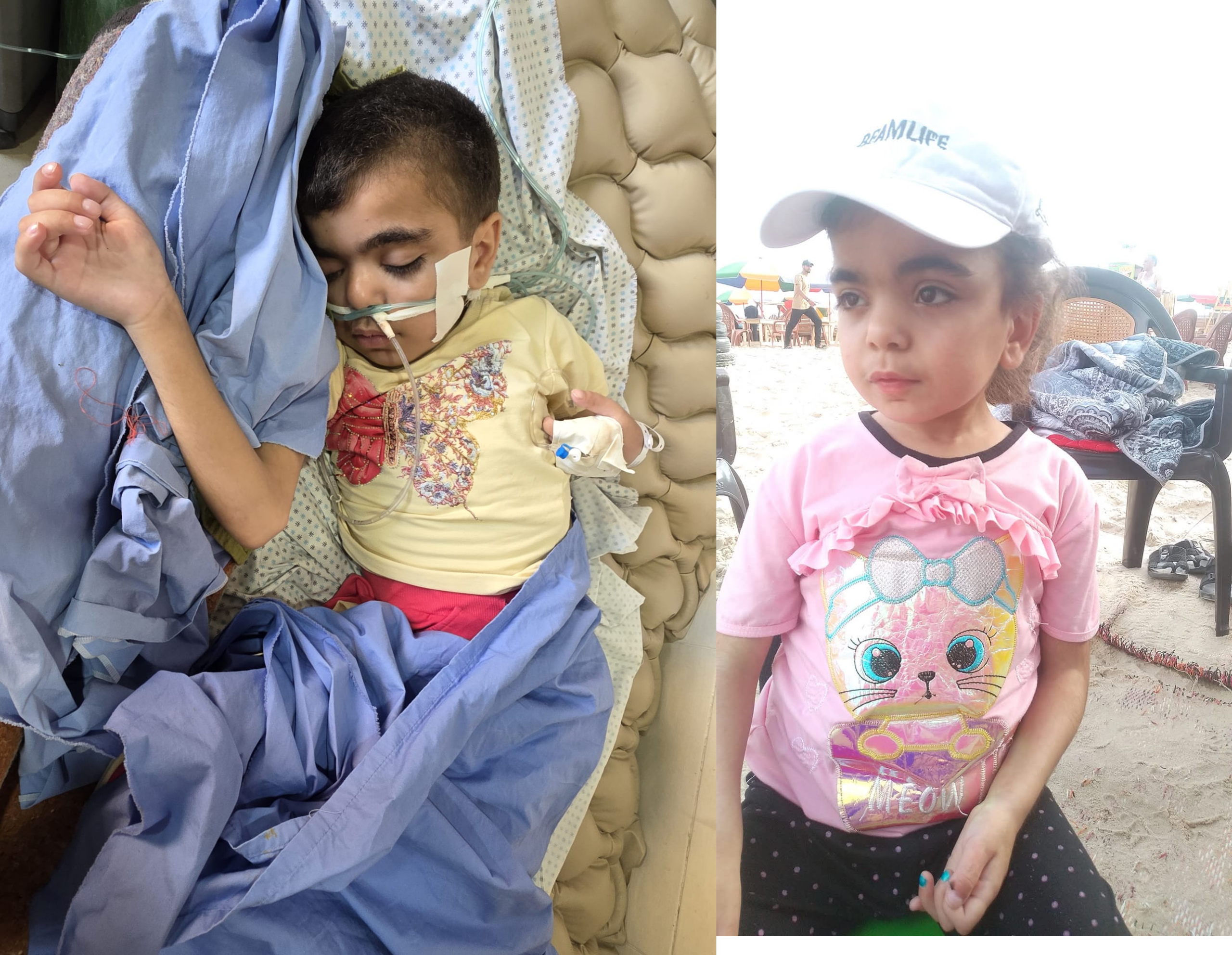
On a treatment bed at al-Rantisi Pediatric Hospital in Gaza, Ghazal Ihab Khader al-Torok lies motionless, her eyes closed and her small body covered by blue blankets. A small tube runs through her nose, helping to feed her and support her breathing. She makes no sound and barely moves; nothing to suggest that she is still aware of what is happening around her. The only sign of life is the faint rise and fall of her chest with each breath supported by medical devices.
Beside her, as he does every day, sits her 45-year-old father, watching closely for every spasm in her small body and every cough that threatens to disrupt her fragile breathing. He holds his phone in his hand, where he keeps a photo of her which he returns to whenever he longs for the daughter she once was. In the photo, Ghazal is five years old, wearing a white hat and a pink blouse embroidered with a cat. She is sitting on the beach and smiling with her face full of life. It is the only photo he has left of her from a time when she was healthy. The rest of her childhood photos were lost along with their home and belongings due to the Israeli bombardment and repeated displacement.
Seven years separate the two photos. Yet Ghazal, now twelve, looks thinner and smaller today than she did at five as if time stopped the moment she was injured. Her frail body has grown weaker, while her ability to speak, move, and play has gone.
On 7 November 2023, Ghazal was living through another day of Israel’s genocidal campaign in al-Shuja’iyah, east of Gaza City, when IOF bombed her neighbor’s home belonging to the al-‘Amawi family. Shrapnel hit her in the head, and she was pulled from the rubble with critical injuries that left her completely quadriplegic and unable to speak or move. Since then, she has suffered severe spasms, constant pain, and bowel incontinence.
A Great Loss
The impact of the bombardment was not limited to Ghazal’s injuries. It also claimed the lives of seven members of her family, including her mother, Maha Khamis Ibrahim al-Torok (38), and her grandfather, Khader Mohammed Hussein al-Torok (69). Five children of her parental cousins were also killed: Ma’moun (2), Zain (7), Sham (5), Mo’een (4 months), and Layan (13). Four of the family’s neighbors from the al-‘Amawi family were also killed in the bombing.
Ghazal’s father recounts the details of that harrowing moment in a voice he struggles to keep steady:
“My daughter’s injuries were the most severe among those who were wounded. Shrapnel penetrated her head, leaving her quadriplegic and in constant pain, with severe spasms. She lost her ability to speak and suffers from bowel incontinence.”
He added that since her injury, his daughter has been transferred from one hospital to another, receiving treatment at al-Shifa, the Baptist Hospital, Patients’ Friends Hospital, and al-Quds Hospital before finally being transferred to al-Rantisi.
With her mother gone, the responsibility of caring for Ghazal has fallen primarily on her father and, to a lesser extent, on her siblings. Her brother, Mohammed Ihab Khader al-Torok (17), told the Palestinian Centre for Human Rights (PCHR) field researcher that the war has imposed this responsibility on his shoulders while he is still very young:
“After my sister was paralyzed by the bombing and my mother was killed, my father became her primary caregiver. He rarely leaves her, except when absolutely necessary or in emergencies. When he is away, my brother Belal (20) and I take care of her, but only for short times.”
Mohammed describes the sense of helplessness he feels when he is alone with her:
“When I am taking care of her, sometimes she has spasms that I cannot do anything to help with, or she starts choking. I immediately run to the nurse on duty at the hospital to help her. I feel deep sadness and pain when I cannot help someone I love.”
Medical Diagnosis and Treatment Needs
Ghazal’s treating physician, Dr. Basem Abu ‘Asi, explains that she suffers from quadriplegia resulting from a direct head injury she sustained in an Israeli strike. She also experiences recurrent, uncontrollable neurological spasms, as well as complete urinary and bowel incontinence. Her condition requires repeated hospital admissions whenever her symptoms worsen. Ghazal is currently receiving treatment at the neurology clinic at the pediatric hospital, where she takes several medications to control her spasms and alleviate the complications resulting from her injury.
He added that she has difficulty swallowing, which has caused her to lose weight, as well as urinary and digestive problems. The child also suffers from excessive respiratory secretions, requiring constant cleaning and wiping. If her father does not keep a close watch on her for even two hours, she could be at risk of dying. For this reason, he stays awake and always monitors her closely. Due to these complications, the child has a weakened immune system and suffers from persistent fevers, while antibiotics have proven ineffective in treating her condition.
In addition to medication, Ghazal needs regular physiotherapy sessions for her limbs to prevent muscle stiffness caused by quadriplegia. She also relies on a therapeutic nutritional formula, “PediaSure,” to make up for the nutrients she loses because she is unable to swallow normally. She also requires regular use of a nebulizer to support her respiratory system, as well as oxygen cylinders to help maintain stable breathing. These needs have become an additional daily burden on her family amid the deterioration of healthcare services and the shortage of medical supplies in the Gaza Strip.
Ghazal’s father says:
“When my daughter Ghazal was admitted to al-Rantisi Pediatric Hospital in March 2026, she weighed around 20 kilograms, around 20 kilograms below the normal weight for a child her age. This is because of her quadriplegia and her inability to eat or swallow normally. She can only receive nutritional formula through a tube inserted into her nose.”
Displacement and Starvation
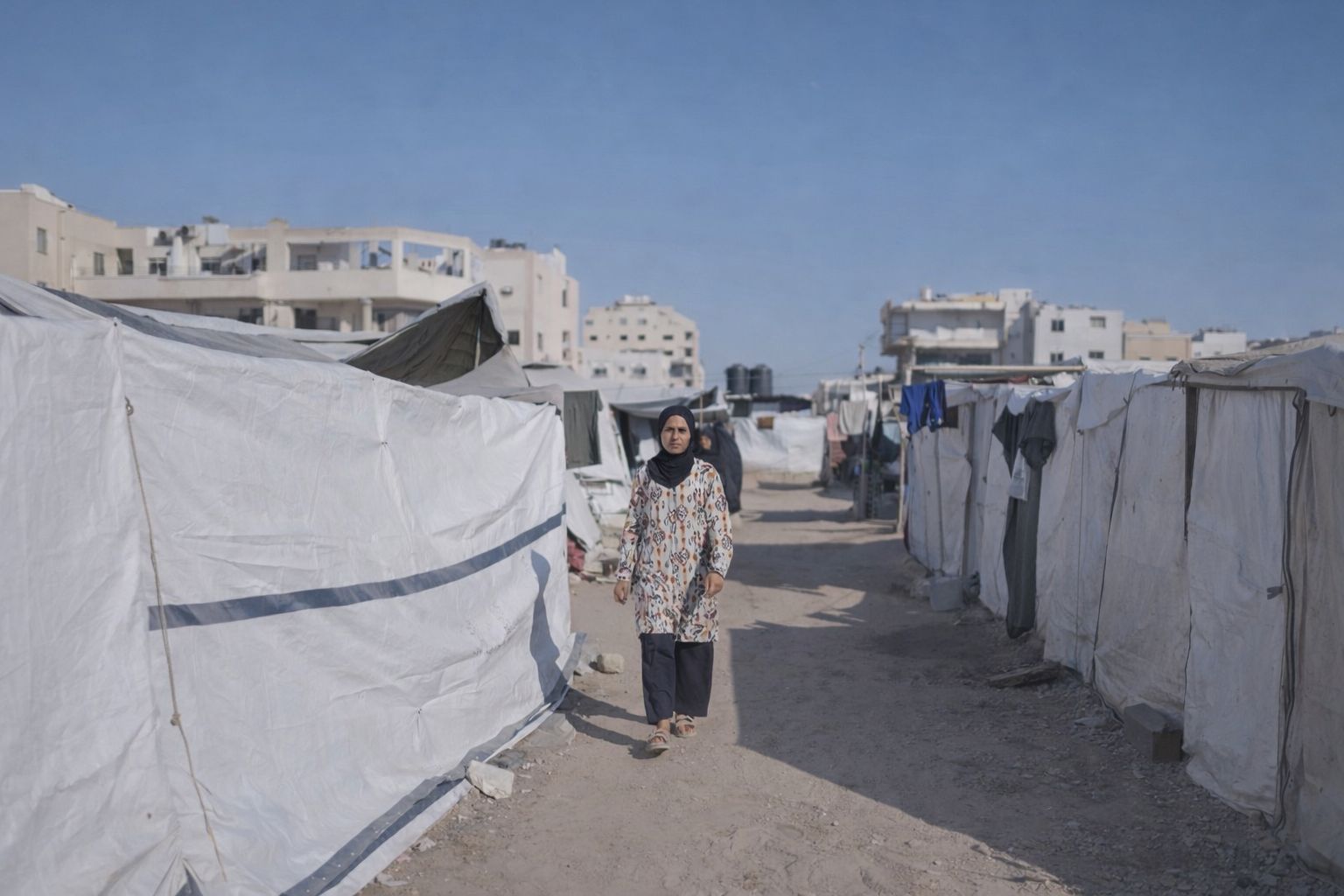
The family has endured repeated and exhausting displacement, moving seven times within Gaza City and once to Deir al-Balah. They fled from al-Daraj neighborhood to Pioneers and Leaders School, then to a relative’s house in al-Sabra neighborhood, followed by a tent near the seaport, and finally back to the UNRWA clinic, where the family is now staying.
The father describes the hardships of that stage:
“We have endured a harsh and exhausting journey of displacement, which has taken a heavy financial toll on us despite having no steady source of income. The hardships of displacement have been made even more difficult by Ghazal’s health condition, as she requires constant care around the clock. Losing my wife and Ghazal’s mother has had a profound impact on us and has left me carrying the primary responsibility for caring for my daughter, with the help of her siblings. All of this has taken place amid a constant sense of insecurity and fear.”
The hardship of starvation has been no less severe than the suffering caused by injury and loss. Sometimes, the father had to ask others for bread to feed his children, especially Ghazal, whom he would feed bread soaked in tea or hot water. At times, he relied on biscuits and nutritional supplements when they were available at health centers.
Current Situation and Awaiting Treatment Abroad
Since March 2026, Ghazal has remained at al-Rantisi Hospital after her condition deteriorated and she developed chest infections that left her dependent on assisted breathing and tube feeding through her nose. In July 2026, she received a referral for treatment abroad, as it had become impossible to perform the specialized surgeries that could potentially help restore or stimulate brain cells in Gaza due to the lack of the necessary medical capabilities.
To this day, Ghazal is still waiting for security clearance from the Israeli occupation authorities to allow her to travel for treatment. She clings to the hope of restoring what can still be saved of her small body and reclaiming a part of her stolen. But will that approval come soon? Or will she remain stuck, like nearly 20,000 other patients still waiting on the same lists, caught between the hope that the door to treatment and survival will finally open and the fear that their wait will prolong until it is too late?