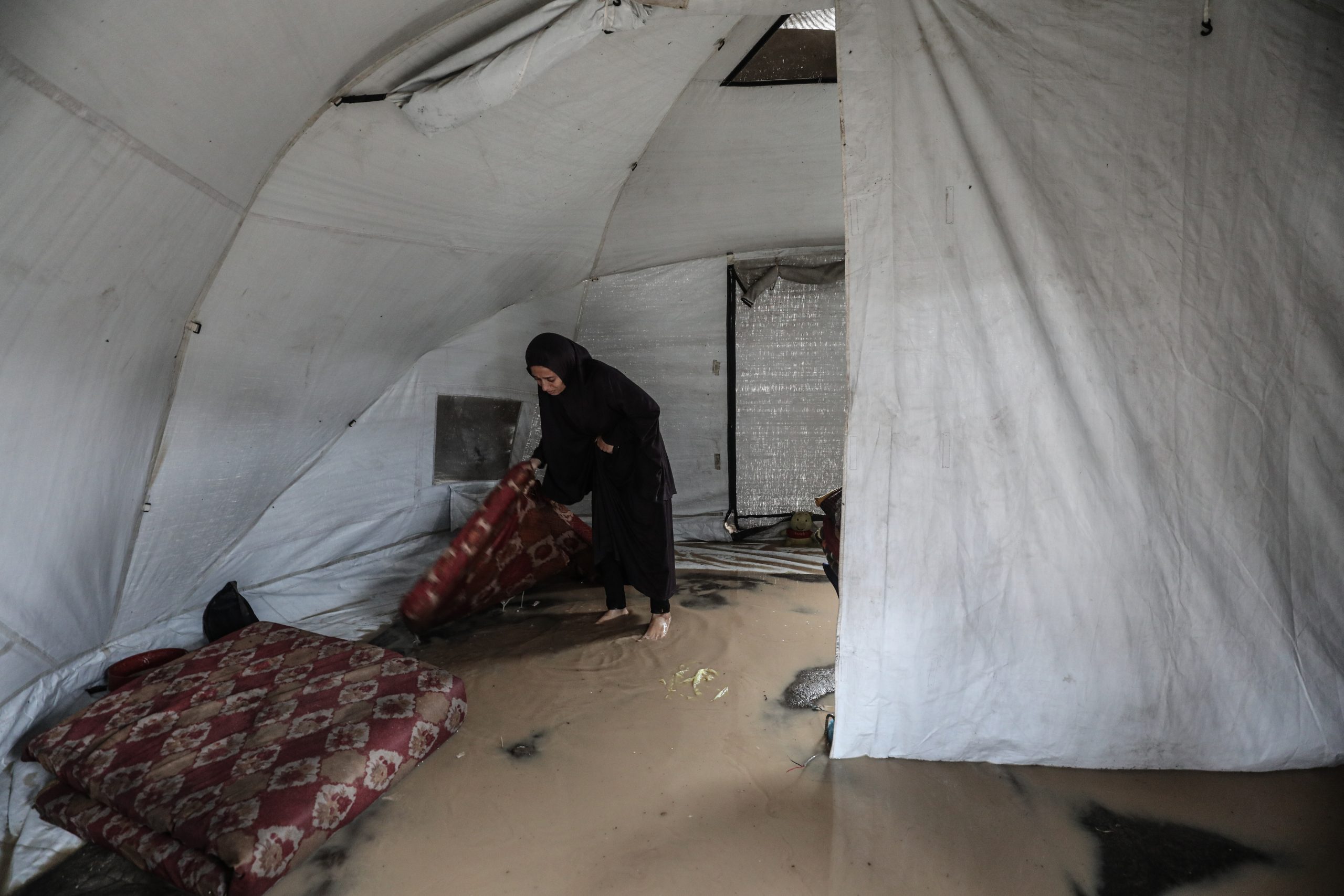
The Palestinian Centre for Human Rights (PCHR) warns of the continued deterioration of the humanitarian conditions of displaced people in the Gaza Strip, particularly amid official forecasts indicating that, starting today, Gaza will face heavy rainfall, floods, flash floods, and strong winds that are expected to destroy thousands of worn-out tents sheltering more than one million displaced persons. Warnings issued by competent authorities highlight the immense risks to the lives of thousands of displaced people, especially those living in fragile tents while lacking basic infrastructure, including the al-Mawasi area in western Khan Younis, which has become the largest sheltering site for displaced persons across the Strip. These developments come at a time when safe living conditions are entirely unavailable, prompting PCHR to issue an urgent appeal to the international community, UN bodies, and humanitarian organizations to intervene immediately and effectively to prevent an imminent humanitarian catastrophe and to ensure displaced persons’ right to safe and dignified shelter-an inalienable and fundamental right under all circumstances.
Despite the ceasefire declared on 10 October 2025, the Israeli Occupation Forces (IOF) continue to impose strict restrictions on the entry of adequate shelter materials into the Gaza Strip. The Spokesperson for the United Nations Secretary-General, Stéphane Dujarric, stated in a recent briefing the Israeli authorities have rejected 23 requests from nine of our partners to bring in nearly 4,000 pallets of critical supplies, including tents, sealing and framing kits, bedding, kitchen sets and blankets.1
Moreover, UN reports stressed that the truckloads of shelter materials that have entered the Strip since the ceasefire represent only a very limited portion of actual needs. The Gaza Strip requires hundreds of thousands of temporary residential units, not merely a few thousand additional tents that offer no protection from rain, wind, or cold. According to government statistics, only 13,511 truckloads have entered the Gaza Strip within 60 days, out of the 36,000 truckloads that were supposed to enter—an average of 226 trucks per day out of the 600 supposed to enter, a rate not exceeding 38%.2 This severe shortfall has resulted in continued shortages of food, medicine, water, and fuel, further deepening the catastrophic humanitarian crisis in the Gaza Strip.
As the Gaza Strip comes under the impact of a severe weather depression, concerns are rising alarmingly over the worsening conditions of displaced people and those sheltering in tents. The tents—many of which leak water and lack proper thermal insulation—are turning into damp environments that contribute to the spread of dermatological and respiratory diseases. This situation is further exacerbated by warnings from local and municipal authorities about the risks of water contamination and the collapse of sewage networks. In recent days and weeks, the Gaza Strip has witnessed heavy rainfall and sudden weather shifts that have caused widespread flooding, sweeping away tents and destroying displaced families’ belongings. According to field testimonies documented by PCHR, hundreds of thousands of families continue to live in uninhabitable conditions, relying on tents that fail to provide even the bare minimum of human dignity.
Thus, PCHR emphasizes that makeshift tents are not a viable solution. The urgent requirement is to bring in more adequate housing models, including prefabricated housing units that are weather-resistant and equipped with sewage systems, alternative energy sources, and infrastructure ensuring a minimum level of privacy and safety. These units constitute an immediate humanitarian necessity that cannot be postponed and represent a moral and legal obligation for the international community not to neglect.
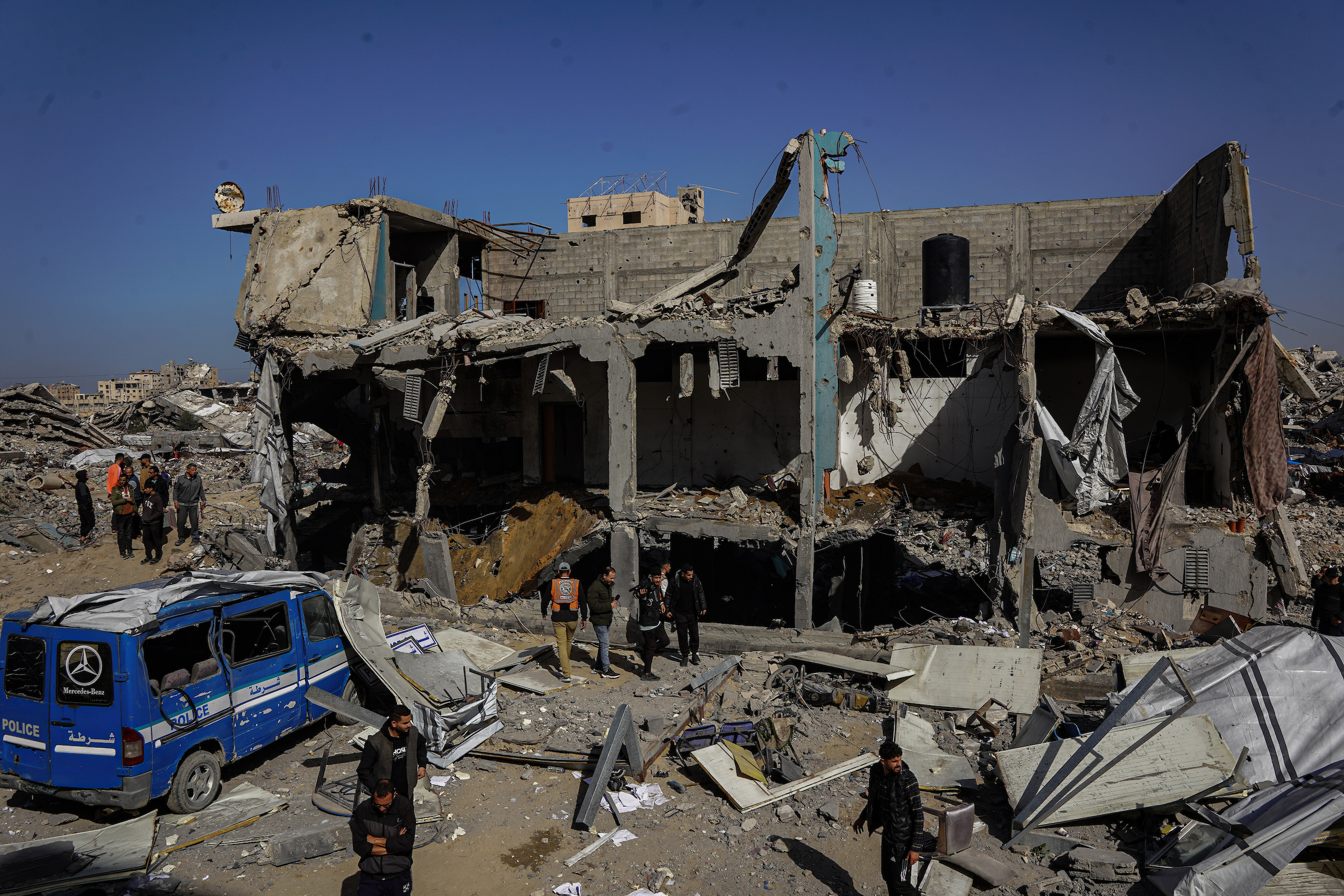
PCHR considers the ongoing Israeli restrictions on the entry of shelter materials, including ready-to-use temporary shelters such as caravans and construction materials suitable for harsh conditions, as a serious violation of international humanitarian law and a continuation of the IOF’s genocide against civilians in Gaza over the past two years. PCHR stresses that leaving hundreds of thousands of civilians without adequate shelter in these severe weather conditions can only be seen as a deliberate entrenchment of Gazans’ suffering, aimed at forcing them either into migration or into despair, with devastating mental and health collapse. Furthermore, the persistence of the humanitarian crisis and the prevention of any adequate solutions, even after the ceasefire, reflect a clear intent to make life in Gaza unlivable and irreparable, in direct violation of the occupying power’s obligations under international humanitarian law.
In light of the above, PCHR:





OPIPLJIVE INFORMACIJE O BOŽIĆNOM KREDITU ZA PLANIRANJE…
Ovo nije normalna objava koju svakodnevno vidite na internetu gdje ljudi daju lažne recenzije i lažne informacije o izvrsnoj financijskoj pomoći. Svjestan sam da su mnogi od vas prevareni i da su lažni agenti iskoristili one koji traže kredite. Neću ovo nazvati normalnim recenzijama, nazvat ću ovo situacijom u kojoj sam živi svjedok kako možete dobiti svoj kredit kada ispunjavate uvjete tvrtke. Zaista nije važno imate li dobar kreditni rejting ili odobrenje vlade, sve što vam treba je važeća osobna iskaznica i važeći IBAN broj da biste mogli podnijeti zahtjev za kredit s kamatnom stopom od 3%. Minimalni iznos je 1000 eura, a maksimalni iznos koji se može posuditi je 100.000.000 eura. Dajem vam 100% jamstvo da možete dobiti svoj kredit putem ove pouzdane i poštene tvrtke, posluju 24 sata online i pružaju kredite svim građanima Europe i izvan Europe. Poslali su mi dokument koji je provjeren i testiran prije nego što sam dobio kredit, stoga pozivam sve kojima je potreban kredit da ih posjete ili kontaktiraju putem e-maila: michaelgardloanoffice@gmail.com
WhatsApp za Europu: +38591560870
WhatsApp za SAD: +1 (717) 826-3251
Nakon što ih kontaktirate, javite im da vam je gospođa Dejana Ivica iz Zagreba dala informacije. Vidjeti znači vjerovati i zahvalit ćete mi kasnije kada dobijete kredit od njih. Dao sam obećanje da ću nakon što dobijem kredit od njih, objaviti dobru vijest svima online. Ako imate prijatelje ili rodbinu, uključujući kolege, možete im reći za ovu ponudu i da se događa ovog BOŽIĆNOG VRIJEME.
[…] Despite the ceasefire declared on 10 October 2025, the Israeli Occupation Forces (IOF) continue to impose strict restrictions on the entry of adequate shelter materials into the Gaza Strip. The Spokesperson for the United Nations Secretary-General, Stéphane Dujarric, stated in a recent briefing the Israeli authorities have rejected 23 requests from nine of our partners to bring in nearly 4,000 pallets of critical supplies, including tents, sealing and framing kits, bedding, kitchen sets and blankets.1 […]
When I first entered the Bitcoin market, I suffered a loss of around $120,000. How unfortunate that some people enjoy hurting other people. I’m still baffled as to how NVIDIA TECH HACKERS on google mail managed to recover what I thought was irretrievably gone from my wallet, but I was fortunate enough to get help from a recovery expert via email (nvidiatechhackers@gmail.com). When it comes to hacking and recovering digital assets from con artists, NVIDIA TECH HACKERS is truly a god
I lost $87,000 in a SIM swap attack. One moment my phone had service, the next it was dead. Within minutes, I was locked out of my email, my exchange accounts, and my entire crypto portfolio was emptied. The attacker had convinced my carrier to transfer my number, bypassed my two-factor authentication, and moved fast. I felt sick. Years of investing, gone in under an hour. That’s when I found NVIDIA TECH HACKERS.
At first, I was hesitant, there are too many fake recovery “experts” out there. But NVIDIA TECH HACKERS was different. They were professional, clear, and moved fast. Within 48 hours, they had traced the stolen funds through multiple wallets, identified a key mistake the hacker made, and located the final destination, a KYC-verified account on a lesser-known exchange.
They worked directly with the exchange and law enforcement to freeze the account. In just under two weeks, every cent $87,000 was recovered. I don’t usually write testimonials, but NVIDIA TECH HACKERS earned this. They didn’t over promise. They delivered. If you’ve lost crypto to a hack or scam, don’t waste time rather get in touch with NVIDIA TECH HACKERS
I got my money back because I called the right people and they can be contacted through their official E-mail address which is ( nvidiatechhackers@gmail.com) Give them a trial as they never disappoint.
Do You Need A Hacker To Recover Cryptocurrency? Hire NVIDIA TECH HACKERS
Hello, everyone. I am a health care worker, and I would like to express my sincere gratitude to the woman who commented on How Do I Recover My Stolen Cryptocurrency/BTC Recovery!!! Fake Crypto Investment Platform about how she was able to get her bitcoin back to her wallet with the assistance of NVIDIA TECH HACKERS. Coincidentally, I was having a similar issue, so I immediately had to contact him for assistance in getting my lost bitcoin back. As they say, they are truly awesome, and I would suggest NVIDIA TECH HACKERS to anyone.
(nvidiatechhackers@gmail.com)
OPIPLJIVE INFORMACIJE O BOŽIĆNOM KREDITU ZA PLANIRANJE…
Ovo nije normalna objava koju svakodnevno vidite na internetu gdje ljudi daju lažne recenzije i lažne informacije o izvrsnoj financijskoj pomoći. Svjestan sam da su mnogi od vas prevareni i da su lažni agenti iskoristili one koji traže kredite. Neću ovo nazvati normalnim recenzijama, nazvat ću ovo situacijom u kojoj sam živi svjedok kako možete dobiti svoj kredit kada ispunjavate uvjete tvrtke. Zaista nije važno imate li dobar kreditni rejting ili odobrenje vlade, sve što vam treba je važeća osobna iskaznica i važeći IBAN broj da biste mogli podnijeti zahtjev za kredit s kamatnom stopom od 3%. Minimalni iznos je 1000 eura, a maksimalni iznos koji se može posuditi je 100.000.000 eura. Dajem vam 100% jamstvo da možete dobiti svoj kredit putem ove pouzdane i poštene tvrtke, posluju 24 sata online i pružaju kredite svim građanima Europe i izvan Europe. Poslali su mi dokument koji je provjeren i testiran prije nego što sam dobio kredit, stoga pozivam sve kojima je potreban kredit da ih posjete ili kontaktiraju putem e-maila: michaelgardloanoffice@gmail.com
WhatsApp za Europu: +38591560870
WhatsApp za SAD: +1 (717) 826-3251
Nakon što ih kontaktirate, javite im da vam je gospođa Dejana Ivica iz Zagreba dala informacije. Vidjeti znači vjerovati i zahvalit ćete mi kasnije kada dobijete kredit od njih. Dao sam obećanje da ću nakon što dobijem kredit od njih, objaviti dobru vijest svima online. Ako imate prijatelje ili rodbinu, uključujući kolege, možete im reći za ovu ponudu i da se događa ovog BOŽIĆNOG VRIJEME. …………..
SSN FULLZ | NIN FULLZ | SIN FULLZ
USA UK CANADA FULLZ
Fresh & Valid Pros
All fresh spammed & valid info fullz
DL Photos Front Back with Selfie
DL photos with LLC
DL Photos with W-2 Forms
DL Photos with SSN
DL Photos of AUS|UK|CA|RUS|FIN|BR|SP|IT|IRE Available
Fullz with MVR, DL issue & Exp dates Included
Fullz with Employee & Bank Info
Fullz with DL & SSN
Fullz with NIN & Sort Code
Fullz with SIN & MMN
Germany|Australia|Spain|Italy Fullz
Email Leads (Crypto|Health|Medical|Banks|Unemployment|Office365)
CVV Fullz with Billing Address
Dumps with Pin Track 101 & 202
Cash Out Methods & Carding Tutorials
IBAN France & Italy Fullz
W-2 Forms with bank statements & Utility Bills
Contact Info Is here:
Telegram – @ killhacks – @ leadsupplier
What’s App – +1.. 727.. 788.. 6129..
TG Channel – t.me/leadsproviderworldwide
E-mail – bigbull0334 at gmail dot com
Signal – @killhacks.90
VK Messenger – @ leadsupplier
Tools & Tutorials For Hacking & Spamming (For learning Purpose)
SMTP RDP SHELLS
C-Panels
Web-Mailers
Bulk SMS Senders & Email Senders
Office365 Logs & Leads
Scripting Scam Pages & Scam Pages
RATS VIRUSES KeyLoggers BRUTES
Hacking & Spamming Ebooks|Tutorials|Guides
Carding Tutorials & Methods
Dumps Cash Out Methods
All tools are fresh & no sampling will be provided for Tools|CC’s|DL Photos
Payment Only in crypto will be accepted
Available 24/7. Delivery will be after payment
#Fullz #Pros #Leads #usafullz #ukfullz #canadafullz #cvvfullz #dumpscvv
#cvvshop #smtps #rdps #cpanles #smssenders #bulksmssender #emailsender
#cryptoleads #Paydayleads #loanleads #umeploymentleads #BTCpayment #cryptopayment
#Viruses #RATS #keyloggers #scampages #hackingtools #spammingtools
Get Quality Leads, Fullz, Pros, Database
(USA STUFF)
——————————–
| SSN DOB DL Address Employee & Bank Info Fullz
| Bank Account & Routing Numbers
| USA DL Front back with Selfie
| USA Passport Photos
| Cars Database with MVR
| USA LLC Docs with DL Photos
| DL Fullz with Issue & Expiry Dates
| Get Specific States, Cities, Gender, Age, Zip codes
| USA CC’s with CVV Fullz
| High Credit Score Pros
| Young & Old Age Fullz
| Business EIN Company Fullz
| USA Email Combos
(UK STUFF)
——————————–
| NIN DOB Address Fullz Sort Code Account Number
| NIN, DOB, DL Address Fullz
| UK DL Front Back with Selfie & Passports
| NIN Dob address info in bulk
| UK CC’s with CVV Fullz
| All UK Counties Fullz
| UK Email Combos
(CANADA STUFF)
——————————–
| SIN DOB Address Fullz
| SIN DOB Address MMN EMAIL & Phone Info Fullz
| DL Front Back with Selfie
| CA CC’s with CVV Fullz
| Canada All states DL & Passport Photos
| Canada Email Combos
USA Headers:
FIRST NAME|MIDDLE NAME|LAST NAME|SSN|DOB|DL NUMBER |DL STATE|PHONE HM|PHONE WORK|PHONE CELL|EMAIL|ADDRESS|
|CITY|STATE|ZIP|RESIDENT STATUS|EMPLOYER|OCCUPATION|JOB STATUS|MONTHLY INCOME|ROUTING NUMBER|ACCOUNT NUMBER
UK Headers:
FIRST NAME|SURNAME|DATE OF BIRTH|NI NUMBER|ADDRESS|CITY|STATE|POST CODE|EMAIL ADDRESS|NUMBER|SORT CODE|ACCOUNT NUMBER|ACCOUNT NAME
CANADA Headers:
FIRST NAME |LAST NAME |ADDRESS |CITY |STATE |COUNTRY |DOB |SIN |PHONE |EMAIL |MMN |ZIPCODE
(ADVANCE TOOLS & TUTORIALS)
———————————————
Spamming Complete Package
Hacking Complete Package
CC & Dumps Tutorials
CC hacking tutorials
Scam Pages & Scam Page Scripting
C-panels & Web-mailers
SMTP RDP Shells
Bulk SMS Sender PC/Mob
Kali Linux Package with Tutorial
Cash out & Transfer Methods
Available 24/7 at:
WhatsApp – (+1) 605… 846… 1870..
Telegram – @ Fullzpros (Watch out for cloned names)
TG Chanel – @ bigdatatrader
Mail – Silasclark99 at gmail dot com
VK ID – Fullzpros
I was diagnosed with Herpes four years ago. For over two years, I relied on prescribed medications and treatments, but unfortunately, my condition continued to worsen. The flare-ups became more frequent, the discomfort increased, and even simple daily tasks became difficult to manage.Last year, out of desperation and hope, I decided to try a herbal treatment program from NaturePath Herbal Clinic. Honestly, I was skeptical at first, but within a few months of starting the program, I felt some changes. My discomfort eased, my energy levels improved, and I felt I had more control over my daily life again.It’s been a meaningful experience for me, and I feel more like myself than I have in years. This is simply my personal story. You can visit their website at http://www.naturepathherbalclinic.com
HIRE A FASTEST CYBER RECOVERY EXPERT TO RECOVER YOUR LOST OR STOLEN BITCOIN/ETH/USDT/ THE HACKANGELS
I simply want to share my story about THE HACKANGELS RECOVERY EXPERT. To all of you out there. One has to be careful. A lot of scammers are out there taking money from innocent traders. I was a victim of these crypto scammers. They made me lose my hard earned funds. The best thing that happened to me this year was seeing an article about THE HACKANGELS RECOVERY EXPERT. A professional hacker and private investigator. I invested $954,300 in a cryptocurrency platform and it turned out to be a scam and I had no idea how to get my money back until I reached out to a recovery company called THE HACKANGELS RECOVERY EXPERT. I explained my situation to them. I was shocked to hear that they had recovered all of my stolen cryptocurrency in just 48 hours. I said that I will not hold this to myself but share it to the public so that all scammed victims can get their funds back. To anyone who may find themselves in a similar unfortunate situation. I highly recommend THE HACKANGELS RECOVERY EXPERT. Quickly reach out to them on their hotline:
WhatsApp: (+1(520)200-2320
Email: support@thehackangels.com
Web: http://www.thehackangels.com
If you’re in London, you can even visit them in person at their office located at 45-46 Red Lion Street, London WC1R 4PF, UK. They’re super helpful and really know their stuff! Don’t hesitate to reach out if you need help.
Hello, I am a professional spell caster with years of experience helping people overcome challenges in different areas of life. I provide spiritual guidance and powerful solutions for anyone facing difficulties, whether in love, marriage, family, or finances.
Here’s what I can help you with:
Love & Relationship Restoration Rekindle lost love, heal broken relationships, and bring harmony back into your life.
Marriage Healing Solve conflicts, restore trust, and strengthen your marriage.
Fertility & Pregnancy Spells Support for couples struggling with fertility and pregnancy challenges.
Lottery & Good Fortune Guidance Attract luck, wealth, and new opportunities into your life.
I am here to help you achieve your dreams and overcome obstacles. My work is genuine, effective, and personalized to your unique situation.
Contact me: alaskaspellcaster44@gmail.com
If you are ready to change your life, don’t hesitate. Your happiness and success are just a message away!
A Truck Driver’s Heart: How JetWebHackers Restored My Hope and Saved My Family
Losing $78,000 to a scam crushed my soul. I felt helpless, broken, and drowning in despair. I worked so hard every day just to keep my family afloat, and suddenly, everything was gone — my dreams, my future, my hope. I felt like I was trapped in a nightmare with no way out. Then, I found JetWebHackers. They didn’t just recover my money—they gave me a reason to believe again. Within 48 hours, they tracked down the scammers and returned what I thought was lost forever. That moment, holding that money, was like a miracle. It’s changed everything for my family. They even gave me a blank ATM card, and I withdrew $55,000 to help us survive. It’s risky, yes — but for us, it’s been a lifeline when we needed it most. I’ll never forget how they pulled me out of darkness when I thought all was lost. If you’re struggling, if you’ve been scammed — don’t give up. Reach out. JetWebHackers gave me a second chance at life. They can do the same for you.
Contact now:
WHATSAPP: +1(763)357-2550
Email: jetwebhackers@gmail.com
Telegram: @jetwebhackers
Please, take that step. Your life can change today.
Hello Everyone!
Here we’re providing Fresh & Valid Fullz Pros
USA UK CANADA AUSTRALIA GERMANY SPAIN Fullz Databases available
Many other countries Fullz are available
All info will Fresh spammed
Providing on whole sale prices for bulk orders
USA UK Canada DL Photos available as well in bulk
DL|ID Photos available of all Global Countries
Passport Photos available
SSN DOB DL FULLZ USA
NIN DOB DL FULLZ UK
SIN DOB ADDRESS MMN FULLZ CANADA
USA LLC DOCS with SSN & DL
W-2 Forms with DL
Fresh Sweep Stakes & Casino Leads
Fullz available in bulk quantity in Millions
Dead Fullz available
CC with Cvv’s with billing address (USA|UK|CA)
Dumps & Cash out methods
Fullz with MVR
Fullz with DL Issue & Exp Dates
Young Age Fullz (2002-2023)
Old Age Fullz (1930-1999)
High Credit Scores Pros 700+
Business EIN Company Fullz & EIN Lookup
DL Front back photo with SSN Card photo
……………………………………….
Contact Us For Fresh Stuff & Bulk Deals:
>Telegram@killhacks – @ leadsupplier
>What’s App – +1 727”788”6129
>Telegram Channel – t.me/leadsproviderworldwide
>VK Messanger – @ leadsupplier
>Signal – @ killhacks.90
>Email – hacksp007 at gmail dot com
……………………………………….
USA Fullz Format:
Name-SSN-DOB-DL-Address-City-State-Zip-Phone-Email-Employee-Account&routing
UK Fullz Format:
Name-NIN-Dob-DL-Address-City-State-Phone-Email-Sortcode-Accountnumber
Canada Fullz Format:
Name-SIN-DOB-DL-Address-City-State-Zip-Phone-MMN
…………………………………………
Email Leads & Combo available in Bulk
Cyrpto Leads(Binance|Coinbase|Blockchain|Bybit|Bitget|Others)
Medical & Health Leads
Doctors Database
Cars Database with Reg. Number
Hacking & Sp@mming Tools & Tutorials with Guide
Full Sp@mmaing Packages (Including all tools)
Smtp’s Rdp’s Cpanel’s available
Bulk SMS & EMail Senders Available
Sc@m Pages & Sc@m Page Scripting available
High Quality Dumps track 101 & 202 available
>Telegram@killhacks – @ leadsupplier
>What’s App – +1 727”788”6129
>Telegram Channel – t.me/leadsproviderworldwide
>VK Messanger – @ leadsupplier
>Signal – @ killhacks.90
>Email – hacksp007 at gmail dot com
#Fullz #USAfullz #ukfullz #canadafullz #ccfullz #dumpscvv #carding #hacking
#spamming #tutorials #prosusa #leads #emailleads #cryptoleads #freshfullz
#cryptopayments #youngagefullz #sweepstakes #casinoleads #ssndobdl #dlfullzusa
#telegram #whatsapp #signal #discord
*All Data, Tools, Fullz & Pros will be provided valid & fresh
*Guanranteed stuff, anything found invalid will be replace instantly
*No sampling for CC’s & tools
*Payments will be in crypto only
TANGIBLE INFORMATION ABOUT CHRISTMAS LOAN FOR PLANNING…
This is not a normal post that you see every day on the internet where people give fake reviews and false information about excellent financial assistance. I am aware that many of you have been scammed and that fake agents have taken advantage of those seeking loans. I will not call these normal reviews, I will call this situation where I live a witness to how you can get your loan when you meet the company’s requirements. It really does not matter if you have a good credit rating or government approval, all you need is a proper ID card and a valid IBAN number to be able to apply for a loan with an interest rate of 3%. The minimum amount is 1000 euros and the maximum amount that can be borrowed is 100,000,000 euros. I give you a 100% guarantee that you can get your loan through this reliable and honest company, we operate 24 hours online and provide loans to all citizens of Europe and outside Europe. They sent me a document that was checked and tested before I got the loan, so I invite anyone who needs a loan to visit them or contact them via email: michaelgardloanoffice@gmail.com
WhatsApp for Europe: +38591560870
WhatsApp for USA: +1 (717) 826-3251
After you contact them, let them know that Ms. Dejana Ivica from Zagreb gave you the information. Seeing is believing and you will thank me later when you get a loan from them. I made a promise that after I get a loan from them, I will post the good news to everyone online. If you have friends or relatives, including colleagues, you can tell them about this offer and that it is happening this CHRISTMAS TIME.
I was scammed of $42000 worth of bitcoin with a scam forex investment unknowingly then I didn’t know what to do.. I felt like I should committed a suicide but I fortunately have a good start again until my friend introduced me to one of the best recovery agent in Texas who helped me to recovered it back for me in just few days , if you feel scammed with fake forex or any form of scam you don’t need to be worried you can contact on winevania3 they are difference from others
TRUE LIFE TESTIMONY , THANKS TO JETWEBSHACKERS +1(763)357-2550
I’m forever grateful to Jetwebhackers for their remarkable assistance in recovering the $38,540 I had lost to a crypto scam. This amount was meant to cover my husband’s urgent hospital bills, and I was deceived by a fraudster posing as Agent David, who promised me a return of $380,940 – but it was all a scam. Thanks to Jetwebhackers’ expertise and dedication, I was able to recover not only the initial investment but also the profit I was promised. Their help has been a blessing to my family, and we can now focus on my husband’s recovery without financial stress. I highly recommend Jetwebhackers to anyone who has fallen victim to crypto scams. They are professional, efficient, and compassionate. Thank you, Jetwebhackers, for your exceptional service and support during a difficult time!
EMAIL: jetwebhackers@gmail.com
Telegram: @jetwebhackers
FRESH DATABASE AVAILABLE
Fullz Leads Pros Info Deets Datasheets
SSN SIN NIN DL DOB Address
USA UK Canada Info Available in bulk
DL|ID Front back with selfie & Selfie Video
USA LLC Docs with DL & SSN
Many Other rare stuff is available on whole sale prices
Bulk quantity fullz available fresh, valid, genuine & guaranteed
Contact Us For Fresh Stuff & Bulk Deals:
=========================================
@ killhacks – @ leadsupplier >> Telegram
+1 727”788”6129 >> What’s App
t.me/leadsproviderworldwide >> Telegram Channel
@leads.seller >> Discord
@ leadsupplier >> VK Messenger
@ killhacks.90 >> Signal
hacksp007 at gmail dot com >> Email
17-7369-4210 >> Zangi
USA-UK-Canada-RU-GR-IT-SP-FR-BR All countries ID front back available
W2 Forms USA with DL info
Dead Fullz in Bulk quantity
Sweep Stakes Old Age Bulk quantity Fresh
Young Age Fullz (2009-2023)
Middle & Old Age Fullz (1930-2008)
High Credit Scores Fullz 700+
Passport Photos with Selfie
EIN Company Pros & EIN Look-up
DL Photos front Back with SSN USA
Car Database USA with Reg Number
#usaleads #usaemails #usacombos #ukleads #ukfullz #usapros
#canadaleads #canadaidcard #ukidcard #usadlssn #ssndobdl
#youngagefullz #sweepstakes #companyein #bankleads #bankfullz
#accountrouting #W2forms #kycstuff #klarna #shopify #kycuber
CC with CVV & Billing Address
Dumps with Pins 101 $ 202 with Cash out tutorial guide
Tools & Tutorials for Learning Spamming & Hacking
Scam Pages scripting
#cvv #cvvshop #cvvsell #dumpscvv #ccdumps #dumpscc #ccsell
#tools #hacking #spamming #scam #scampage #hackingtutorials
Complete spamming Packages including all Tools & Tutorials
Kali Linux Full Package
SMTP Linux Root
RDP with C-Panels & Shells
Crypto Leads Email & Combos
Payday & Loan Leads
Medical & Health Leads
Doctors & Hospitals Databases
#Leads #combos #emailleads #cryptoleads #paydayleads #loanleads
#medicalinfo #healthleads #doctorseleads #hospitaldatabaseusa
All info will be provided verified & Checked
Grab from Gov, Stores & Offices
Guaranteed & Valid stuff will be provided
@ killhacks – @ leadsupplier >> Telegram
+1 727”788”6129 >> What’s App
t.me/leadsproviderworldwide >> Telegram Channel
@leads.seller >> Discord
@ leadsupplier >> VK Messenger
@ killhacks.90 >> Signal
hacksp007 at gmail dot com >> Email
17-7369-4210 >> Zangi
*Our team is available 24/7 on all time zones
*Be aware from scammers using ours cloned names
*Only contact on the give info
*Payments will be accepted only in crypto
*No sampling & demo’s for tools, cc’s & ID|DL’s
Wow what a good God I am so excited to tell you all how I become a millionaire I’m a woman of faith I was reading a comment on google where I meet a man sharing how Dr UYI cast a spell for him and he get his wife back after the spell I was interested I have to do research when I was doing the research I got so many testimony about this same man call Dr UYI how he help people to win lottery how he help people to get there ex back how he help people to do so many things I was happy and I contact him to help me win the lottery when I contact him and he told me what to do and after I did what he ask me to do he den gave me a lottery number to play and told me to go and buy ticket after playing the game I was so surprise the game come out good and I won the sum of 90, 000,000 dollars i was amazed and promise to share it to the people around me if anyone is willing to play the mage lottery it should contact Dr UYI so he can give you the right number to play thanks to you Dr UYI I’m so so grateful contact Dr UYI via drzukalottospelltemple@gmail.com OR WhatsApp on +17174154115
I had to write back and say what an amazing experience I had with Dr Uyi for his powerful lottery spell. My Heart is filled with joy and happiness after he cast the Lottery spell for me, And i won $750,000,000 His spell changed my life into riches, I’m now out of debts and experiencing the most amazing good luck with the lottery after I won a huge amount of money. My life has really changed for good. I won (seventy five thousand dollars)Your Lottery spell is so real and pure. Thank you very much for the lottery spell that changed my life” I am totally grateful for the lottery spell you did for me Dr Uyi and i say i will continue to spread your name all over so people can see what kind of man you are. Anyone in need of help can email Dr Uyi for your own lottery number, because this is the only secret to winning the lottery. Email: (drzukalottospelltemple@gmail.com) OR WhatsApp on +17174154115
I had to write back and say what an amazing experience I had with Dr Uyi for his powerful lottery spell. My Heart is filled with joy and happiness after he cast the Lottery spell for me, And i won $750,000,000 His spell changed my life into riches, I’m now out of debts and experiencing the most amazing good luck with the lottery after I won a huge amount of money. My life has really changed for good. I won (seventy five thousand dollars)Your Lottery spell is so real and pure. Thank you very much for the lottery spell that changed my life” I am totally grateful for the lottery spell you did for me Dr Uyi and i say i will continue to spread your name all over so people can see what kind of man you are. Anyone in need of help can email Dr Uyi for your own lottery number, because this is the only secret to winning the lottery. Email: (drzukalottospelltemple@ gmail. com) OR WhatsApp on +17174154115
FULLZ DATABASE AVAILABLE
#SSN DOB DL FULLZ—#SSN DOB ADDRESS FULLZ—#SIN DOB ADDRESS MMN FULLZ
#NIN DOB ADDRESS SORT CODE ACCOUNT NUMBER—#DL Front Back with Selfie USA UK CA
FULL INFO ON SSNDOB | REAL DL Fullz with Issue & Exp Dates | NIN DOB ADDRESS | BUSINESS EIN COMPANY
Passport Photos with Selfie | High Credit Scores | DL FOR COINBASE | SSN SIN SPAMMED & VERIFIED
#Taxseason26
We can provide you 📇
✔️ SSN FULLZ ⚡️💵💵
✔️ REAL DLS
✔️ USA Leads 🔥
✔️ UK NIN DOB DL ADDRESS
✔️ CANADIAN & GERMANY INFOS
✔️ SIN DOB ADDRESS MMN PHONE
✔️ BUSINESS EIN COMPANY PROS
✔️ DEAD FULLZ
✔️ SWEEP STAKES
✔️ CC WITH CVV
✔️ PAYDAY LEADS 💎
✔️ Verified Email Database 📧
✔️ HOME OWNER LEADS
✔️ EMPLOYEE ✅
✔️ FOREX DATABASE💸
✔️ DUMPS WITH PIN TRACK 101 & 202
✔️ DATA FOR TAX RETURN
✔️ AMAZON
✔️ TUTORIALS
✔️ TOOLS
For more infos DM ✉️
⬇️⬇️⬇️⬇️⬇️⬇️⬇️
DISCORD { @leads_providers24 }
telegram 💬 { @Zavi_24 }
telegram channel { https://t.me/FullzDatabase24 }
whats app 📞+44 7700 137680
SIGNAL { @Leads_Providers.07 }
🌍 Available in Bulk💰
⚠️Be aware of scammers ⚠️
NOTE:-
We guarantee that Our INFOS 100% firsthand and extremely fresh because we update them weekly and monthly.
Fresh stuff available here only
BIG discount on bulk
I have a replacement policy for bad data
NO samples of cc/dls/ein/
#UKFULLZ#CANADAFULLZ#SINDOB#CCFULLZ#DUMPS#SSNFULLZ#REALDL#USA#SAVENATURE#HACKING#SELLER#VENDOR#2026#TRUMP#IRAN#VENEZUELA#TAXSEASON26#WW3#FULLZPROS #USALEADS #UKFULLZ #CANADAFULLZ #BTC #ETH #CRYPTOCURRENCY #MAGA #SWEEPSTAKES #DEADFULLZ #OLDAGEFULLZ #TAXRETURN #CRYPTOLEADS #SINFULLZ #CANADAFULLZ #CCINFOS #DUMPS #SSNDOB
FRESH FULLZ UPDATED-2026 AVAILABLE
USA UK CANADA GERMANY SPAIN ITALY AUSTRALIA
Tax Return 2026 Filling Fullz
Children Fullz 2011-2023
Young & Old Age Fullz 1930-2009
High Credit Score 700+ Scores
DL & ID Photos Front Back with selfie
DL Photos available all countries
Passport Photos
W-2 Forms with DL Photo (2021-22-23)
USA LLC Docs with DL & SSN
USA-> Name SSN DOB DL Address City State Zip Phone Email Employee & Bank Info
UK-> Name NIN DOB DL Address City State Postcode MMN Account number Sort Code
Canada-> Name SIN DOB DL Address City State Zip Phone MMN
Many Other Countries Fresh Fullz available in Bulk quantity
All Info will be provided with guarantee
Tax Filling Tools & Tutorials available
Our Team Is working 24/7 & here we’re:
————————————–
Telegram@killhacks – @ leadsupplier
What’s App – (+1) 727”’788”’6129
Telegram Channel – t.me/leadsproviderworldwide
Discord – @ leads.seller
VK Messenger – @ leadsupplier
Signal – @ killhacks.90
Email – hacksp007 at gmail dot com
Zangi – 17-7369-4210
Email Leads & phone number Leads
Crypto, Forex, Investors Leads
Payday & Loan Leads
Doctors Database, Health & Medical Leads
Car Database with Reg Numbers
Email & Pass Combos
Office365 Leads & Logins
Crypto Exchanges Leads
LinkedIn, Facebook, Instagram Leads
Education & School Leads
TOOLS & TUTORIALS AVAILABLE
H@cking Sp@mming C@rding Sc@M Pages Scripting Tools
Complete packages for Sp@mming & Ph!shing Attack
Sqli Injectors & Pen3tratrion Tools with tutorials
SMTP Linux Root & Sc@m Page Scripting
C@rding Tools & Tutorials (For CC|CVV Cash out & Dumps)
We are also providing complete packages for the above listed stuff
Complete guidance & assistance will be provided
Just try our services, we’ll give your best
#fullz #usafullz #canadafullz #ukfullz #taxreturn2026 #usataxreturn #dlphotos
#personalID #leads #taxfillingfullz #usataxfilling #childrenfullz #trumpiran #indiarussia
#chinausa #usachina #MAGA #Btc #btcbullrun #cryptocrash #cryptobill #eth #altseason
*Be aware from the scammers using our cloned names
Single Mom Loses $310K to Fake Charity Investment Scam…
Raised two kids alone, worked overtime as a cashier, bought school supplies myself, saved $310K for their college and a better home. ‘Emily’ connected online, shared my struggles, pitched “ethical” charity-linked investments with 20% monthly returns to help families. Trusted her story, sent it all. Lost everything. Locked in bathroom, collapsed crying—sure I’d stolen my kids’ future. Found JetWebHackers at midnight. Messaged broken. They traced fast, recovered full $310K in weeks. Funds arrived… held kids’ photo, tears of joy overflowing. They rebuilt my hope. If scammed, don’t give up—JetWebHackers are real saviors. Thank you deeply! God bless.
#JetWebHackers
EMAIL: support@jetwebhackers.com
WhatsApp: +1 (260) 228-9998
HOW I RESTORED MY STOLEN BITCOIN WITH THE HELP OF THE HACK ANGELS RECOVERY AGENCY.
I want to share my incredible experience with THE HACK ANGELS RECOVERY AGENCY. It’s really a testimony for me. I found myself in such a predicament not too long ago, having invested a significant amount of money in what I believed to be a promising platform, only to discover it was nothing more than a fraudulent scheme. I was defrauded of $1.6 million in Bitcoins. I learnt my lesson. I made every attempt to get my money back from them, but with no success. Eventually, a buddy who had gone through a similar situation suggested THE HACK ANGELS RECOVERY AGENCY. A recovery AGENCY. I got in touch with them via
WhatsApp +1(520)200-2320 ) or shoot them an Email at (support@thehackangels.com) They also have a great Website at (www.thehackangels.com )
And with their technical expertise. they were able to easily retrieve all of the money that had been stolen. I heartily suggest them to anyone experiencing a similar situation. They focus on individualized care and transparent communication, ensuring client support throughout the process.
I am here to say all i experienced with Dr Isikolo just like everyone else who is grateful would do. Dr Isikolo saved my marriage and it happened just like a miracle. For a very long time, I have issues with my husband and he became very distant from me and that alone worries me a lot. Family and friends did all they could to help the situation but to no avail. Days became week and weeks became months and months became two years plus. I knew I had to seek help. So I contacted Dr Isikolo and he offered willingly to help me which he did. He resolved the situation and the love and connection I and my husband shared, was restored and it all happened like a miracle. Now we do everything together and the kids are so happy that I never left and Dr Isikolo is all I have to thank for the full support and making my family happy and whole again. contact him on his page: https://isikolo-temple.com or text him via WhatsApp +2348133261196
Best provider of W-Union, M-Gram, bank transfers, PayPal, Cash-App, S-Krill, and mobile money transfers. International prepaid cards. [M-T. C. N in 15 min] Social media:
W- Union and M-Gram Pay-Pal Cash-App etc… Fees:
!!!! The minimum is $299 BTC for $2,000 WU – If you ask for a lower amount, I will ignore you!!!!
Social media:@Mangoflesch https://wa.me/237655693182
Email:georgymbargo@gmail.com
YOU CAN RECOVER YOUR STOLEN FUNDS WITH THE HELP OF // THE HACK ANGELS RECOVERY EXPERT
The most reputable and trustworthy recovery experts available today. THE HACK ANGELS RECOVERY EXPERT. They can help you retrieve your stolen crypto funds. They have technical expertise resources to track down and recover lost crypto. I had lost £973,000 to fraud and at first I thought it was gone for good. I went online to search for recovery, I saw numerous testimonies regarding THE HACK ANGELS RECOVERY EXPERT and how they had assisted other people in getting their money back. I didn’t hesitate to contact them, in just a few days the experts returned all my money. They said that they did an investigation and returned my money immediately. They can never ask you for any upfront payment. They can help you track your funds. They are cyber security experts doing great jobs out there. Be wise and do your research to avoid being scammed again. For anyone in a similar situation seeking to recover funds lost to online scams, contact THE HACK ANGELS RECOVERY EXPERT through
WhatsApp +1(520)200-2320
EMAIL: support@thehackangels.com
Website; at (www.thehackangels.com