Date of testimony: 1 August 2025
I am Faiza Nahid Hassan Azzam – commonly known as Al-Nazli – 37 years old, a widow and mother of three children: Jannat, 12 years old, Maria, 7 years old, and Misk, 6 years old. I hold a bachelor’s degree in Primary Education and I am from Tel al-Hawa, Gaza – across from Al-Quds Hospital.
I lived in my home in Tel al-Hawa with my husband, Yasser Mohammed Yousef Al-Nazli, and our three children. My family lived in a nearby apartment building. When the Israeli war on Gaza broke out on 7 October 2023, our lives were completely turned upside down. Our area in Tel al-Hawa became one of the most heavily bombarded: carpet bombing, war missiles from F-16 fighter jets, and armed quadcopter drones spreading fear and death everywhere.
After repeated threats and as the shelling drew closer, I was forced to flee with my three children and my family to the south for safety, while my husband refused to leave the house and remained behind. Fear consumed our hearts, especially the children, and with the ongoing threats and worsening security situation, we decided to leave.
On 14 October 2023, we were forcibly displaced to Hamad City in Khan Younis, where we stayed in my sister’s apartment for two months. The apartment was extremely cramped, overcrowded with family members, and we suffered severe psychological, physical, and economic hardships. There was no privacy or comfort, and the constant fear of sudden bombardment haunted us.
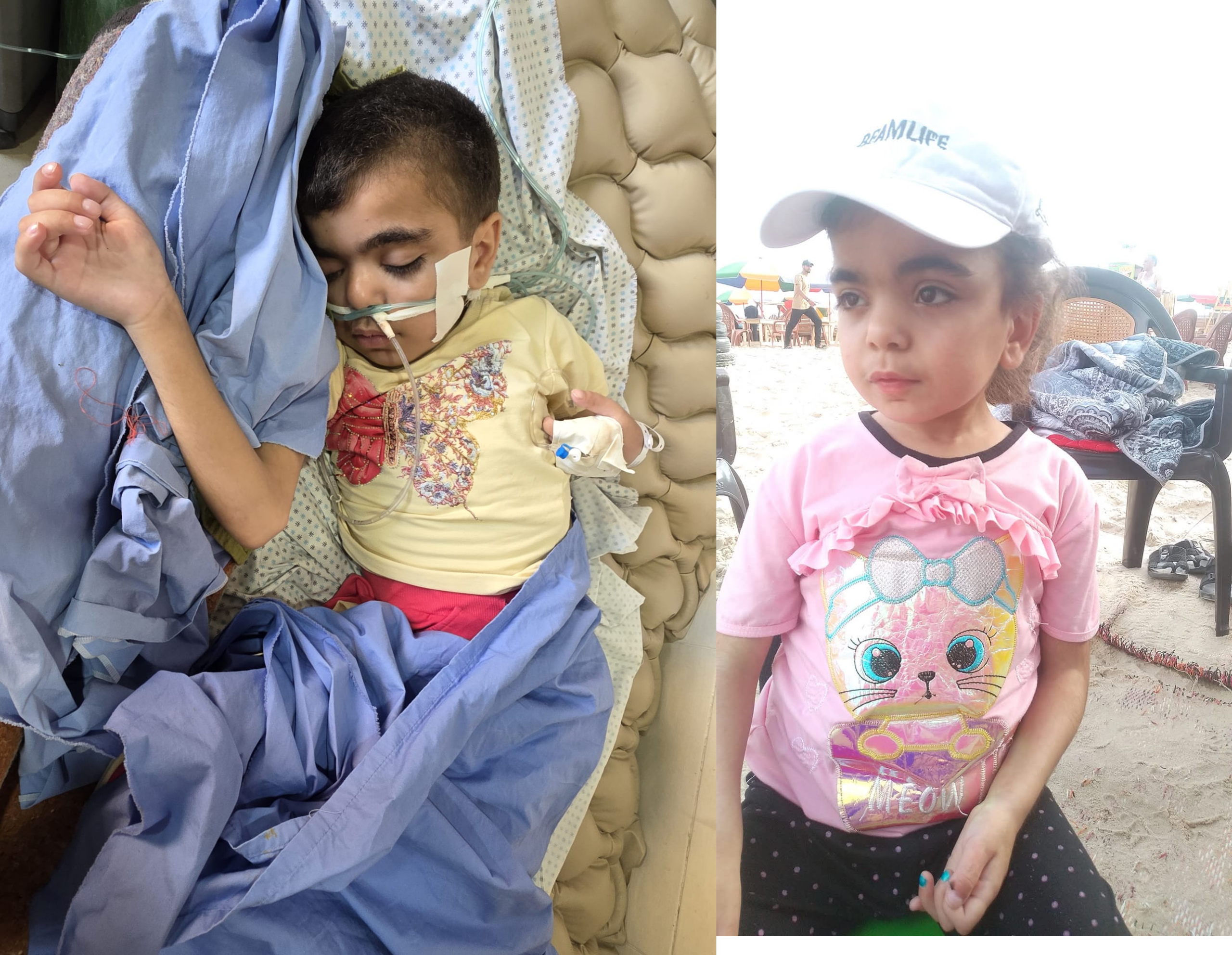
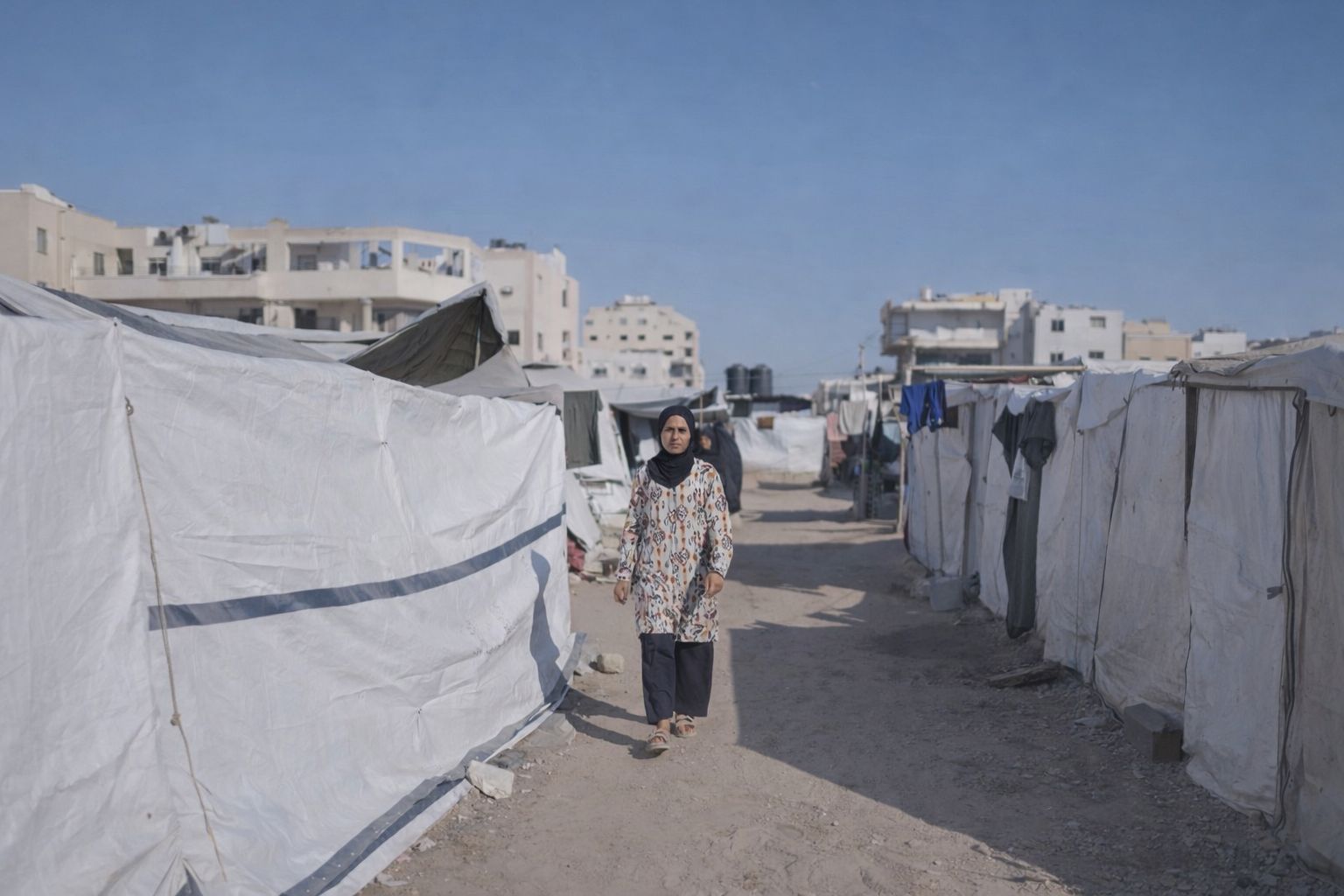
After evacuation warnings were issued for Hamad City, we moved to Rafah and set up a tent near the Egyptian border, across from the cemetery. Conditions were inhumane: no drinking water, shortages of food and medicine, freezing nights, and extreme psychological strain – especially since my eldest daughter, Jannat, has had cerebral atrophy since birth and needs continuous care and treatment.
When Israeli forces stormed Rafah on 6 May 2024, we were forced once again to flee back to Hamad City in Khan Younis. Our suffering deepened: water collection became an exhausting chore, food and medicine were scarce, and Jannat’s condition deteriorated due to the lack of treatment and care. Repeated displacement, insecurity, and financial hardship made our lives unstable, and every day we feared for our lives and the lives of our children.
Throughout this time, my husband Yasser stayed in touch with us from Tel al-Hawa to check on us. On 20 June 2024, we received the devastating news of his death. Yasser was killed in Tel al-Hawa (in the towers area) by bullets fired from an Israeli armed quadcopter at around 12:30 p.m., striking him directly in the head and chest as he tried to take cover. He managed to call his sister, Nabila, to tell her what had happened. The family went out to search for him, but ambulances could not reach the area due to the dangerous conditions. Yasser tried to crawl to safety while bleeding but could not continue. His body was later found by his mother and sister, who traced the trail of blood between the towers of Tel al-Hawa. He was transported on an animal-drawn cart to Al-Ahli Baptist Hospital, where he died immediately upon arrival.
Yasser’s martyrdom devastated me; I felt my life stop. He left us without a provider and left our children deprived of their father’s love.
A month after the ceasefire was announced, in February 2025, I returned to Gaza with my three children via Salah al-Din Road. I returned with a broken heart, hoping to find my home and my memories intact, and to find Yasser waiting for us. But reality was harsher – I returned to find no husband and memories erased by the destruction.
I went to my home across from Al-Quds Hospital, while my family returned to their apartment building on Al-Dahdouh Street in Tel al-Hawa. My father would spend the night at my place and leave at dawn for the family’s apartment.
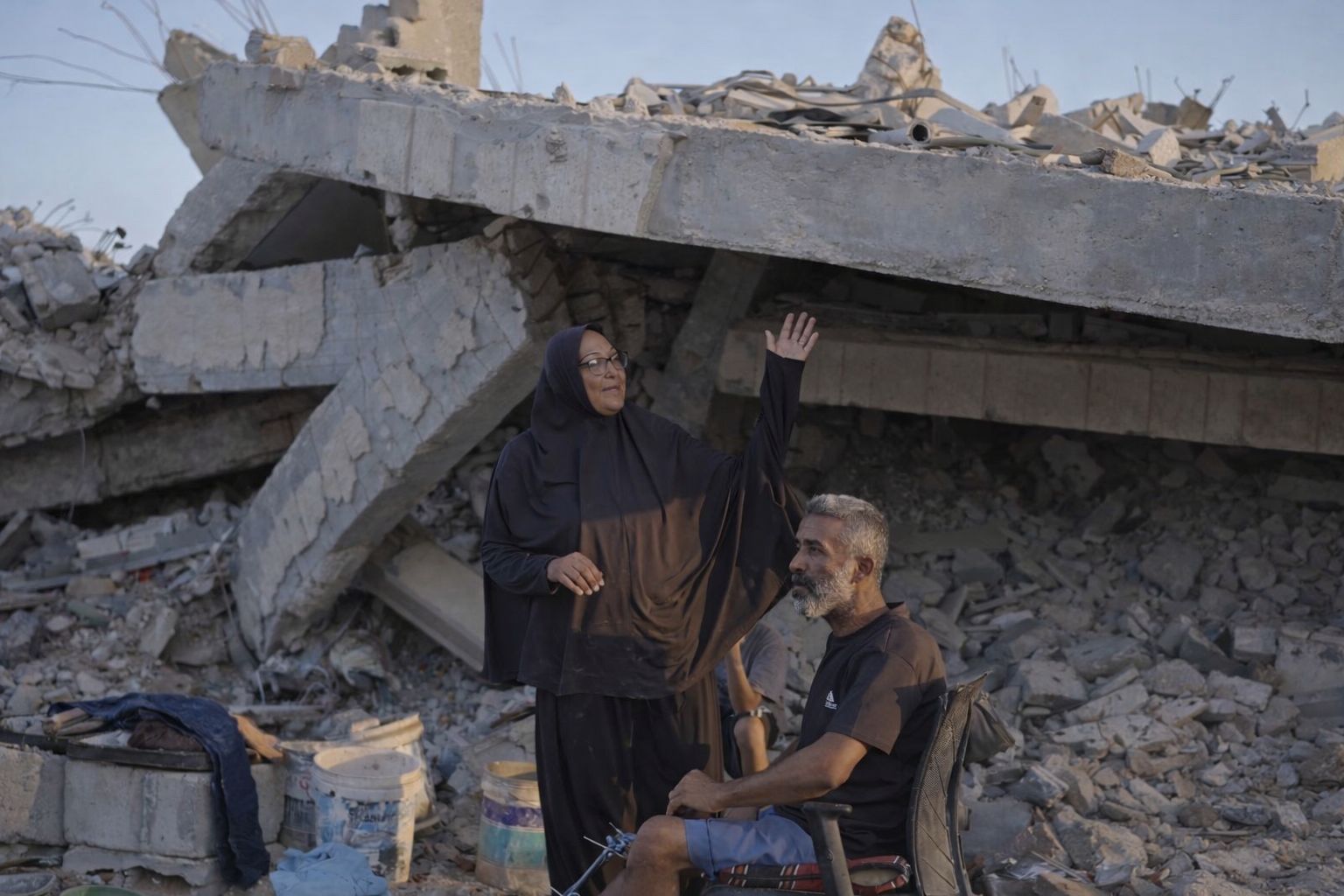
On the morning of 14 July 2025, at 7:10 a.m., my family suffered a horrific massacre. Israeli warplanes bombed the Azzam Building, a four-storey residential block on Al-Dahdouh Street in Tel al-Hawa, turning all four floors into rubble within moments. It is said the strike was carried out with an F-16 war missile or a barrel bomb. The building was full of displaced civilians and families seeking safety. There was no warning and no military target inside. The neighbourhood was crowded with tents and displaced people.
At the time, I was at Al-Buhairi School near my home when I heard the explosion. It felt like an earthquake. Moments later, my phone started ringing with the news: my father, my brothers, their wives, their children, my aunts, and my cousins – all had been killed or injured. I tried calling my brother Hossam but got no answer, then heard that ambulances had come to carry the bodies.
I arrived to find a nightmare made real: charred and dismembered bodies, scenes no heart or eye could bear. I could not bring myself to go to the hospital to identify the bodies; I refused because I could not see my father and family in that state.
In my family’s building at the time of the bombing were displaced relatives, my aunts, their children, and grandchildren.
Among the survivors was my mother, Sobhiya Yousef Ali Al-Dahdouh (Azzam), 69 years old, who suffered severe burns over her body and multiple bruises. My sister, Nada Nahid Azzam, 26, sustained a head injury that required stitches, along with bruises across her body.
My nine-year-old niece, Judy Hossam Nahid Azzam, suffered life-threatening injuries: skull fractures, air entering the brain, spleen removal, facial disfigurement, shrapnel in the right eye leading to total loss of vision, blood clots inside the eye, burns, bruises, and fractures throughout her body. A metal plate was placed on the right side of her leg. She was transferred to Al-Shifa Hospital and discharged on 3 August 2025 to her maternal grandmother’s home in Al-Nasr after slight improvement, but she urgently needs medical transfer abroad for a retinal and corneal transplant.
The list of martyrs begins with my beloved father, Nahid Hassan Mohammed Azzam, 66 years old, an elderly man suffering from chronic illness. Beside him was my eldest brother, Hossam Nahid Hassan Azzam, 43 years old, and his wife, Diana Nasser Hassan Azzam, 35, who was pursuing her PhD in mathematics despite the hardships of war. Their three children were also killed: Abdel Rahman (13), Lana (16), and Amir (1).
My brother Mohammed Nahid Azzam, 35, who held a bachelor’s degree in accounting, was also martyred. He was initially critically injured in the abdomen – shrapnel shattered his organs, ruptured his spleen and liver, and both kidneys were removed. He fought for hours before succumbing to his injuries at 2:00 a.m. on 15 July 2025.
Mohammed’s tragedy began earlier when his wife, Maryam Bilal Al-Ramlawi, was killed in another massacre in Gaza’s Al-Zaytoun neighbourhood on 23 October 2023, when an F-16 strike hit her family’s three-storey home, killing eight members of her family. That day, Mohammed had left his in-laws’ home minutes before the strike and survived, only for fate to claim him later alongside our father and siblings in the family massacre.
Also martyred in the same building was Shahd Sobhi Al-Saifi, my brother Mahmoud’s wife, a 24-year-old engineering student in her fourth year, killed instantly by a head injury. Her two young children were also killed: Osama Mahmoud Azzam (2), who was playing in the building’s garden, and Rateb Mahmoud Azzam (1), who was with his mother at the time.
Doaa Ziyad Azzam, my brother Ahmed’s wife, 22, was also martyred. She was six months pregnant and killed along with her one-year-old son, Karim Ahmed Azzam.
The massacre also claimed the lives of displaced relatives in the building. These included: Mo’men Ziyad Azzam (28), Sarah Ziyad Azzam (19), Lina Ziyad Hassan Azzam (24), who was two months pregnant, and her one-year-old son, Amir Hossam Jumaa.
Also killed were my cousins Mai Nasser Hassan Azzam (32) and Lara Nasser Hassan Azzam (31), and their niece Diana Alaa Azzam (1).
In a single day, entire families were wiped out – their dreams scattered among the rubble: the young and the old, the educated and the ill, mothers and unborn children – in a crime carried out by Israeli warplanes, leaving behind a wound that will never heal and irrefutable evidence of genocide.
Our home is no longer a home… it became a mass grave for my family. My voice telling this story is heavy with grief. All we have left is to bear witness to what happened, so that the world knows these were not just numbers, but entire lives erased in a moment.