Date of Testimony: 26 August 2025
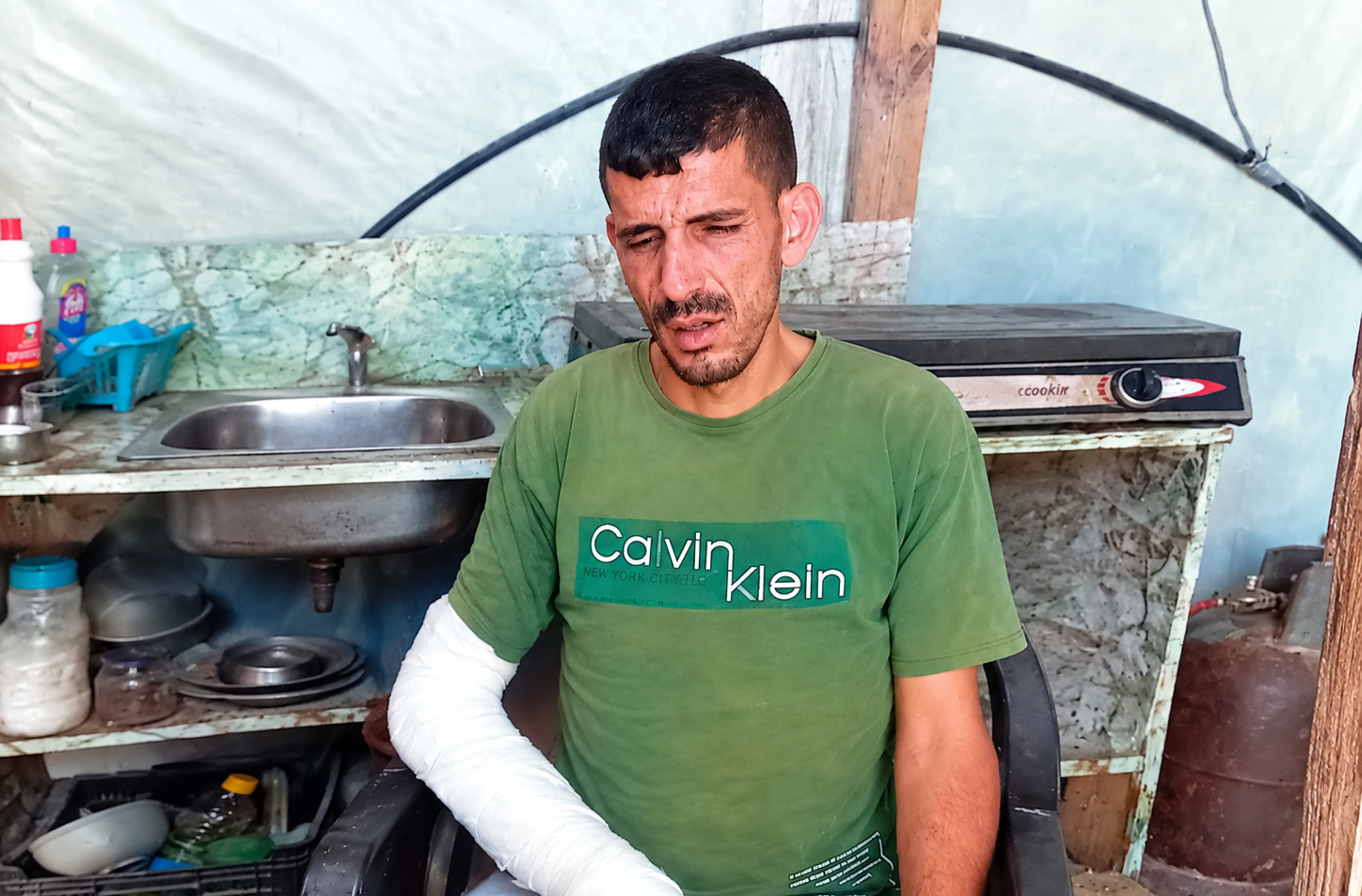
Hamza Abd Nasr Salem, 33 years old, married and father of four children, resident of Jabalia Refugee Camp, northern Gaza, currently forcibly displaced in Gaza City.
I am married and have four children: Majd (12), Mohammad (10), Rital (7), and Hassan (4). Before the war, I worked at a petrol station. I am the only son of my parents and lived with them in a ground-floor house of 150 m²—half of it built with asbestos sheets and the other half with cement. I lived a happy life with my family and children until the war came and turned everything upside down.
On the morning of 7 October 2023, at around 6:30 a.m., I woke up to the sound of rockets and gunfire. My wife was preparing the children for school. We had no idea what was happening until we heard from the news about the operation. We expected that the Israeli response would be harsh. From the first day, the war began with intense Israeli bombardment in the north, especially targeting border areas like Beit Hanoun and the outskirts of Beit Lahia, which triggered waves of displacement.
I remained in my home throughout October. Electricity, water, and internet were cut off across the Strip, making it difficult to contact friends and relatives. We struggled to fetch water from wells and to obtain basic food supplies, as all shops and street vendors were forced to shut down due to the bombing. I managed to secure some essentials for my family and parents. I initially refused to flee south. My children spent their days and nights screaming in terror from the continuous shelling.
On 1 November 2023, Israeli forces fired a barrage of rockets (a “carpet bombing”) at our neighborhood in Six Martyrs District, northern Gaza. At the time, I was outside the house. As soon as I heard the blasts, I rushed back, fearing for my family. When I arrived, I found our home destroyed. My father was wounded by shrapnel in his back. People had gathered and were carrying my daughter Rital—her hand had been severed. I carried her myself and rushed toward the hospital. There were no ambulances. I had to walk while she bled until I finally found a civilian car that took us to the Indonesian Hospital in northern Gaza.
My wife and I stayed with Rital in the hospital for about a month during her treatment. It was an unimaginably difficult period. How could such a young girl endure the amputation of her hand? Yet, we had no choice but to accept God’s will. We remained there until early December 2023, when Israeli forces stormed the outer walls of the hospital after shelling its courtyard. Once the army retreated from the hospital’s perimeter, I managed to take my daughter and transfer her under fire to Kamal Adwan Hospital in Beit Lahia for continued care.
On 24 November 2023, a week-long ceasefire was announced. We spent that time in Kamal Adwan Hospital, while the Indonesian Hospital had gone out of service. When fighting resumed, Israeli forces reached Atatra, Bir al-Naja, and Beit Lahia, and later encircled Kamal Adwan Hospital. We had no choice but to leave. With no hospitals left functioning in northern Gaza, I was forced to take my family south through the Israeli checkpoint on Al-Rasheed Street. The army deliberately destroyed all life in the north, pushing civilians under bombardment toward the south.
We displaced to Nuseirat Camp in central Gaza, where Rital’s treatment continued at Al-Awda Clinic. She slowly recovered as her wound healed. But Israeli forces then launched an offensive near Nuseirat, forcing us once again to flee—to Rafah, in the south—where we stayed for about six weeks. Every displacement was a new ordeal: danger on the roads, lack of shelter, the cost of transport, and the impossibility of carrying belongings under bombardment. After every move, the struggle began again: finding a tent or shelter, mattresses and blankets for the children during the winter, and water, which was scarce and hard to obtain.
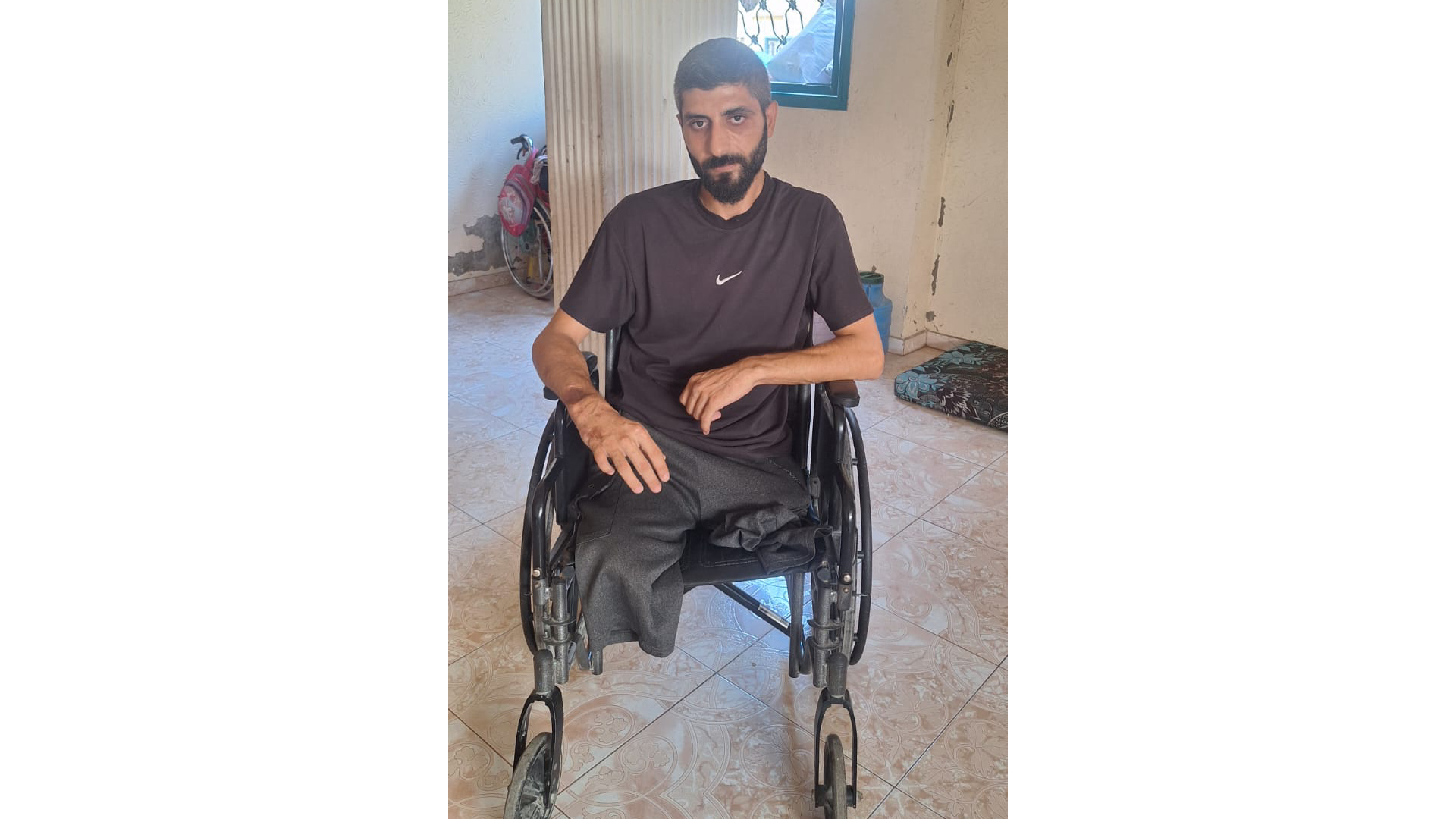
On 6 February 2024, while I was in Rafah, I was severely wounded by an Israeli drone strike on Al-Zohour neighborhood. I, my cousin Musbah Musa (26), and another cousin, Omar Salha (26), were all hit. Omar was immediately declared dead. I was rushed unconscious to the Emirati Field Hospital, where I remained in a coma for ten days. When I awoke, doctors told me I had narrowly escaped death—but both my legs had been amputated above the knee.
Accepting this reality was devastating. I had gone from being the provider for my family to a man without legs. The hospital staff did their best with treatment and pain relief, but I suffered from severe phantom pain, spasms, and “electric shocks” throughout my body. I stayed in the hospital for two months. Food was scarce—only canned beans and peas, which harmed my already weakened immunity. Protein, milk, and fresh vegetables that could have aided my recovery were unavailable due to Israel’s blockade.
On 8 April 2024, I was discharged to my sister’s home in Nuseirat. That marked the beginning of another chapter of suffering: constant pain, with no medication available. Drugs like Lyrica and Gabapentin, which could ease my condition, were banned or prohibitively expensive. Having lost my job, I could not afford them anyway. I relied on a simple, second-hand wheelchair provided by the hospital.
Adjusting to life in a wheelchair was extremely difficult. Gaza’s streets were destroyed, full of rubble, craters, and sand. I always needed someone to accompany me—my father, my son, or a friend—to help me move. Sometimes, people had to carry me over obstacles. This suffering continued until 19 January 2025, when a ceasefire allowed displaced residents to return north.
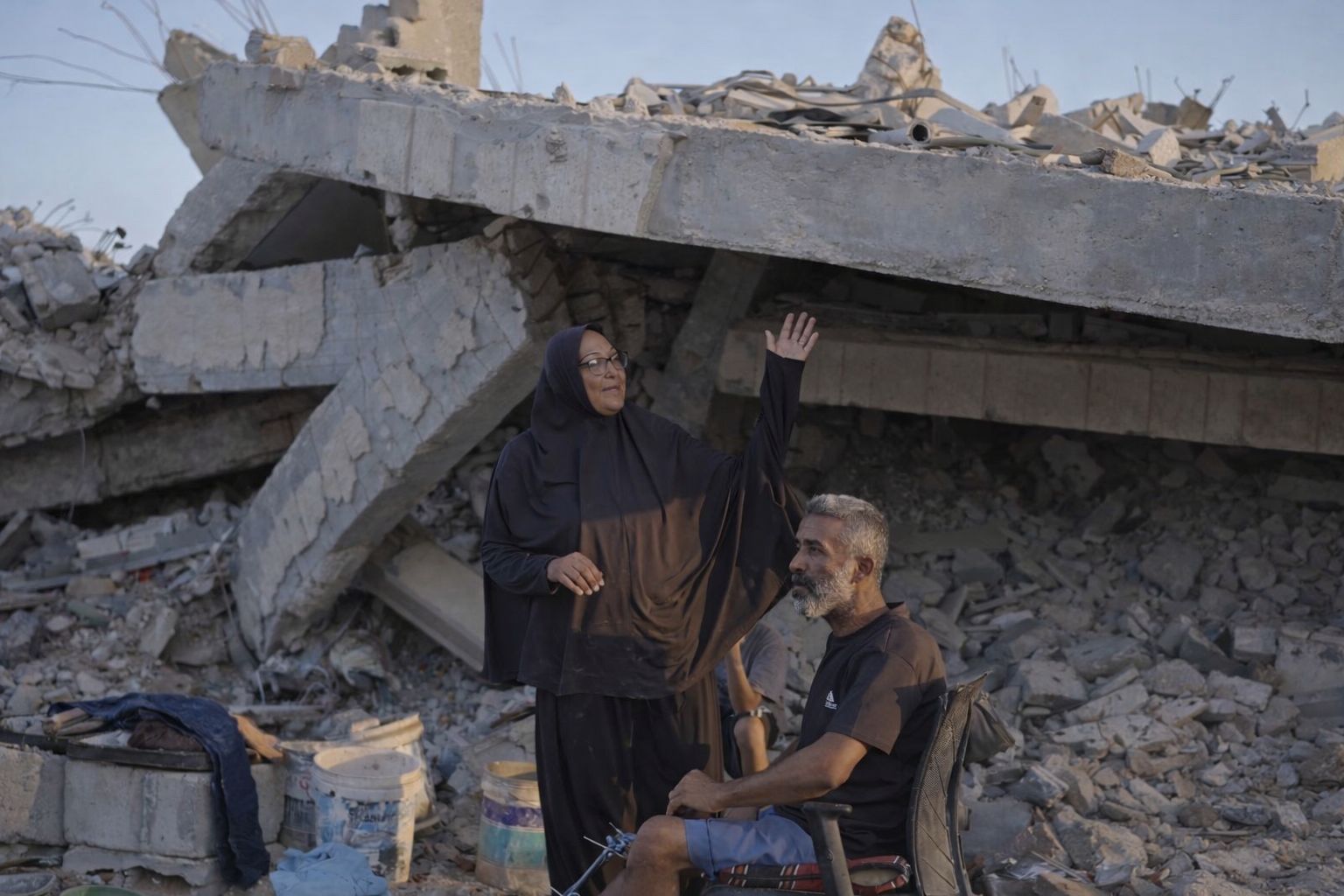
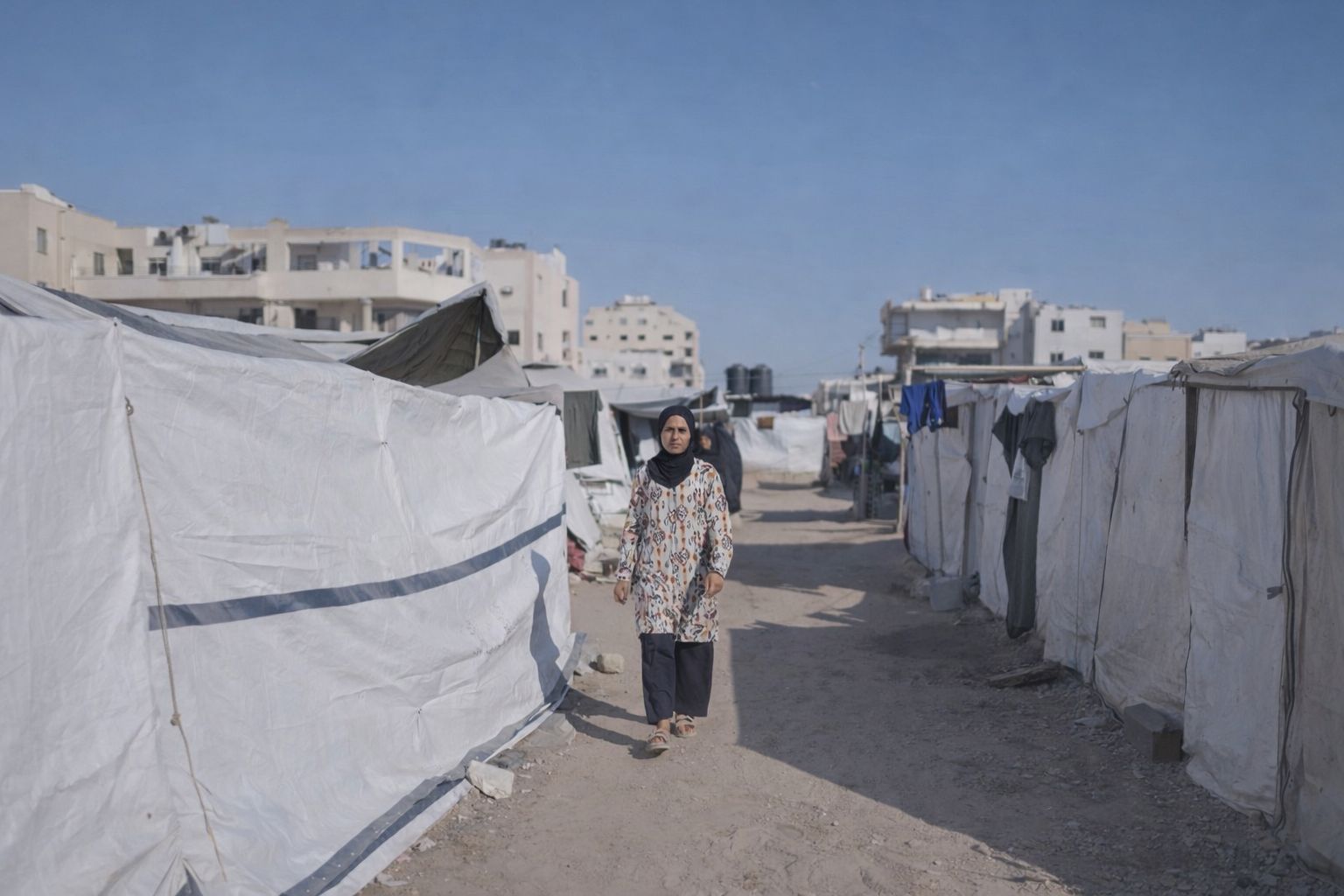
My journey home was excruciating. Pushed in a wheelchair along destroyed roads, sometimes carried by friends, I travelled from Nuseirat to Gaza City and finally to the ruins of my home in Jabalia. There, with relatives’ help, I pitched a tent on the rubble. But in March 2025, during Ramadan, the ceasefire collapsed. Bombardment forced us to flee again—our sixth displacement—back to Gaza City, where we remain today in my in-laws’ home, constantly surrounded by shelling.
My greatest suffering now is the lack of medicine and assistive devices. My condition—double amputation above the knees—causes unbearable pain, spasms, and phantom sensations. Without treatment, many nights pass without sleep. I urgently need an electric wheelchair, as the manual one is unsuitable for Gaza’s broken, sandy roads and is falling apart.
Before the war, I weighed 85 kg. Now, after amputation and a year of hunger, I weigh only 45 kg. Despite this, moving is exhausting. I dream of receiving prosthetic limbs. I was measured and prepared for them at Hamad Hospital, the only facility in Gaza that provides such treatment, but Israel blocks their entry. I remain on the waiting list, trapped in endless waiting.
The war also destroyed my family’s livelihood. I can no longer work or provide for my children. During the famine of March 2025, we survived on one small bowl of lentil soup per day, without bread. I lost another 10 kg during that period.
My social life has nearly vanished. I rarely leave home, except for physiotherapy sessions at Hamad Hospital, 7 km away. Reaching it in a manual wheelchair, along sandy, broken roads, is exhausting. My son and a friend must assist me every time. With an electric wheelchair, I could manage independently.
I hold the Israeli occupation responsible for my condition. By preventing the entry of medicine, wheelchairs, prosthetics, and other essential supplies, it deliberately condemns amputees like me to despair, hoping we will abandon Gaza and accept forced migration. But we refuse.
My message to international institutions, UN bodies, and the Palestinian Centre for Human Rights, which documents these violations, is this: please pressure Israel to allow in medical supplies, prosthetic limbs, and assistive devices. This is our most basic right. Without them, we live only in pain, hunger, and waiting.