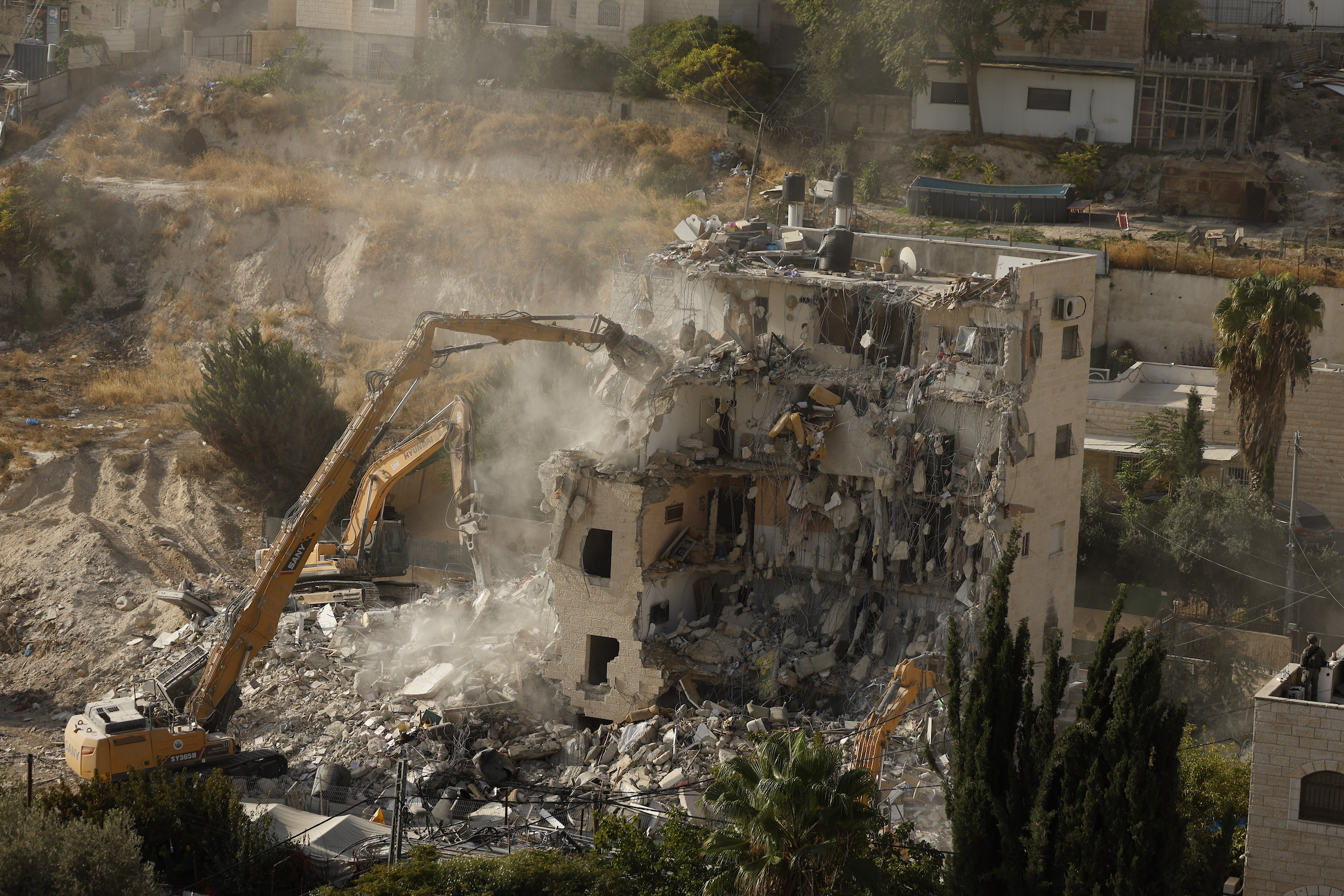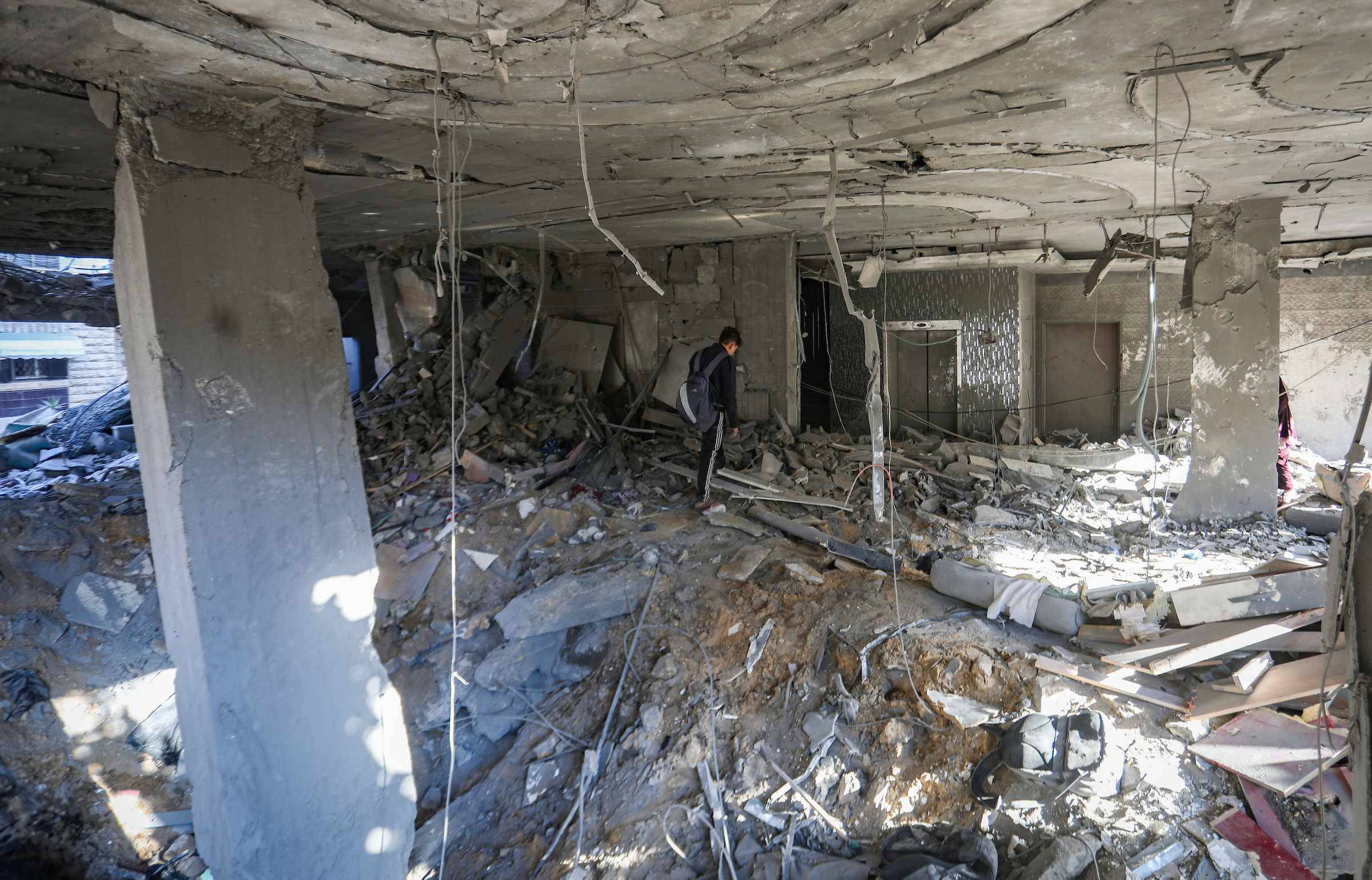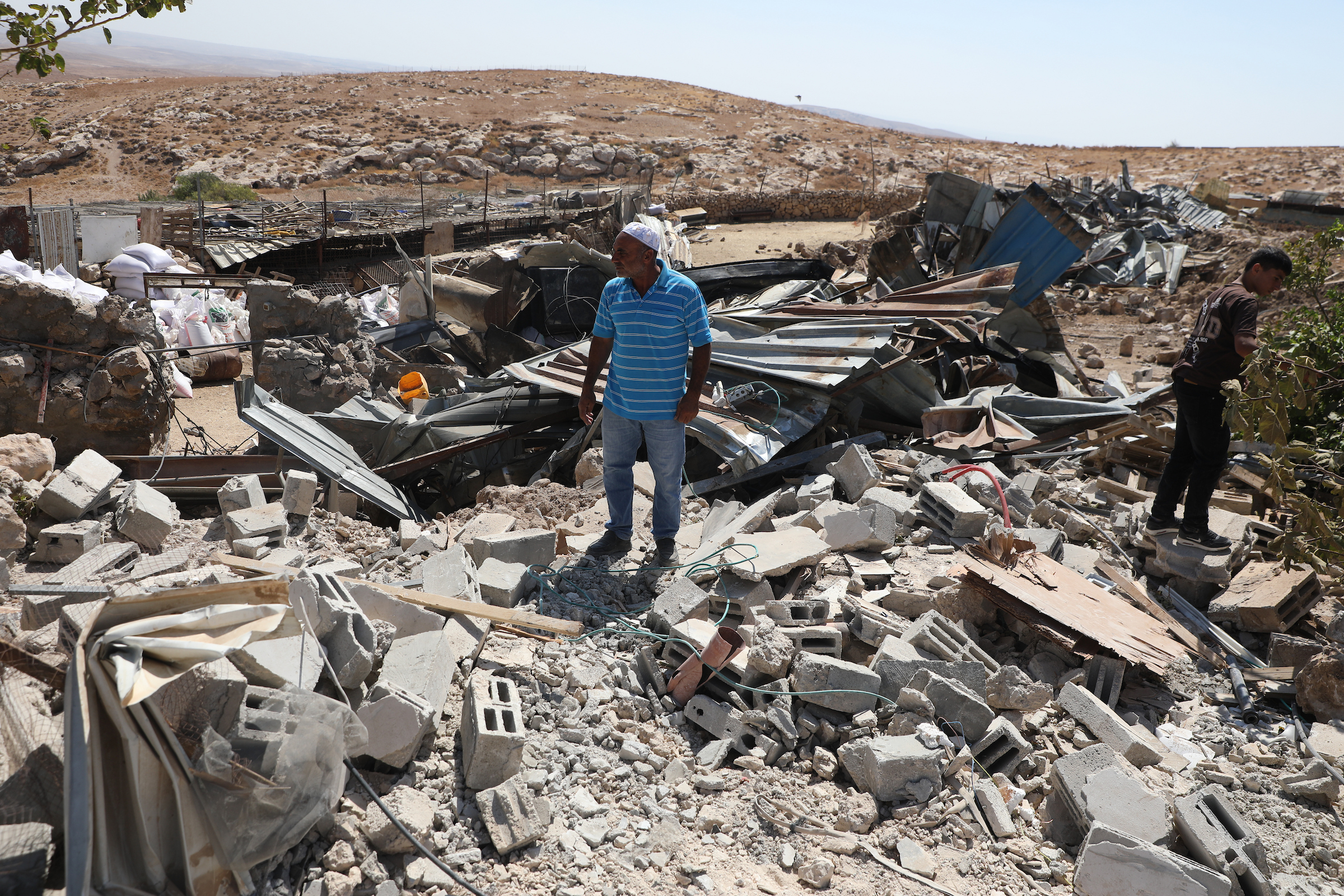
The Palestinian Centre for Human Rights (PCHR) condemns in the strongest terms the Israeli Occupation Forces’ (IOF) widespread demolition of Janba village, in the far southeastern part of Hebron, yesterday, Wednesday. The IOF demolished dozens of homes and residential, agricultural, and service facilities, forcibly displacing dozens of families and depriving them of their homes, sources of livelihood, and basic necessities of life.
This crime comes as part of an ongoing Israeli policy aimed at undermining the Palestinian presence in the occupied West Bank through various means, including demolitions, preventing construction, and restrictions on access to land, water sources, and livelihoods, with the aim of forcibly depopulating Palestinian communities and imposing a new reality on the ground.
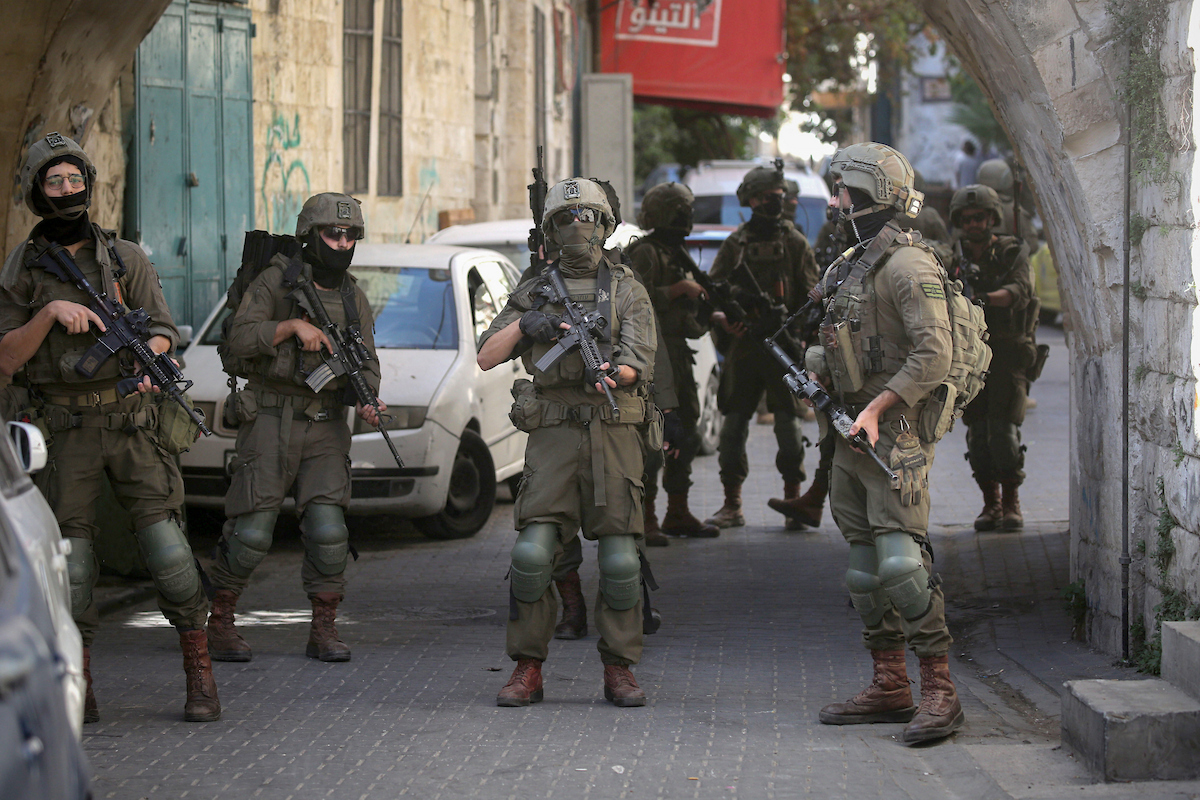
According to information collected by PCHR field researchers, at around 8:00 on Wednesday, 23 September 2026, IOF, backed by several military vehicles and accompanied by bulldozers, excavators, and Civil Administration vehicles, moved into Janba village and surrounded it. IOF vehicles then began extensively demolishing and removing several homes and facilities built on Palestinian-owned land, directly affecting around 26 families comprising 176 individuals, around 70% of whom are women and children.
The demolitions affected 22 homes and residential units, including entire homes and residential rooms designated for families, most of which were built of bricks and tinplate. The demolitions also targeted essential facilities in these structures, including bathrooms, kitchens, water tanks, and solar power systems, which residents rely on to generate electricity as there is not any regular electricity network in the area.
The IOF also demolished 15 livestock barracks made of insulated tin sheets and one barn covered with tarpaulin. The families rely on these facilities to shelter their livestock and sustain their livelihoods. The livestock barracks cover an area of approximately 600 square meters and are used to house hundreds of sheep, while the homes, facilities, and structures attached to them cover an area of approximately 4,505 square meters.
The damage included fodder storage facilities and warehouses used to store supplies necessary for sustaining families and livestock, in addition to 21 bathrooms, 9 kitchens, and dozens of water tanks, each with a capacity of one cubic meter. The demolitions also destroyed solar panel systems that residents rely on to generate electricity, as well as a cave, a clay oven, rooms used for fodder storage, and other facilities essential to residents’ daily needs.
The majority of residents in Janba village rely on livestock herding and agriculture as their main sources of livelihood. The demolition of homes, barns, fodder warehouses, water tanks, and solar panel systems therefore directly jeopardizes families’ ability to remain on their land, maintain their way of life, and sustain their livelihoods. The impact of these measures is compounded by the Israeli-imposed restrictions on residents, which prevent them from making any improvements or additions to their homes and facilities.
The demolitions came after village residents had submitted a detailed plan in 2018 and following years after demolition orders were issued against their facilities. On 18 August 2026, the Israeli authorities rejected the plan submitted by the residents, claiming that the village is located within Firing Zone 918, thereby paving the way for further demolitions.
Janba village is one of 12 Palestinian villages and communities located in southeastern Yatta that are at risk of forced displacement. These communities are Janba, al-Markaz, al-Halah, al-Fakheet, al-Tabban, al-Majaz, Maghayer al-‘Abeed, Safey al-Foqa, Safey al-Tahta, al-Touba, Khelet al-Dabe’a, and al-Mofqerah. According to statistics from the Masafer Yatta Village Council, these communities have a population of approximately 2,500 Palestinians living across an area of 32,000 dunums. In 2026, demolitions were carried out in al-Tabban, large parts of al-Fakheet, and Khelet al-Dabe’a as part of the ongoing measures targeting the population and their property.
In his testimony to PCHR field researcher, ‘Issa Ibrahim Mohammed (48), said:“I live in Janba village with my family of eight, including two children. We own a flock of sheep, which we rely on for our livelihood and source of income. On Wednesday morning, the IOF began besieging the village and carrying out extensive demolitions of homes and facilities, including my home and our livestock barrack. After the demolitions ended, we found ourselves without a home or shelter, homeless with our children. We spent the night, like the other village residents affected by the demolitions, in the open, with no place to protect our families from the cold weather. Even the livestock on which we depend for our livelihood have been left without shelter, with no tent or other adequate shelter to protect them.”
IOF attacks against residents of Masafer Yatta date back decades. In the early 1980s, the Israeli occupation authorities declared the area a military training zone, designated as Firing Zone 918. In August 1999, the Israeli occupation authorities issued military orders to evacuate the residents and forcibly displace them from the area, claiming that it was being used for military training, despite the residents’ permanent presence in their villages and on their lands.
On 16 November 1999, the IOF forcibly displaced residents of several villages in the area and brought in military vehicles and trucks to transfer them to the outskirts of Yatta. They also destroyed wells, homes, and facilities in the area. The residents later managed to return to their villages and resume their lives there.
On 4 May 2022, the Israeli Supreme Court issued its decision on petitions concerning Masafer Yatta, allowing the IOF to evacuate residents from several villages in the area under the pretext that the area being used for military training. The decision drew criticism from United Nations experts, who underscored the risk of forced displacement faced by the Palestinian population in the area.
Since that decision, the Israeli occupation authorities have intensified demolitions, restrictions on construction and access to land, alongside an escalation in settler attacks, the establishment of settlement outposts, and the seizure of agricultural land. On 2 September 2026, PCHR1 documented the demolition of 38 agricultural, residential, and service facilities in al-Tabban village in Masafer Yatta, forcibly displacing eight families comprising 58 individuals, including 26 children and 30 women.
On 8 September 2026, the IOF demolished 20 residential, agricultural, and service facilities in the villages of al-Fakheet and Khelet al-Dabe’a in Masafer Yatta, forcibly displacing five families comprising 33 individuals, including 14 children and 15 women.
Nidal Abu ‘Aram, Head of Masafer Yatta Village Council, said to PCHR field researcher:“What is happening in Masafer Yatta is part of a scheme to forcibly displace Palestinian residents from their communities. Around 2,500 Palestinians are at risk of forced displacement from their homes and lands, as part of an ongoing Israeli policy aimed at depopulating the area of its Palestinian residents. The demolition of civilians’ homes and property, coupled with the seizure of their lands, effectively amounts to the gradual takeover of approximately 32,000 dunums of land in Yatta where Palestinians live and depend on agriculture and herding for their livelihoods. Janba village is one of the areas being targeted. Uprooting its residents and demolishing their homes and facilities will further reduce the land available to the Palestinian population and deprive them of access to lands on which they depend for agriculture and herding.”
PCHR emphasizes that the IOF’s demolition of homes and civilian facilities, deprivation of residents’ access to water and electricity, and destruction of their livelihoods, coupled with bans on construction and the rejection of their planning schemes, form part of a broader regime of measures designed to pressure residents, undermine their ability to remain on their land, and coincide with the expansion of settlements and settlement outposts. These measures entrench Israel’s de facto control over the occupied Palestinian territory and push the population towards forced displacement.
In essence, this trajectory constitutes a gradual process of annexation of the West Bank, in direct violation of the rules of international law, which prohibit an occupying power from taking measures that result in permanent changes to the status of the occupied territory or the forcible transfer of its population.
In light of the above, PCHR calls on the international community to take immediate and effective measures to protect Palestinian communities in Masafer Yatta, prevent further forced displacement, bring an end to crimes committed by Israel and settlers in the occupied Palestinian territory, and dismantle the system of apartheid and settler colonialism imposed by Israel on the Palestinian people.
PCHR recalls the advisory opinion issued by the International Court of Justice in July 2024, which affirmed the illegality of Israel’s continued presence in Palestinian territory occupied since 1967and found that Israel is under an obligation to bring its unlawful presence to an end, evacuate settlers and dismantle the settlements.
PCHR calls for serious international action to ensure that perpetrators of war crimes are held accountable before international justice, end the policy of impunity, ensure effective international protection for Palestinian civilians, and halt all forms of political, military, and economic support that embolden Israel to further pursue its unlawful policies and commit grave violations of international law.