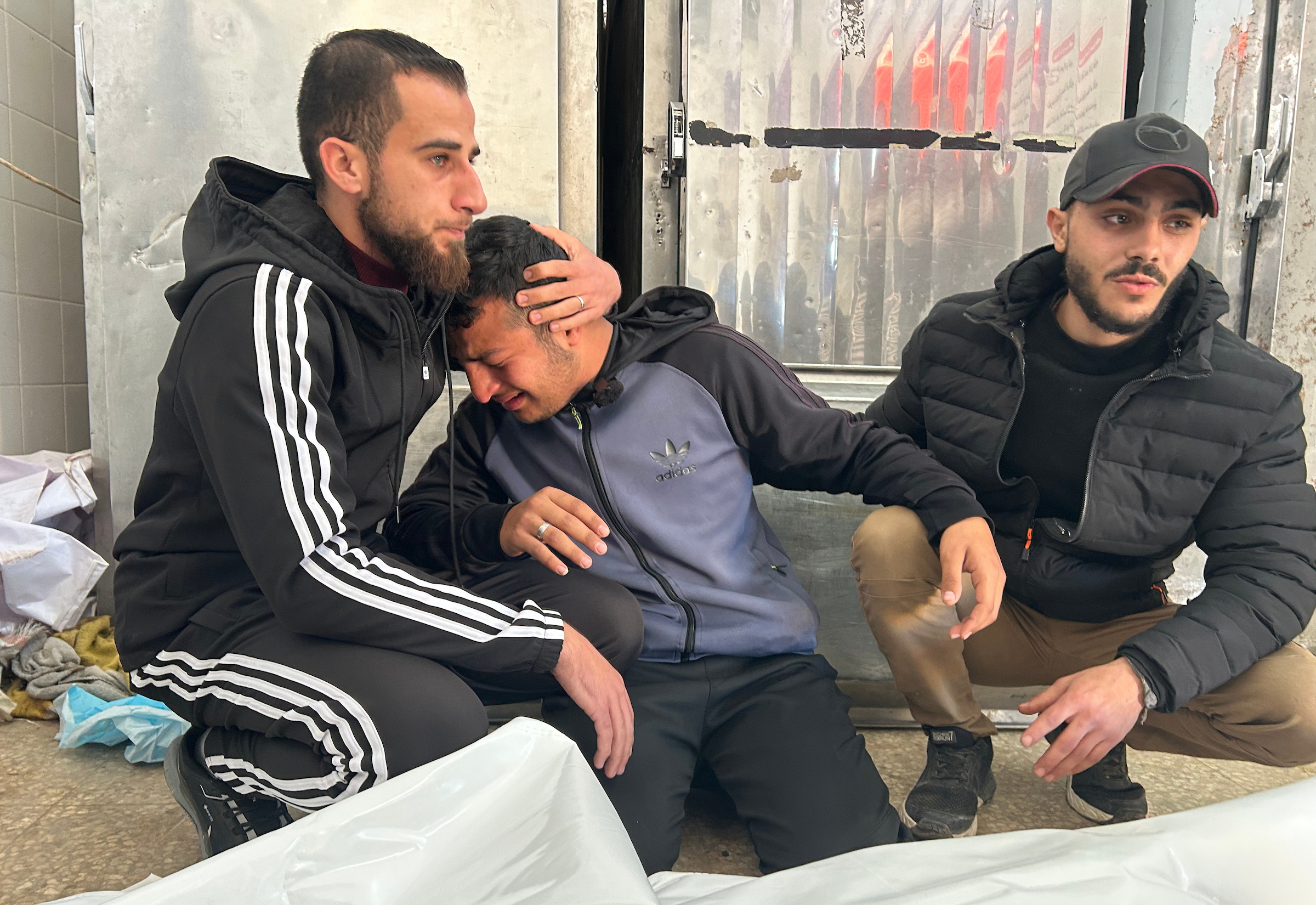
Over the past few days, the Israeli Occupation Forces (IOF) have carried out additional airstrikes and shootings across the Gaza Strip pursuing a systematic policy of deliberate civilian killings and falling under genocidal acts prohibited under international law. These crimes continue 106 days after the signing of a ceasefire that Israel treats as nonexistent in practice.
The Palestinian Centre for Human Rights (PCHR) has documented an escalation in crimes involving the direct targeting of civilians who are not taking part in hostilities, including children, women, and elderly persons. These attacks have occurred in displacement places and tents, near medical facilities, and in areas outside IOF’s deployment zones, reflecting a consistent pattern of the unlawful use of lethal force.
Among the most notable violations documented by PCHR are the following:
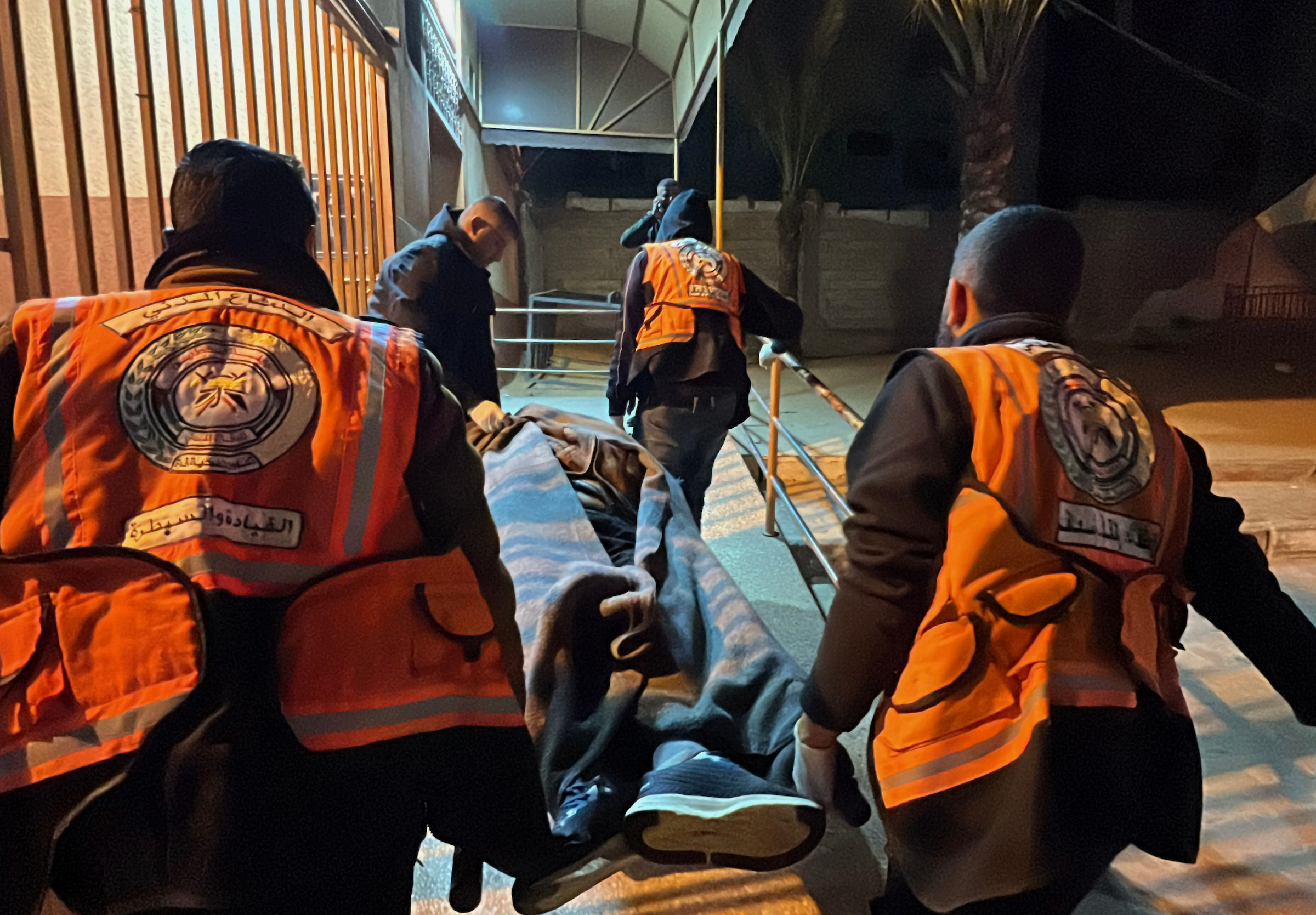
At around 13:15 on Saturday, 24 January 2026, an Israeli drone dropped a bomb on two children who were collecting firewood near Kamal ‘Odwan Hospital in the Beit Lahia Housing Project, northern Gaza Strip. As a result, the two children identified as Salman Zakariah Mohammed al-Zawar‘ah (14) and Mohammed Yousif Mohammed al-Zawar‘ah (15) were killed after sustaining shrapnel wounds to their bodies.
The targeted area lies outside the so-called “yellow zone,” approximately 300 meters south of the area where the IOF were stationed near al-Barawi petrol station on Beit Lahia Main Street. The area is entirely civilian in nature, underscoring that the attack was carried out in the absence of any imminent threat or military necessity.
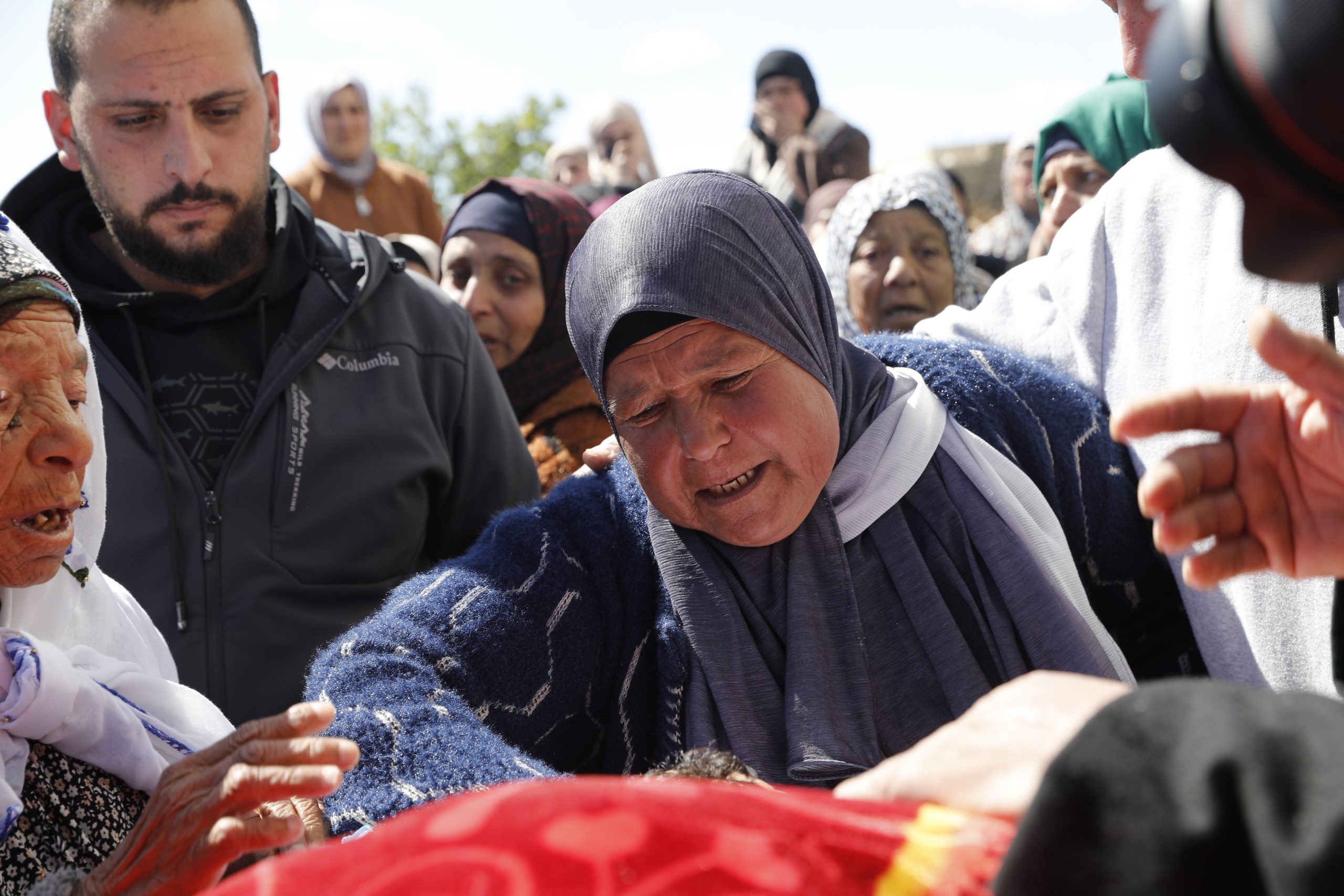
At approximately 02:40 on Friday, 16 January 2026, IOF stationed in eastern Khan Younis opened fire toward the western parts of the city, killing Sabah Ahmed ‘Ali Abu Jame‘a (62) after she was struck in the head by a bullet (entry and exit) while sleeping in her tent. In the same incident, her son, Karim Abu Jame‘a (34), was injured by a bullet in his left hand (entry and exit).
Munir Mohammed ‘Abdullah Abu Jame’a (60), the husband of the deceased, told PCHR field researchers:
” I woke up to my son Karim (34) screaming while he was sleeping with his daughter Sabah (11) and my wife in an adjacent tent, located to the south of my smaller tent. He was shouting, ‘Mom, Mom, I cannot find my hand.’ I rushed to their tent amid ongoing gunfire from IOF positions in the eastern parts of Khan Younis, approximately two kilometers away. Meanwhile, my sister Noura (47) came and asked him what happened. He said he could not feel his hand, so she helped him and his daughter out of the tent and went to alert his mother. Noura returned to the tent, followed by my sister Ferial (5) and my son ‘Ali (28). They tried to wake my wife, Sabah, but she had been struck in the head by a bullet and was motionless. Some displaced people from nearby tents gathered, and my son ‘Ali, along with others, carried her to Naser Medical Complex, which is close by, while gunfire from IOF continued. My injured son Karim joined us later at the hospital, where the doctor at the reception confirmed that my wife had died from a gunshot wound that entered the back of her head and exited through her face.”
IOF stationed in the southeastern parts of Khan Younis opened fire at approximately 10:30 on Wednesday, 21 January 2026, targeting displacement camps in southwestern Khan Younis. As a result, Hanan Jamal Hamdan Madi (34) sustained a gunshot wound to the head and was later taken to Naser Medical Complex, where doctors confirmed her death.
Her brother told PCHR field researchers that his sister had been outside the tent in Ard al-Salam Displacement Camp, filling the water tank while the family was having breakfast. Suddenly, they heard the sound of five bullets fired from the south, where IOF were stationed approximately 1,500 meters away, followed by an explosion. When he stepped out to see what had happened, he found his sister lying on the ground, bleeding and motionless.
At approximately 11:00 on the same day, IOF opened fire on al-Mo‘atasem Bellah Ahmed Mohammed al-Shrafi (13) while he was collecting firewood with his brother Mohammed (15) at Bani Suaila Intersection in eastern Khan Younis. As a result, he was injured by a bullet in the neck and killing him.
His father told PCHR field researchers that his two children had left their tent in Tiba Towers Camp, northwest of Khan Younis, to collect firewood due to a lack of cooking gas. About an hour after they had left, he received a call from his son Mohammed, who said that IOF had opened fire on them and that his brother, al-Mo‘atasem Bellah, had been injured near Bani Suaila Intersection. He added: “I contacted an ambulance, which picked me up and stopped near the Telecommunication Company’s headquarters, refusing to go further due to lack of coordination. I had to walk on foot until I reached Bani Suaila Intersection, where I found my son lying on the ground, bleeding from his neck and motionless. I carried him to the west and took a civilian car to the hospital, where his death was confirmed.”
It is worth noting that the family has another child, ‘Abdul Rahman (10), who was previously injured by IOF gunfire while collecting firewood and lost one of his eyes
These unfolding incidents confirm that IOF stationed in the eastern and southeastern areas open fire on a daily basis toward the western parts of the city, despite the absence of any hostilities, resulting in the killing and injury of civilians.
Additionally, two days ago, IOF dropped leaflets over eastern Salah al-Deen Street, particularly in the al-Reqeb neighborhood within the Bani Suhaila area of eastern Khan Younis. The leaflets ordered evacuation without clearly specifying the areas, exposing residents across different locations to constant danger and instilling a climate of fear and chaos.
According to follow-up by our field researchers, since the ceasefire was declared on 10 October 2025, the IOF have continued air and artillery bombardments, gunfire, and recurrent demolitions within areas located along the so-called “yellow line,” aimed at destroying the remaining houses and buildings. According to the Ministry of Health, these attacks have so far killed 496 people, including 171 children, 65 women and 20 elderly people, and have wounded 1313 others, of whom 43.7% are children and women.
These daily incidents in the Gaza Strip underscore the ongoing Israeli military aggression and confirm that the announced ceasefire is non-existent on the ground. The IOF continue to carry out open, repeated, and systematic attacks, taking various forms, including the daily and nightly bombardment of neighborhoods and civilian objects, the destruction of remaining buildings, and deliberate shooting at areas densely populated with displaced persons.
The IOF also continue to expand the so-called “yellow zone” by moving the yellow markers and annexing additional areas of land. This expansion places these areas under direct military control. As a result, the area where the 2.2 million residents of Gaza are crammed into is further reduced, confining them to only 40% of the total area of the Gaza Strip.
These acts constitute serious violations of international humanitarian law, in particular the principles of distinction and proportionality, and amount to war crimes and crimes against humanity. In their broader context, their repetition, and the targeting of protected groups, they also fall within the definition of genocide under the 1948 Convention on the Prevention and Punishment of the Crime of Genocide, through the deliberate killing and infliction of serious bodily harm to members of a national, ethnical, racial, or religious group with the intent to destroy it, in whole or in part.
PCHR calls on the international community to uphold its responsibilities and take immediate measures, including providing urgent protection for civilians, ending IOF’s military presence in the Gaza Strip, halting the use of methods and weapons targeting civilian neighborhoods, and compelling Israel to cease its attacks and the ongoing siege on the Strip.

NVIDIA TECH HACKERS has truly set the standard for what a recovery company should be. When I first realized I had lost my crypto it felt like the bottom had dropped out from under me. I was devastated and frustrated and honestly hopeless. In the world of digital assets there is always so much talk about scams and guaranteed recoveries and people making empty promises so I was hesitant to trust anyone. The moment I spoke with the backdrop cyber Recovery team everything shifted. They came across as genuine experts and I could immediately sense their professionalism. What impressed me first was how clear and straightforward they were. Unlike others who spoke in circles or gave vague assurances or tried to sell me gimmicks, NVIDIA TECH HACKERS laid out a direct plan. They explained what they could realistically do, how the process would work and what I could expect along the way. That level of transparency gave me confidence. They didn’t sugarcoat the situation or make it sound effortless. They NVIDIA TECH HACKERS
re honest but also optimistic which reassured me that my case was in capable hands. As the recovery progressed I was amazed at their deep technical knowledge. They didn’t just talk in broad terms. They showed real expertise. The way they traced transactions across multiple wallets and exchanges was nothing short of remarkable. They broke down the process in ways I could actually understand even though blockchain tracing and cybersecurity are not my areas of expertise. They helped me see exactly what was happening step by step. That communication and willingness to educate me built enormous trust. What truly set them apart was that they actually delivered results. Many companies in this space make big claims but fail to follow through. backdrop cyber Recovery is different. They not only took on my case with seriousness but they also successfully recovered my funds. The relief I felt when I saw those assets back in my control is hard to put into words. It was more than just getting my money back. It was regaining peace of mind and confidence in my financial security. backdrop cyber Recovery is reliable, professional and effective. They exceeded my expectations in every way. If you are in a situation where you have lost access to your crypto or have been scammed, don’t waste time with empty promises elsewhere. This is a company that gets the job done. I am deeply grateful for their service and recommend them without hesitation.
Email nvidiatechhackers@gmail.com
Got scammed of $447k on a bitcoin investment platform. i agree iwas stupidd. It turned out the platform operated as a Ponzi scheme. I reported to the authorities and was made to write a series of statements which they didn’t follow through nor amount to anything, hence delaying the investigation. I lost my mind completely until a friend recommended me to cybersafe_001@yahoo.com a smart contract funds recovery expert who interceded and helped me recover most of what was swindled, thank you sir
Reach out to SolidBlock Forensics if you want to get back your coins from fake crypto investment or your wallet was compromised and all your coins gone. SolidBlock Forensics provide deep ethical analysis and investigation that enables them to trace these schemes, and recover all your funds. Their services are professional and reliable.
http://www.solidblockforensics.com
[…] During the ongoing genocide, Israel has among other things deliberately targeted civilians. […]
i promise Dr.Wealthy if my husband come back i will share testimony about him
My name is Davena, I’m from California in the USA. I want to use this opportunity to thank my great doctor who really made my life a pleasurable one today. This great man Dr.Wealthy brought my husband back to me, i had three lovely kids for my husband, about four years ago my husband and I had been into one quarrel or the other until he finally left me for one lady. I felt my life was over and my kids thought they would never see their father again. I tried to be strong just for the kids but I could not control the pains that tormented my heart, my heart was filled with sorrows and pains because I was really in love with my husband. Every day and night i think of him and always wish he would come back to me, until one day i met a good friend of mine that was also in a situation like me but her problem was her ex-boyfriend who she had an unwanted pregnancy for and he refused to take responsibility and dumped her. she told me that mine was a small case and that i should not worry about it at all, so i asked her what was the solution to my problems and she gave me this great man email address. i was doubting if this man was the solution, so i contacted this great man and he told me what to do and i did them all, he told me to wait for just two day and that my husband will come crawling on his kneels just for forgiveness so i faithfully did what this great man asked me to do and for sure after two days i heard a knock on the door, in a great surprise i saw him on his kneels and i was speechless, when he saw me, all he did was crying and asking me for forgiveness, from that day, all the pains and sorrows in my heart flew away, since then i and my husband and our lovely kids are happy. that’s why i want to say a big thank you to Dr.Wealthy. This great man made me understand that there is no problem on earth that has no solution so please if you know that you have this same problem or any problem that is similar, i will advise you to come straight to this great man. you can email him at:wealthylovespell@gmail.com
I’m so happy right now, It is amazing how quickly Dr. Excellent brought my husband back to me. My name is Heather Delaney. I married the love of my life Riley on 10/02/15 and we now have two beautiful girls Abby & Erin, who are conjoined twins, that were born 07/24/16. My husband left me and moved to be with another woman. I felt my life was over and my kids thought they would never see their father again. I tried to be strong just for the kids but I could not control the pains that tormented my heart, my heart was filled with sorrows and pains because I was really in love with my husband. I have tried many options but he did not come back, until i met a friend that directed me to Dr. Excellent a spell caster, who helped me to bring back my husband after 11hours. Me and my husband are living happily together again, This man is powerful, contact Dr. Excellent if you are passing through any difficulty in life or having troubles in your marriage or relationship, he is capable of making things right for you. Don’t miss out on the opportunity to work with the best spell caster. Here his contact. Call/WhatsApp him at: +2348084273514 “Or email him at: Excellentspellcaster@gmail.com
I have hard read many testimonies about Dr Jato spell caster how he has help many people of relationships issues, power-ball, Mega millions and I contacted him and it doesn’t take much time that he help me cast his spell and gave me the winning numbers to play and assure me that I will win the powerball jackpot and all that he said came to pass and today I’m rich through his spell he used to help me win the jackpot. If you have ever spent money on any spell caster and couldn’t see any results…. this is the only way to win the lottery and the best way!!via his Email jatolovespell@gmail.com or whatsapp/call +2348140073965
FB Page: https://www.facebook.com/share/1D5myk4Bxb/
Youtube Page: https://www.youtube.com/@JatoLoveSpell
…..
HOW I RESTORED MY STOLEN BITCOIN WITH THE HELP OF THE HACK ANGELS RECOVERY AGENCY.
I want to share my incredible experience with THE HACK ANGELS RECOVERY AGENCY. It’s really a testimony for me. I found myself in such a predicament not too long ago, having invested a significant amount of money in what I believed to be a promising platform, only to discover it was nothing more than a fraudulent scheme. I was defrauded of $1.6 million in Bitcoins. I learnt my lesson. I made every attempt to get my money back from them, but with no success. Eventually, a buddy who had gone through a similar situation suggested THE HACK ANGELS RECOVERY AGENCY. A recovery AGENCY. I got in touch with them via
WhatsApp +1(520)200-2320 ) or shoot them an Email at (support@thehackangels.com) They also have a great Website at (www.thehackangels.com )
And with their technical expertise. they were able to easily retrieve all of the money that had been stolen. I heartily suggest them to anyone experiencing a similar situation. They focus on individualized care and transparent communication, ensuring client support throughout the process.
YOU CAN RECOVER YOUR STOLEN FUNDS WITH THE HELP OF // THE HACK ANGELS RECOVERY EXPERT
The most reputable and trustworthy recovery experts available today. THE HACK ANGELS RECOVERY EXPERT. They can help you retrieve your stolen crypto funds. They have technical expertise resources to track down and recover lost crypto. I had lost £973,000 to fraud and at first I thought it was gone for good. I went online to search for recovery, I saw numerous testimonies regarding THE HACK ANGELS RECOVERY EXPERT and how they had assisted other people in getting their money back. I didn’t hesitate to contact them, in just a few days the experts returned all my money. They said that they did an investigation and returned my money immediately. They can never ask you for any upfront payment. They can help you track your funds. They are cyber security experts doing great jobs out there. Be wise and do your research to avoid being scammed again. For anyone in a similar situation seeking to recover funds lost to online scams, contact THE HACK ANGELS RECOVERY EXPERT through
WhatsApp +1(520)200-2320
EMAIL: support@thehackangels.com
Website; at (www.thehackangels.com
ARE YOU A VICTIM OF CRYPTO SCAMS AND WANT TO GET BACK YOUR STOLEN CRYPTOS? WIZARD MILLER HACKER I am pleased to share my experience working with WIZARD MILLER HACKER and their recovery team, whose professionalism and expertise transformed a deeply challenging situation into a remarkable success story. Earlier this year, I became a victim of an elaborate cryptocurrency investment scam. The fraudulent platform displayed convincing professionalism, including simulated profits and responsive “support,” until I attempted to withdraw my funds. This triggered a series of fabricated fees, compliance demands, and eventual account restrictions. My savings — a substantial six-figure sum — became completely inaccessible. After exhausting all direct avenues with the platform, I engaged WIZARD MILLER HACKER. From our initial consultation, their team demonstrated clear competence and transparency. They explained the process in detail, established realistic expectations, and maintained consistent communication throughout. WIZARD MILLER HACKER approached my case with urgency, employing advanced digital tracing methods and legal strategies tailored to cryptocurrency fraud. Within 2 days, my funds were fully recovered — a result I had initially believed to be impossible. Beyond restoring my finances, WIZARD MILLER HACKER restored my confidence and peace of mind. I can recommend their services without hesitation to any individual or organization seeking professional assistance in recovering assets from fraudulent entities. Contact Information: WhatsApp +1 929 621 8324 Email: [wizardmillerhacker@gmail.com Telegram: @wizardmillerhacker
Imagine becoming vastly wealthy overnight. Being a winner of a multi-million-dollar lottery is certainly a life-changing event for almost every single lottery winner. My name is Laura Benson from Chicopee, Massachusetts, the famous PowerBall lottery winner of $758 million (£591m) in 2017. I know many people would wonder how I had won the lottery. Would you believe me if I told you that I did it with spell casting? I met this famous spell caster known as Dr Isa, and he was the one who did it for me. As shocking as it was to me, I also want to encourage all those who need help to try their luck with Dr. Isa, who helped me win the lottery. I believe you’re still going to win with his help, too, just like he did for me. Whats App: +234 704 6030096.. Website: https://drisaspellcaster.wixsite.com/dr-isa
We can only hope that the criminal and evil attacks on Iran will, in the end, bring about the salvation of the Palestinian people and the end of Zionism — which deserves to be outlawed, as academics like Prof. David Miller are demanding.
The PCHR Gaza site continues to be a key site demonstrating the fact that settler terrorism is the main terrorism that plagues the world, not any Islamic terrorism. Its excellent documentation should eventually form the case for reparations of the sort that Germans have been coughing up for Jews. People who take advantage of this comment section for ads should be ashamed of themselves; I assume they are pro-genocide. It is sad that while most moderated sites that are legitimate censor even truthful comments that might upset anyone, these evil people have the chutzpah to misuse even the most important sites such as this one. Aren’t they afraid that readers will curse them?
ELON MUSK TESLA CRYPTO SCAM MY TERRIFYING EXPERIENCE
I’m still shaking my head in shock. I lost a whopping $64,000 to a fake Tesla investment platform that used convincing deepfake Elon Musk videos to lure me in. The promised 15% daily profits were too good to be true, and I ended up barely scraping by to pay my bills. But here’s the good news: I didn’t have to go broke completely. A friend who’d been in a similar situation recommended Jetwebhackers, a team of skilled investigators who specialize in recovering stolen crypto funds. I was hesitant at first, but they impressed me with their professionalism, speed, and no-upfront-fees approach. In just 72 hours, they tracked down the scammers, recovered my full Bitcoin, and gave me my life back. If you’ve fallen victim to a similar Elon Musk Tesla crypto scam or any other type of financial fraud, don’t wait – reach out to Jetwebhackers before it’s too late.
Contact Info:
Email: Jetwebhackers@gmail.com
WhatsApp: +1 (260) 228-9998
URGENT – RECOVERY IS POSSIBLE
GET BACK YOUR EX AFTER DIVORCE OR BREAKUP
My name is flora olmo from united state. I want to testify to the general public how my ex-lover was brought back to me by the great power’s of Dr.oosa after three months of loneliness and not talking to each other, my ex-lover called me after my contact with Dr.oosa that he wants us to come back and start a good home, now we are happily married with two kids. All thanks to Dr for his spiritual help. You can contact him on his email if you have similar problem, or any solution you may need. job, divorce, promotion in your place of work, healing spell, money spell, protection spell, lottery spell, pregnancy spell, herpes cure etc.you can Contact him via doctoroosaherbalhome@gmail.com or whatsapp: +2349066208065
FULLZ AVAILABLE FRESH SP@MMED VALID UPDATED 2025-2026 DATABASE
SSN USA NIN UK SIN CANADA
DL PHOTOS FONT BACK WITH SELFIE
LLC DOCS USA UK Canada
High Credit Scores Pros 700+
Passport Photos
SSN DOB DL Fullz
Fullz For Tax Refund Filling
DL Fullz with issue & expiry Dates
DL fullz with MVR
CC with CVV & Billing Address
W2 Forms 2024 -2025
Forms 1040 (2024-2025)
Dead Fullz
Sweepstakes Fresh
Crypto Leads | Forex Leads | Office365 Leads
Mortgage & Loan Leads
Education & Health Leads
Combos Fresh (Emails & Passwords)
Email & Phone number Leads (USA UK CANADA GERMANY AUS FR IT etc.)
Bank Leads available with fullz
Employee Leads with income & Payday
CONTACT US HERE 24/7 available:
Telegram@killhacks – @ leadsupplier
What’s App – (+1) 727”’788”’6129
Telegram Channel – t.me/leadsproviderworldwide
Discord – @ leads.seller
Signal – @ killhacks.90
Email – hacksp007 at gmail dot com
https://about.me/gilberthong
Zangi – 17-7369-4210
Tools & Tutorials
SMTP | RDP | C-panels | Shells
Carding Tutorials (PDF & Videos)
BTC & Crypto H@cking Tools & Tutorials
Sc@m Pages with Scripting
Loan Methods
Tax Return Filling Tutorials
Cashapp | Wetern Union H@cking Tutorials
Many other stuff, Fullz, Tutorials & Tools available
Feel Free to contact we will give you our best
*Valid & Genuine stuff guaranteed
*Invalid | Wrong & Bad Stuff will be raplaced instantly
*Don’t forget to visit our TG Channel for updates
*Be aware from scammers using our cloned names
#Fullz #W2forms #sweepstakes #cryptoleads #taxreturn #taxrefund #USAUKFullz #ssndobdl #ssndobfullz #BTCHacking #moneytransfers
#ninukfullz #dlphotosusa #LLCdocsusa #LLCusa #EINpros #usairanwar #trumpiran #supremeleader #worldwar3 #facebokhacking #whatsapphacking
#gulf #middleeast #nucleaur #russiaukraine #btc #cryptobill #ethetf #ondo #tokenisation #cryptopayments
I would like to highly recommend TOP RECOVERY EXPERT, the best in cryptocurrency recovery. I want the world to know how exceptional their services are. For years, I faced a very difficult time after being scammed out of $453,000 in Ethereum. It was devastating to realize that someone could steal from me without remorse after I trusted them. Determined to recover my funds legally, I began searching for reliable help and came across TOP RECOVERY EXPERT, the most professional recovery service I have ever found. With their expertise and support, I was able to recover my entire Ethereum wallet. I now understand that while many investment opportunities can seem too good to be true, professional guidance can make all the difference. Thanks to TOP RECOVERY EXPERT, I have regained not only my assets ETH but also my peace of mind and happiness. Their dedication and professionalism have truly changed my life. I am now the happiest person I have ever been, all because of their help. If you have been a victim of a crypto scam, I strongly advise you to reach out to TOP RECOVERY EXPERT. Contact Information: Text/Call:: +1 (346) 980-9102 Email: Toprecoveryexpert @ consultant. com
HOW TO FIND AND RECOVER YOUR STOLEN BITCOIN / CRYPTO RECOVERY SERVICES
The professionalism and reliability of Alpha Recovery Experts team set them apart as a trusted partner in the realm of bitcoin recovery services. Operating with the highest level of professionalism and integrity, Alpha Recovery Experts ensure that their clients receive the best possible assistance in recovering their lost bitcoins. With a team of experts dedicated to helping individuals navigate the process of recovery, they offer 24/7 support to ensure that clients receive prompt and effective assistance when they need it most. Testimonials from satisfied clients further underscore the effectiveness of Alpha Recovery Experts in recovering lost bitcoins, highlighting their commitment to client satisfaction and successful outcomes.
Contact: info:
Website: Alpharecoveryexperts.com
Email: ( Alpharecoveryexpert@consultant. com)
WhatsApp: (+44 745, 742,4681)