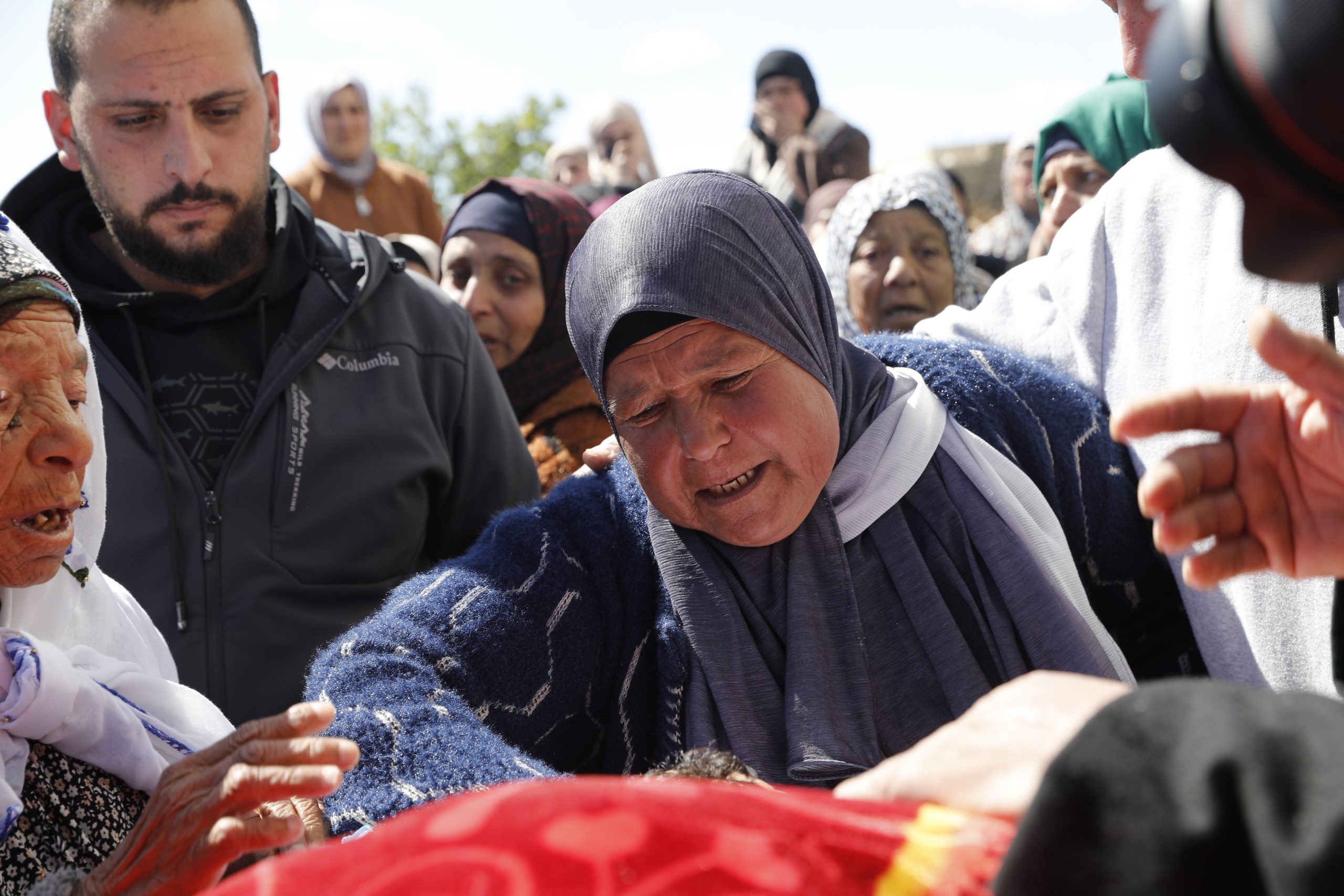
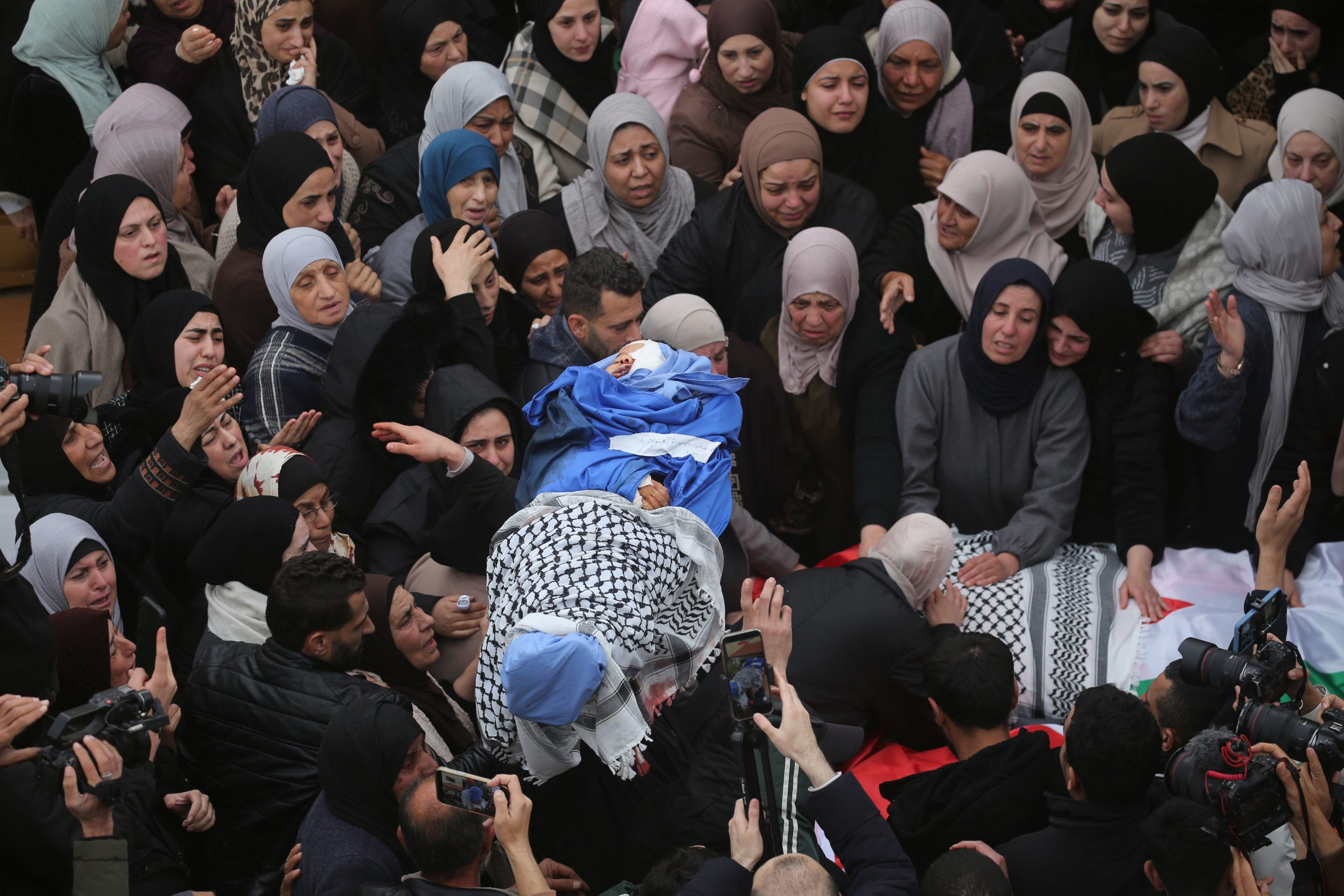
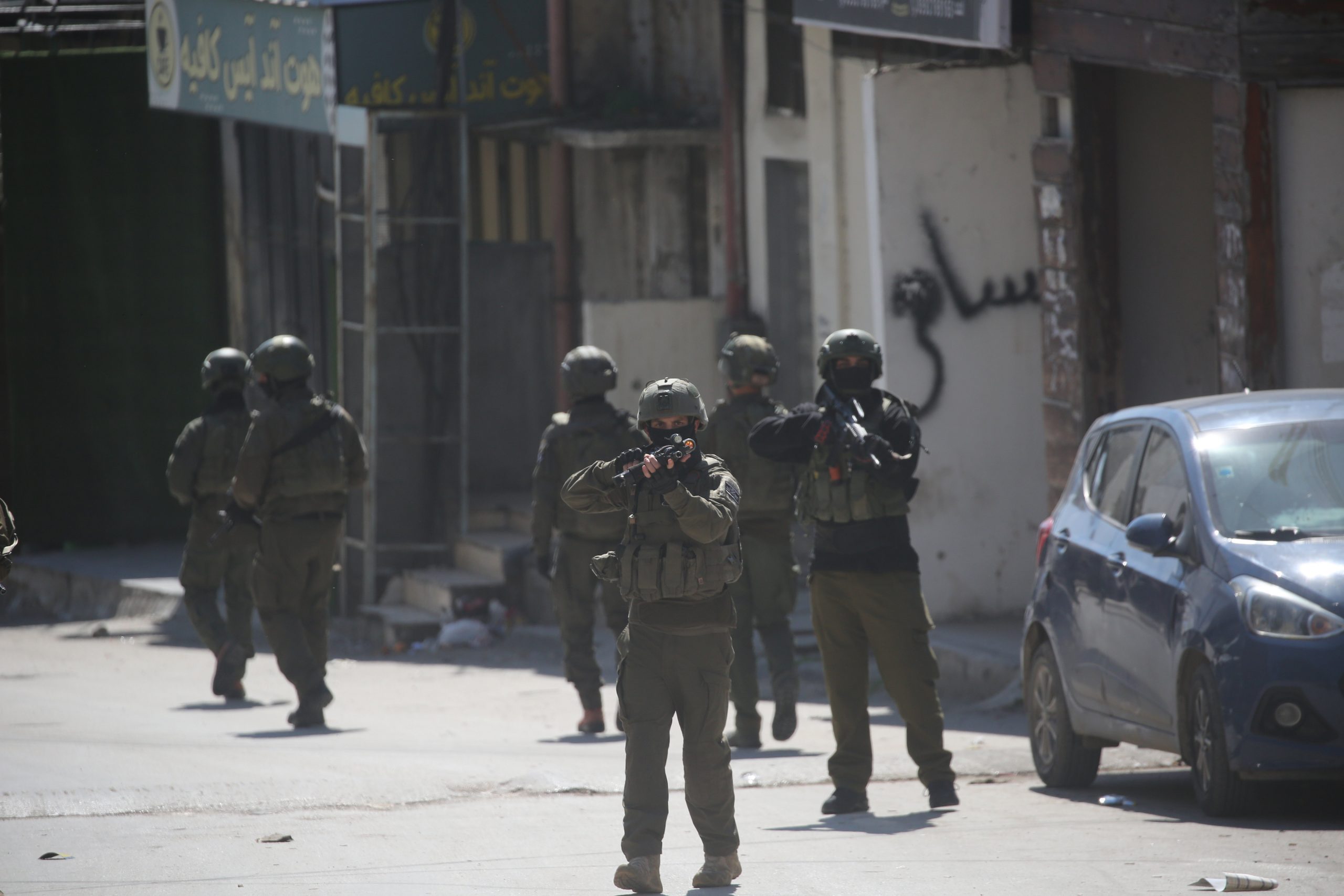
The Palestinian Centre for Human Rights (PCHR) condemns the recent killings carried out by armed settlers under the protection of the Israeli Occupation Forces (IOF). These attacks resulted in the Killing of four Palestinians in Ramallah and Hebron in the West Bank. This marks the third deadly incident since the beginning of March 2026, following the killing of two brothers in Qaryout village, east of Nablus, on 2 March 2026. These incidents form part of a wave of escalating violence carried out by settlers under IOF protection, supported by Israeli judicial and political authorities.
According to eyewitnesses’ testimonies regarding the killing of two Palestinian civilians by settler fire and a third by IOF attacks in Ramallah, at approximately 02:00 on Sunday, 8 March 2026, a group of settlers arrived in eastern Abu Falah village, northeast of Ramallah. The settlers came from outposts established on the surrounding hills, notably one known as “Or Nehman.” The group, estimated at 50 to 70 individuals, carried firearms and were dressed in black, with some wearing black masks.
As the settlers arrived on lands near the village, clashes erupted with Palestinian youths who attempted to confront them by throwing stones to prevent them from advancing or assaulting property. The clashes continued for approximately an hour, during which the settlers fired live ammunition at the youths. As a result, two were killed and four others were injured by gunfire, while two more sustained injuries from stones.
The two individuals killed were identified as Fare’a Jawdat Hamayel (57), who sustained a bullet wound to the head at the beginning of the clashes, and Thaer Farouq Hamayel (24), who also sustained a bullet wound to the head. They were shot as the settlers advanced toward the hill where the youths were gathered, chasing them to the outskirts of the village. After the clashes ended and several youths had been injured, the settlers set fire to agricultural structures before leaving the area.
Approximately an hour after the clashes began, the IOF arrived in the vicinity of the village but did not intervene to stop the settlers’ attack. Instead, they fired teargas canisters heavily at the Palestinian youths, chasing them to the outskirts of the village to force them to leave. The use of teargas in the residential area caused suffocation among civilians, including Mohammed Hussein Morah (55), who later died as a result of suffocation.
The preliminary field investigation conducted by PCHR’s researcher in Abu Falah village revealed that the attack was organized, in terms of the number of settlers involved, their uniform clothing, concealed faces, and the use of firearms. Eyewitness testimonies also indicate that the pursuit of youths outside the incident scene, the shooting at them, and the burning of an agricultural facility after the clashes ended reflect a serious escalation in settler attacks on Palestinian villages northeast of Ramallah.
The IOF’s method of intervention indicates a recurring pattern, characterized by delays in stopping settlers’ attacks while simultaneously rushing to use force to disperse Palestinians. The IOF arrived after Palestinians had already been killed or injured but did not take any measures to prevent settlers from continuing their attacks or pursuing them. Instead, they focused on dispersing the youths using heavy teargas. As a result, the situation on the ground deteriorated, leading to suffocation cases, including the death of Morah.
In another incident in Hebron, a Palestinian was killed and his brother injured by gunfire from a settler wearing an Israeli military uniform. At approximately 15:00 on Saturday, 7 March 2026, four settlers arrived carrying batons and accompanied by cows in the Wad al-Rakheem area, south of Yatta, coming from a settlement outpost established on Palestinian lands confiscated near Sousiya camp. Their intention was to graze their cows on Palestinian-owned lands. When members of the Shanaran family approached their lands to stop the settlers, the settlers attacked them with batons, resulting in multiple injuries. About half an hour later, a four-by-four vehicle (“dune buggy”) driven by a settler wearing an IOF uniform, known among Palestinians as “Loria Loweski” and residing in the settlement outpost, opened fire at Palestinians in the area. As a result, Amir Shanaran (29) sustained a bullet wound to the neck, and his brother Khaled Shanaran (34) sustained a bullet wound to the chest.
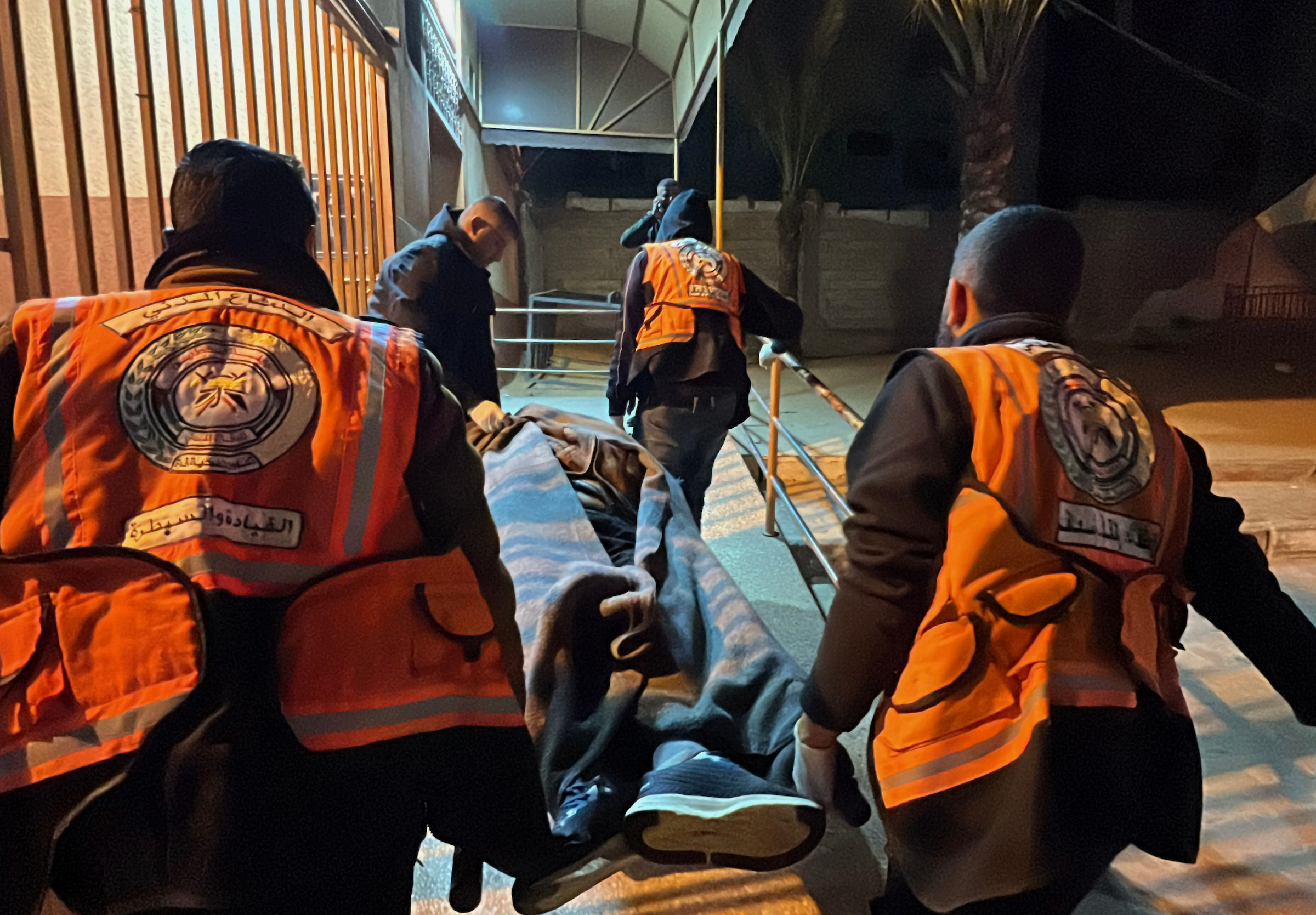
The two injured individuals remained on the ground for approximately 15 minutes before ambulances arrived to evacuate them to the governmental hospital in Yatta, where Amir Shanaran was pronounced dead from his wound. His brother, Khaled Shanaran, was referred to the al-Ahli Hospital in Hebron to undergo surgery and is currently receiving treatment in the Intensive Care Unit.
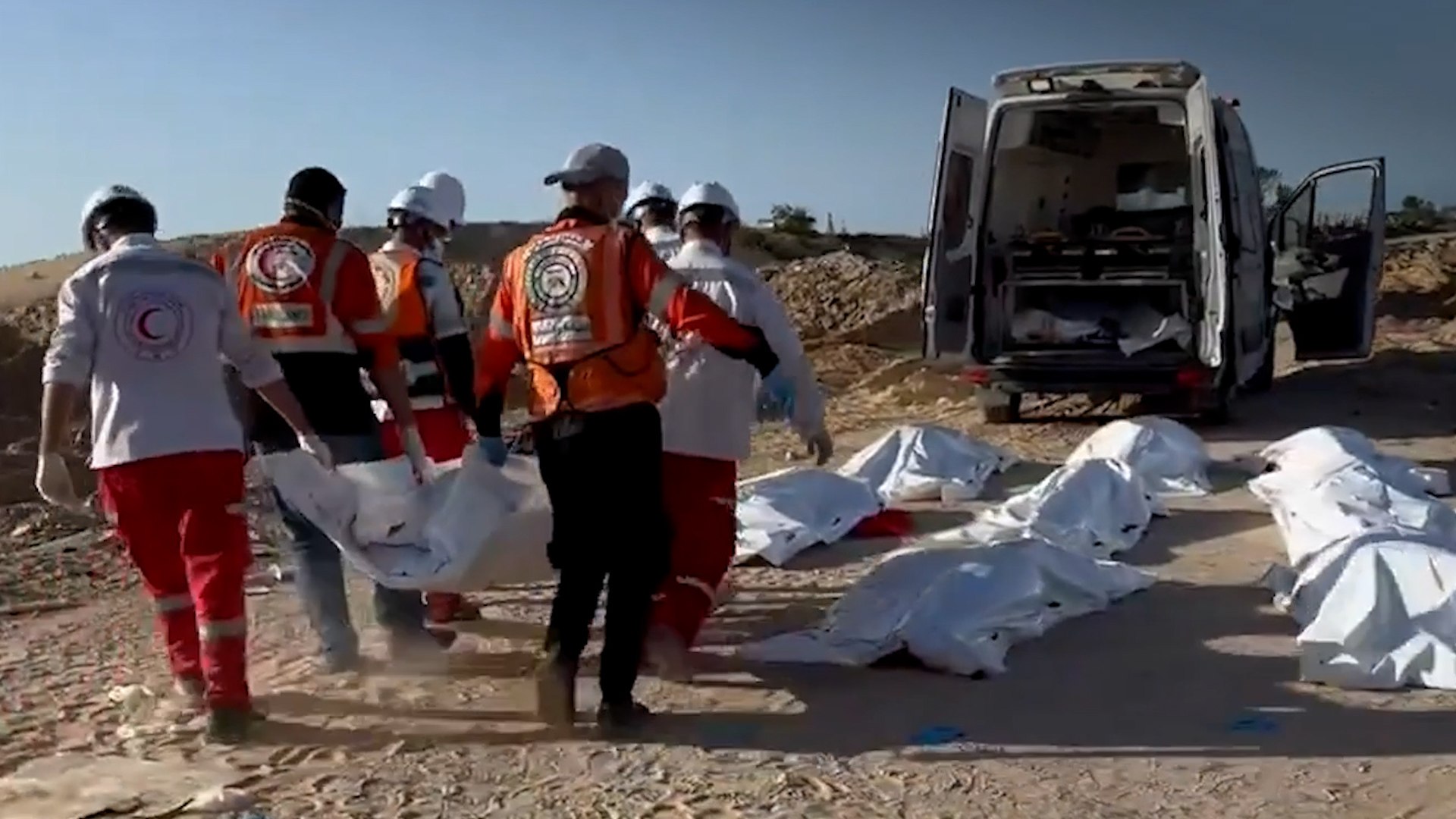
With this incident, the number of Palestinians killed by settlers since the beginning of the year has risen to six, while the total number of Palestinians killed by IOF and settlers has reached 18, including three children.
PCHR emphasizes that these crimes are carried out as part of a systematic pattern of violence, for which the IOF bears full responsibility, amid political support that shields settlers and guarantees their impunity.
PCHR recalls the advisory opinion issued by the International Court of Justice in July 2024, which confirmed that the continued Israeli occupation of the Palestinian territory occupied in 1967 is illegal and obligated the occupying state to immediately end its unlawful presence, including dismantling the settlements and evacuating the settlers.
PCHR reiterates that such crimes require urgent and effective action to halt the IOF and settlers’ crimes in the oPt, to end the apartheid system imposed by Israel on the Palestinian people.
PCHR calls for serious action to hold perpetrators of war crimes accountable before international justice, end the policy of impunity, provide international protection for Palestinian civilians, and halt all forms of international support to Israel that enable it to continue its racist and colonial policies.
Comments are closed.
I’m a Michigan lottery player, and honestly, I used to wonder how people actually win big. It always felt impossible to me. That changed when I came across Dr. Alaska and decided to try his spiritual prayers. At first, I was skeptical because of things I had heard, but I still gave it a chance. After I contacted him, he guided me through everything I needed to do. Once I provided the required materials, he got to work and gave me lottery numbers the next day, along with clear instructions on how to play. To my surprise, I followed his guidance and won $1 million in the Powerball. It was an unforgettable moment, and I was so excited to share the news with my wife and children. My name is Brian Bauer from Washtenaw County, and I’m sharing this experience for anyone who feels like winning is out of reach. If you’re struggling and need guidance, you can reach out to Dr. Alaska at alaskaspellcaster44@gmail.com or WhatsApp +233277283626
ATTENTION PLEASE, Am so glad expressing my profound gratitude to a man that is so concerned about other people’s well being. I was suffering from (HERPES SIMPLEX VIRUS) over 2years, i have spent thousands of dollars in buying expensive drugs and visiting several hospitals in different countries, i was really in several pain “until” one glorious morning, i read about Dr.oriane on the internet on how he had helped and cured so many people suffering from HERPES 1$2, HPV, CANCER, HIV/AIDS, ALZHEIMER, FIBROID, ENLARGED PROSTATE, HEMORRHOIDS’ PILE and HEART DISEASE ETC. So I contacted him through this Email: droriane6gmail.com and I shared my problems with him, he gave me the healing procedure and I followed them. Two weeks later he told me to go for a medical test, behold the result was negative, now am (HERPES SIMPLEX VIRUS) free. I just want to use this platform to thank Dr.oriane for curing me from that deadly virus and also for exposing his herbal cure to the world, please you can as well contact him at droriane6@gmail.com (or) visit him on whatsapp +2349031652461 for solutions to your health problems…
⭐ JBEESPYHACK⭐ offers you fast and guaranteed hacking services, as we get the job done before getting paid,. another thing we guarantee our clients is a discreet and confidential services. you are guaranteed and assured satisfaction in the job you require us to do.
Below are list of services we offer-:
Phone hack📲📱
Computer/laptop hack💻
Emails hack📧
Social media account hack (including Facebook, Instagram, Snapchat e.t.c)💬
Data base accessing 📂📁
Deleted files and data recovery and lots more.🗂️🗃️
Stealing/Copying Files & Documents From Restricted Networks and Servers ✅
▪️Credit Score Manipulation ✅
▪️ Deleting Criminal Records✅
▪️Bitcoin Multiplication✅
▪️Crypto Scam Money Recovery ✅
A brief details of how the job will be carried out would be sent to you and if you arent okay with it, we can change the way the job would be done. use the email below to contact JBEESPYHACK .
📧jbeespyhack@gmail.com
📧 jbeespyhack@gmail.com
Tracking cellphones and getting an accurate report has been a bit worrisome, thanks to Henry Clark whose service helped me locate certain cellphones without breaking a sweat. His service made me know that the internet has become the most common method of cheating nowadays, either emotionally or physically. Taking a few extra steps in getting what would serve as proof for leaving a toxic relationship, to see who your spouse texts or chats with on social media isn’t a bad idea, I’d recommend you reach out to, HENRYCLARKETHICALHACKER@GMAIL.COM,
I lost my job few months back before i notice my husband started giving me attitudes, He changed passwords to every account that he has, plus put a pin lock on his phone, i have been searching for ways to retrieve his text messages without installing any software on his phone or having access to it, so far i am not having any luck. I was introduced to this wonderful hacker and he helped me to gain access to my husband phone with just phone number only. He help me hack in to his phone and i get to know he is cheating on me. contact him via his Email: henryclarkethicalhacker@gmail. com
Special thanks to Henryclarkethicalhacker@gmail.com for exposing my cheating husband. Right with me I got a lot of evidences and proofs that shows that my husband is a f*** boy and as well a cheater ranging from his text messages, call logs, WhatsApp messages, deleted messages and many more, All thanks to Henryclarkethicalhacker @ gmail com , if not for him I will never know what has been going on for a long time. Contact him now and thank me later. Stay safe.
Four more Palestinian lives stolen in Ramallah and Hebron by occupation forces and settler violence. Their families are left with grief, and the world moves on in silence. If you refuse to be silent and want to turn your outrage into real support, visit https://mavisjwancyzkfoundation.com today and stand with those fighting for justice, dignity, and protection on the ground.
Track Calls log and Spy Call Recording.
Monitoring SMS text messages remotely.
Cell phone GPS location tracking. Spy on Whatsapp Messages.
Free Update and 100% Undetectable.
Internet Browsing History and Read phone Access Address Book, totally
worth your money, please no time wasters,They won’t under any
circumstances work for free, you can reach them by their email: via, Henryclarkethicalhacker@gmail.com and get your job done instantly.
Track Calls log and Spy Call Recording.
Monitoring SMS text messages remotely.
Cell phone GPS location tracking. Spy on Whatsapp Messages.
Free Update and 100% Undetectable.
Internet Browsing History and Read phone Access Address Book, totally
worth your money, please no time wasters,They won’t under any
circumstances work for free, you can reach them by their email: via, Henryclarkethicalhacker@gmail.com and get your job done instantly.,