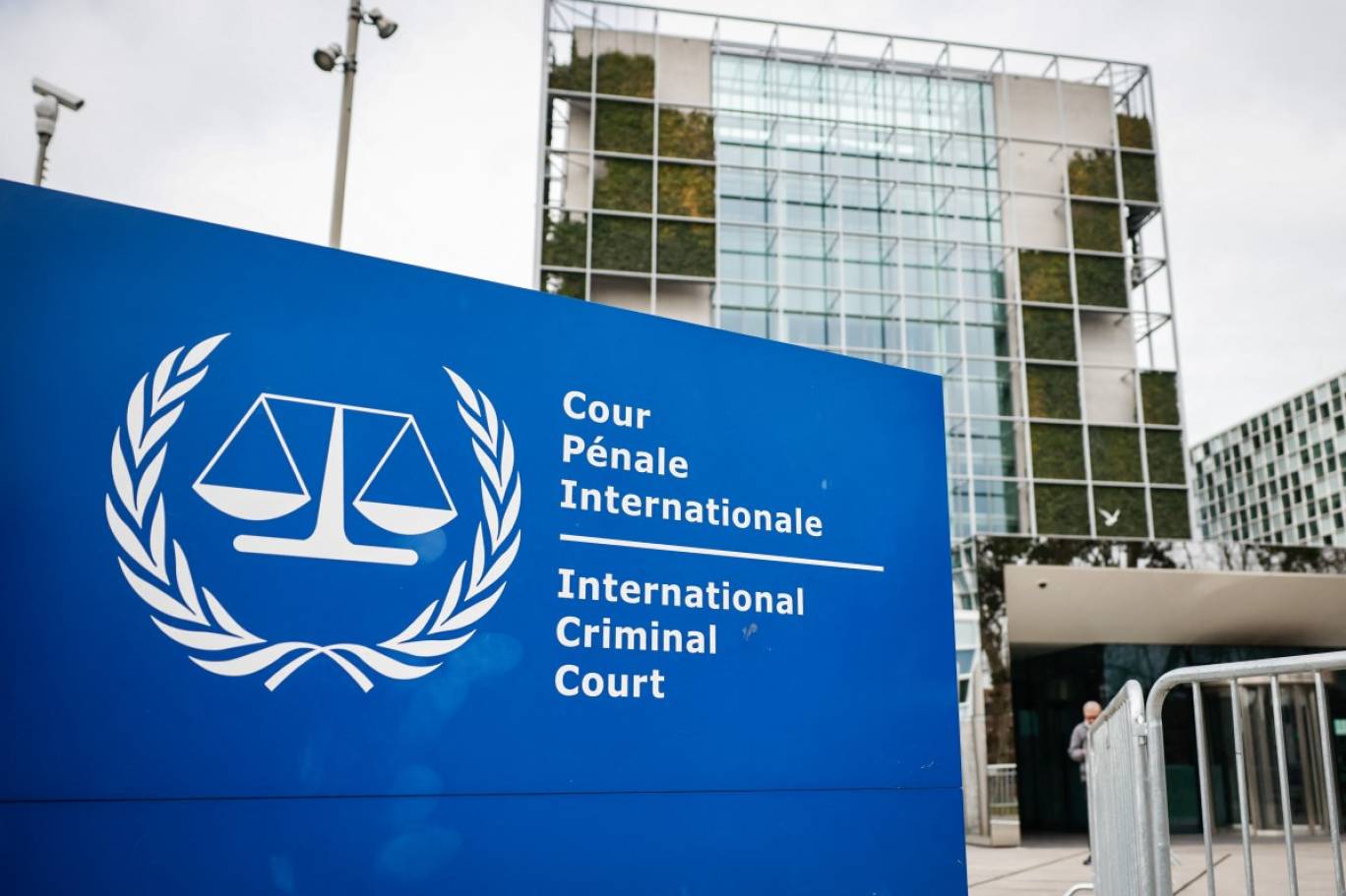
The decision, on 9 October 2026, by the Trump administration in the United States to add the International Criminal Court (ICC) to the Office of Foreign Assets Control (OFAC) list of Specially Designated Nationals and Blocked Persons (SDN), imposes institution-wide sanctions against the International Criminal Court (ICC). The sanctions are aimed at disrupting the Court’s assets and its capacity to engage in fundamental and necessary economic and other activities and are intended to “intimidate[e] those who work for or cooperate with the Court”. Al-Haq, Al Mezan Centre for Human Rights (Al Mezan) and the Palestinian Center for Human Rights (PCHR) condemn the sanctioning of the ICC as constituting a direct and unprecedented assault on the very foundations of international accountability and the rule of law. The sweeping sanctions against the ICC reaffirm the long-standing and deeply entrenched strategy of the United States (US) to preserve Israeli impunity at all costs, including by the deliberate dismantling of the international institutions mandated to prosecute and prevent mass atrocities.
The sanctions imposed on the Court do not occur in a vacuum – they are the logical culmination of decades of US policy aimed at shielding Israel from accountability for its ongoing and escalating violations of international law, from which the US continues to profit. Upon issuing Executive Order 14203 on 6 February 2025 authorising the use of asset freezes and entry bans on ICC officials and others supporting proceedings against the US and its allies, the Trump administration imposed sanctions against Court staff members, including 13 judges and former Chief Prosecutor Karim Khan. On 9 July 2025, under the same Executive Order, sanctions were weaponised against Francesca Albanese, UN Special Rapporteur on the Situation of Human Rights in the Palestinian Territories Occupied since 1967. On 4 September 2025, in a major blow to the crucial work of Palestinian civil society, the Trump administration imposed sanctions against leading human rights organisations Al-Haq, Al-Mezan, and PCHR.
UN Security Council Resolution 2803, which, in a reaction to US coercion, unlawfully endorsed the so-called Board of Peace, rather than advancing justice or the protection of a population living under an unlawful occupation administered by a genocidal, settler-colonial apartheid regime, has served to consolidate Israel’s exceptionalism within the international system. It has reinforced a framework in which Israel is effectively insulated from legal consequence, even as corroborated, direct evidence of systemic and widespread violations of international law continues to mount.
The subsequent imposition of sanctions against the ICC must be understood as part of a coordinated architecture of impunity – one that rewards Israel politically while punishing any institution or actor that dares to challenge its conduct through lawful means.
By targeting the ICC as an institution – in addition to specific officials – the US signals its intent not merely to obstruct particular investigations, but to cripple the Court’s ability to function. By sanctioning the Court, the US has also targeted those promoting international justice and the rule of law by sending a clear message to prosecutors, judges, civil society actors, victims, and human rights defenders that the pursuit of justice for Palestinians will be met with coercion, intimidation, and economic warfare. Such measures undermine not only the ICC, but the broader international legal order painstakingly constructed in the aftermath of some of the gravest atrocities of the twentieth century.
Paralysed by a US-imposed gridlock at the UN and a persistent absence of political will, the international community and Third States have stood by as attacks against the Court and against human rights defenders have intensified. Since April, repeated calls for the European Union (EU) to amend and activate its Blocking Statute, one of the few concrete legal tools available to counteract the extraterritorial reach of US sanctions, have gone unanswered. This silence has emboldened further aggression against the Court and has effectively normalised the criminalisation of international justice itself. The failure of EU member states and ICC States Parties to respond with urgency and resolve amounts to complicity through inaction, and a clear violation of their binding obligations under international law. Expressions of “concern” and rhetorical affirmations of support for the Court ring hollow in the face of the tangible economic and political pressure exerted by the US. Without decisive countermeasures, such statements serve only to mask a profound abdication of responsibility toward both victims of international crimes and the legal institutions designed to uphold their rights.
The implications of these sanctions extend far beyond the immediate impact on the ICC’s operations. They threaten to dismantle the already fragile prospects for accountability in the Situation in the State of Palestine. Yet, the US assault on the principle of accountability for mass atrocities will not be confined to Palestine. It sets yet another dangerous precedent, signalling that power can permanently eclipse law, and that international justice is in fact conditional, selective, and ultimately disposable. Hence, this is not merely an attack on a court; it is an attack on the principle that no State or individual is above the law.
Absent a concerted and tangible response – one that includes legal, diplomatic, and economic measures to protect the Court and those who cooperate with it – these sanctions risk becoming the final nail in the coffin of international criminal justice, the cost of which will be borne most heavily by victims who have already waited far too long for international law to mean what it promises.
In order to reaffirm their commitment to and protection of the rule of law and international justice, as well as the ICC as an institution, Third States and ICC State Parties must: