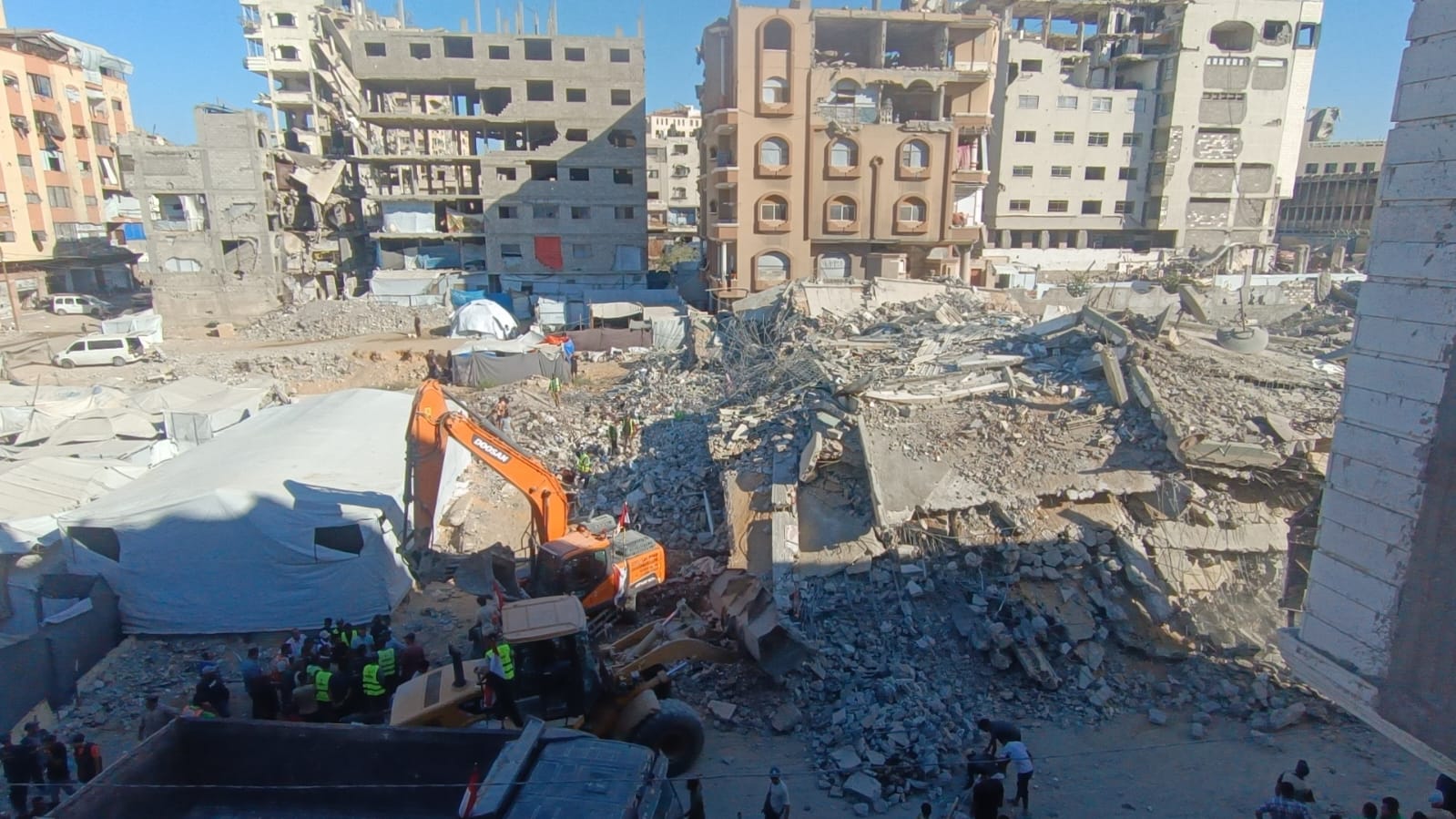
In yet another humanitarian catastrophe, a residential building that had already sustained damage in a previous Israeli bombardment collapsed, killing 21 Palestinians, including 12 children and 5 women, and injuring 45 others, 10 of whom reportedly sustained serious injuries. After hours of continuous search and rescue efforts, rescue teams managed to pull 35 people alive from beneath the rubble at dawn on Wednesday, 16 September 2026. With this latest incident, the death toll from similar building collapses across the Gaza Strip has reached 55, with dozens more injured—a toll expected to rise. This comes amid estimates that around 2,000 war-damaged residential buildings, still inhabited by residents who have no alternative or adequate shelter, are at imminent risk of collapse at any moment.
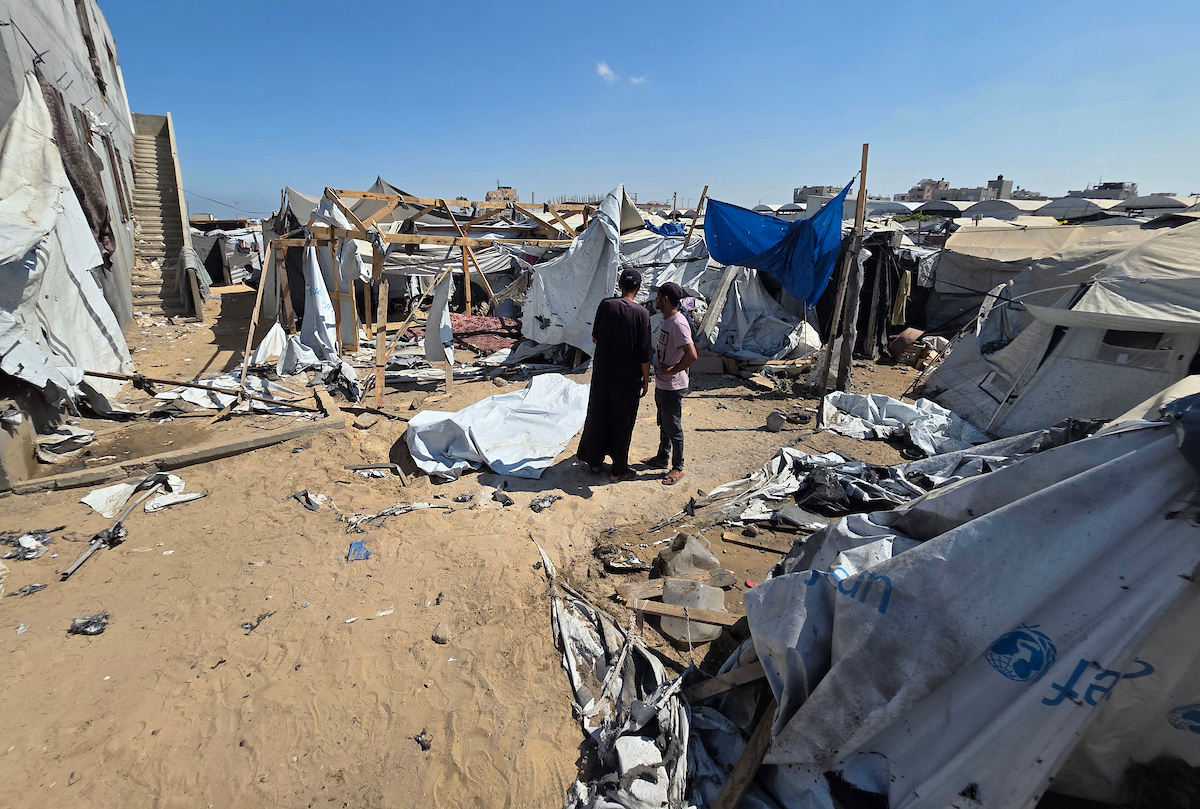
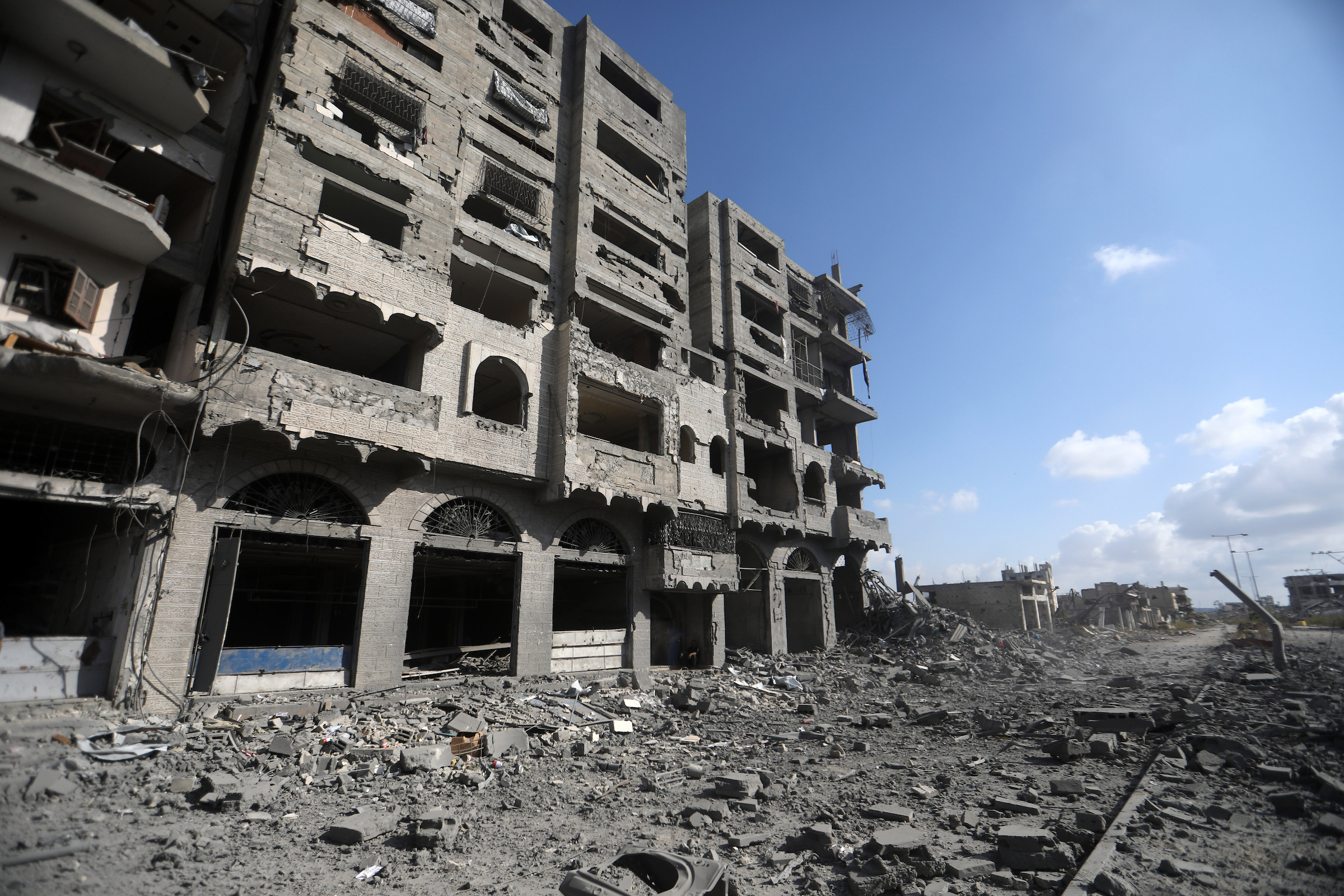
This tragic collapse was a direct and foreseeable consequence of Israel’s systematic policy of destroying and erasing residential neighborhoods across the Gaza Strip, compounded by its continued ban on the entry of construction and recovery materials, as well as heavy rescue equipment. As a result, residents are trapped between makeshift tents that are unfit for human habitation and buildings whose walls have been cracked by repeated Israeli bombardments, turning them into little more than graves in waiting.
According to information collected by Palestinian Centre for Human Rights (PCHR) field researchers, residents of western Gaza were awakened at around 02:00 by the terrifying sound of a building collapsing, followed by loud screams coming from al-Sa’adah 8 Building. The six-storey building, topped by two roof levels and comprising four residential apartments on each floor, stood on a side street near the UNRWA headquarters in western Gaza City. The building had sustained severe cracks during a previous Israeli bombardment that targeted the surrounding area amid Israel’s ongoing genocide in the Gaza Strip, leaving its collapse seemingly only a matter of time. Despite the obvious danger and the lack of alternative shelter, ten displaced families from the al-Zaytoun and al-Shuja’iya neighborhoods in eastern Gaza City had sought refuge there and lived in the building for 10 months. Having exhausted all options for finding alternative shelter, they remained there in the hope of staying all together and escaping from the relentless cycle of displacement.
According to the latest update from the Civil Defense, the bodies of 21 people, including 12 children and 5 women, have been recovered from beneath the rubble. Several members of the same families were among those killed. Another 45 people sustained injuries of varying severity, including 10 in critical condition. Rescue teams, working under extremely difficult conditions, managed to pull out and evacuate 35 people alive from beneath the rubble.
Tariq Ibrahim Ghanem, a representative of the Culture Displacement Camp, told a PCHR field researcher that camp residents were awakened by the sound of the building collapsing and the screams of people trapped beneath the rubble, causing widespread panic among the residents. Ghanem added that four families had arrived at the building the previous night to participate in preparations for a wedding for al-‘Ejlah family, which was due to take place that day. However, in a matter of moments, the long-awaited wedding turned into a house of mourning.
Immediately following the collapse, Civil Defense was alerted and called for urgent assistance from the Egyptian Committee, which has heavy machinery capable of removing the massive amounts of rubble covering the victims. ‘Abdullah al-Majdalawi, Director of Public Relations and Media at the Civil Defense in Gaza City, told a PCHR field researcher that rescue teams rushed to the scene after requesting bulldozers and excavators from UNDP, the Egyptian Committee, and the International Committee of the Red Cross (ICRC) to clear the rubble and rescue those trapped beneath it.
Rescue operations in the Gaza Strip, as in similar incidents, are carried out with dilapidated equipment, primitive tools, and severely limited capabilities. In many cases, rescue teams are forced to clear rubble with their bare hands and basic hand tools—methods wholly inadequate for clearing a six-storey building that has collapsed on top of its residents. This is largely due to the Israeli occupation authorities’ continued ban on the entry of heavy machinery and specialized rescue equipment, as well as life-detection devices, spare parts, and the fuel needed to operate the remaining dilapidated machinery, most of which is already out of service.
The fact that local teams are forced to search for suitable heavy machinery for each incident reflects the scale of destruction inflicted on the civil defense system in the Gaza Strip. This destruction has been deliberately caused by the Israeli Occupation Forces (IOF) throughout the military aggression; as a result, every minute of delay in reaching victims can make the difference between life and death
Available information from the Civil Defense indicates that around 2,000 damaged buildings across the Gaza Strip remain inhabited. Some have developed severe cracks and are at risk of collapse, yet thousands of families continue to live in them because they have no safe or adequate alternative shelter. Unless urgent action is taken to allow the entry of construction and recovery materials and provide safe, adequate shelter alternatives, what happened at dawn today will happen again at other sites, with the death toll continuing to rise away from the sound of bombardment. Similar tragedies are only a matter of time unless construction and recovery materials are allowed into the Gaza Strip immediately. According to the Ministry of Health in Gaza, separate building-collapse incidents have already claimed the lives of 34 people.
The IOF have continued to prevent the entry of construction and recovery materials into the Gaza Strip as part of a deliberate policy aimed at making the Strip uninhabitable and forcibly displacing its population outside. Coupled with the siege, the destruction of infrastructure, and the restrictions on the entry of food and medicine, this policy forms a fundamental element of the crime of genocide, as embodied in the deliberate infliction of conditions of life calculated to bring about the physical destruction of the group, in whole or in part.
Over the past three years, Israel has employed various methods to destroy Palestinians in the Gaza Strip, extending beyond direct killings through bombardment and gunfire to building collapses and the deaths of hundreds from starvation, malnutrition, and the collapse of the healthcare system. These are parallel paths to the same deadly outcome, all occurring under the responsibility of the Israeli occupation authorities, which, as an occupying power, bear clear legal obligations towards the civilian population under their control.
PCHR emphasizes that political and legal responsibility for this ongoing catastrophe lies with the Israeli occupation and extends to the Peace Council established under US President Donald Trump’s plan for the Gaza Strip. The Council has become a cover for the continuation and institutionalization of the genocide, having failed to lift restrictions on the entry of construction and recovery materials or provide the population with alternative shelter to protect them from the risk of death beneath the rubble or in the open.
Israel’s deliberate policy of keeping hundreds of thousands of civilians in life-threatening housing conditions constitutes a violation of their right to life, an adequate standard of living, and adequate housing. It also falls within the acts addressed by the International Court of Justice (ICJ) in its provisional measures concerning the Gaza Strip, which require Israel to ensure unimpeded access to basic services and humanitarian assistance.
In light of the above, PCHR calls for the immediate and unrestricted entry of construction and repair materials, heavy rescue equipment and machinery, and shelter supplies into the Gaza Strip, and for safe shelter to be provided to families currently living in damaged buildings.
PCHR also calls for an urgent engineering assessment, conducted under UN supervision and in coordination with relevant local authorities, to identify buildings at risk of collapse and evacuate their residents to appropriate alternative shelters with basic life conditions. PCHR further calls for Civil Defense teams to be enabled to carry out their duties by allowing the entry of machinery, equipment, spare parts, and fuel, and by ending the restrictions imposed on their operations.
PCHR calls on the United Nations and its specialized agencies to immediately expand emergency shelter programmes in the Gaza Strip and provide protection to displaced civilians who face the risk of death within the remnants of damaged buildings.
PCHR reiterates that the international community’s continued silence over the situation in the Gaza Strip provides the Israeli occupation with cover to continue its policies. Every day that passes without the entry of construction and shelter materials means more people falling victim to building collapses, hunger, and disease, in addition to the daily Israeli bombardments.