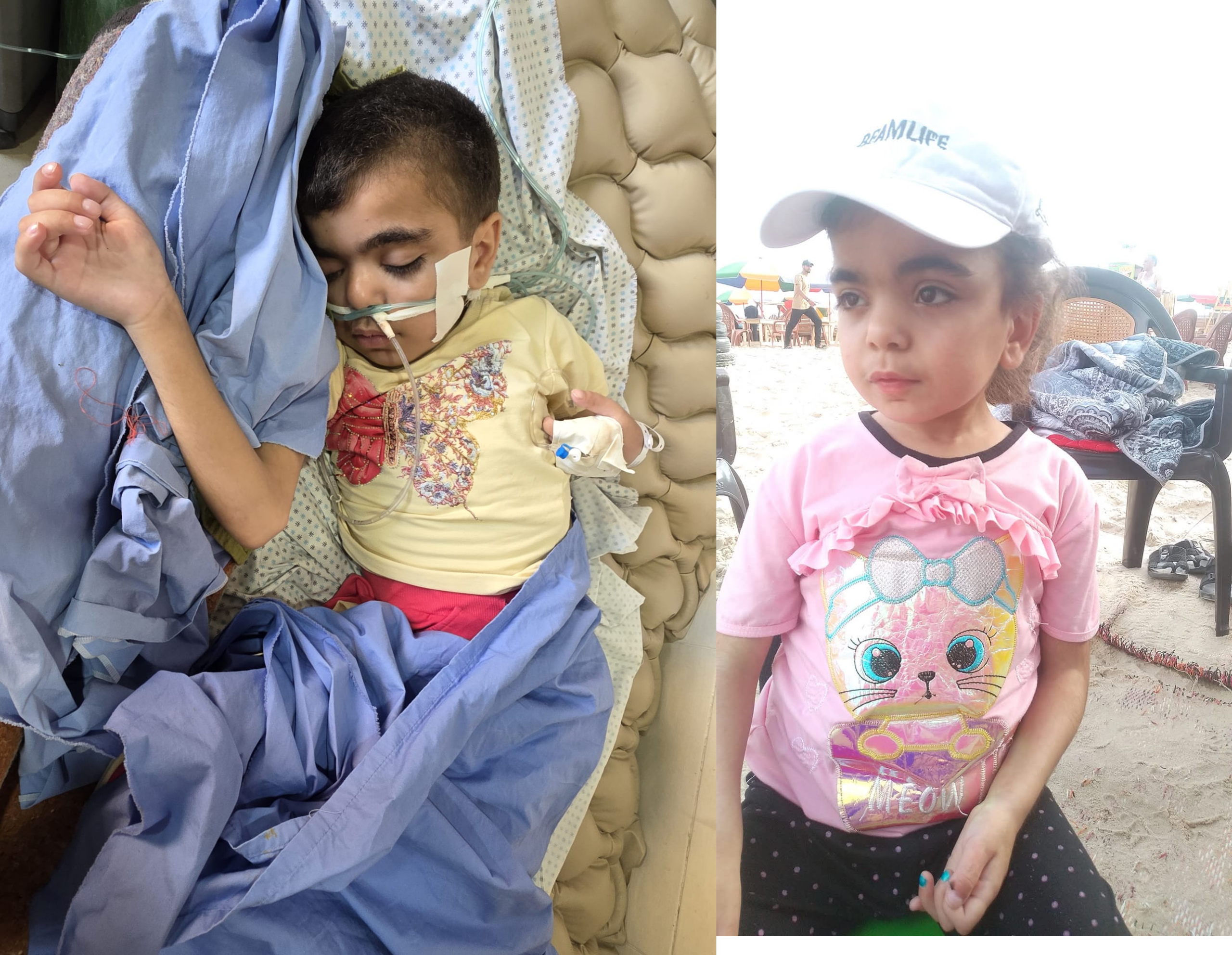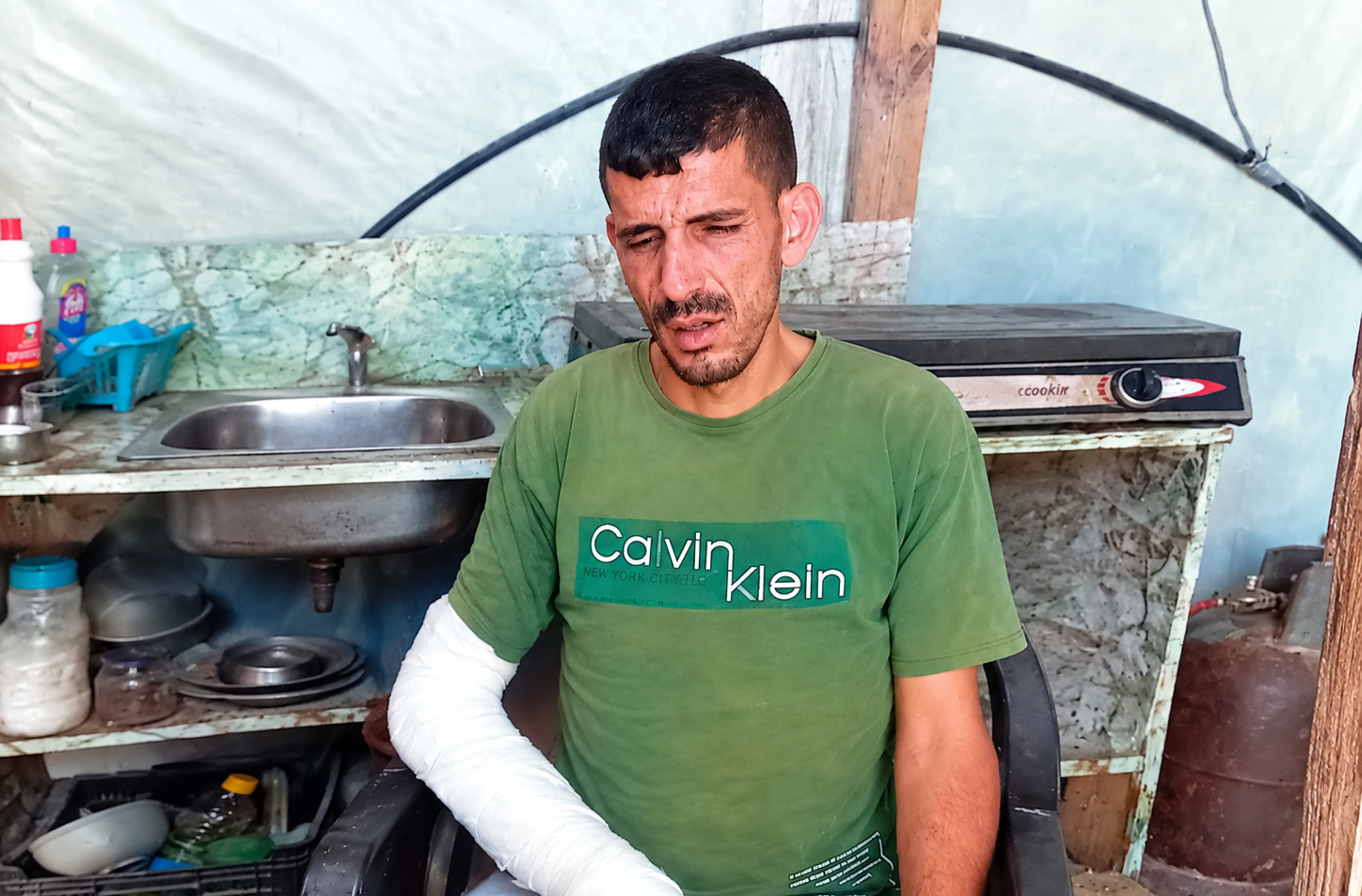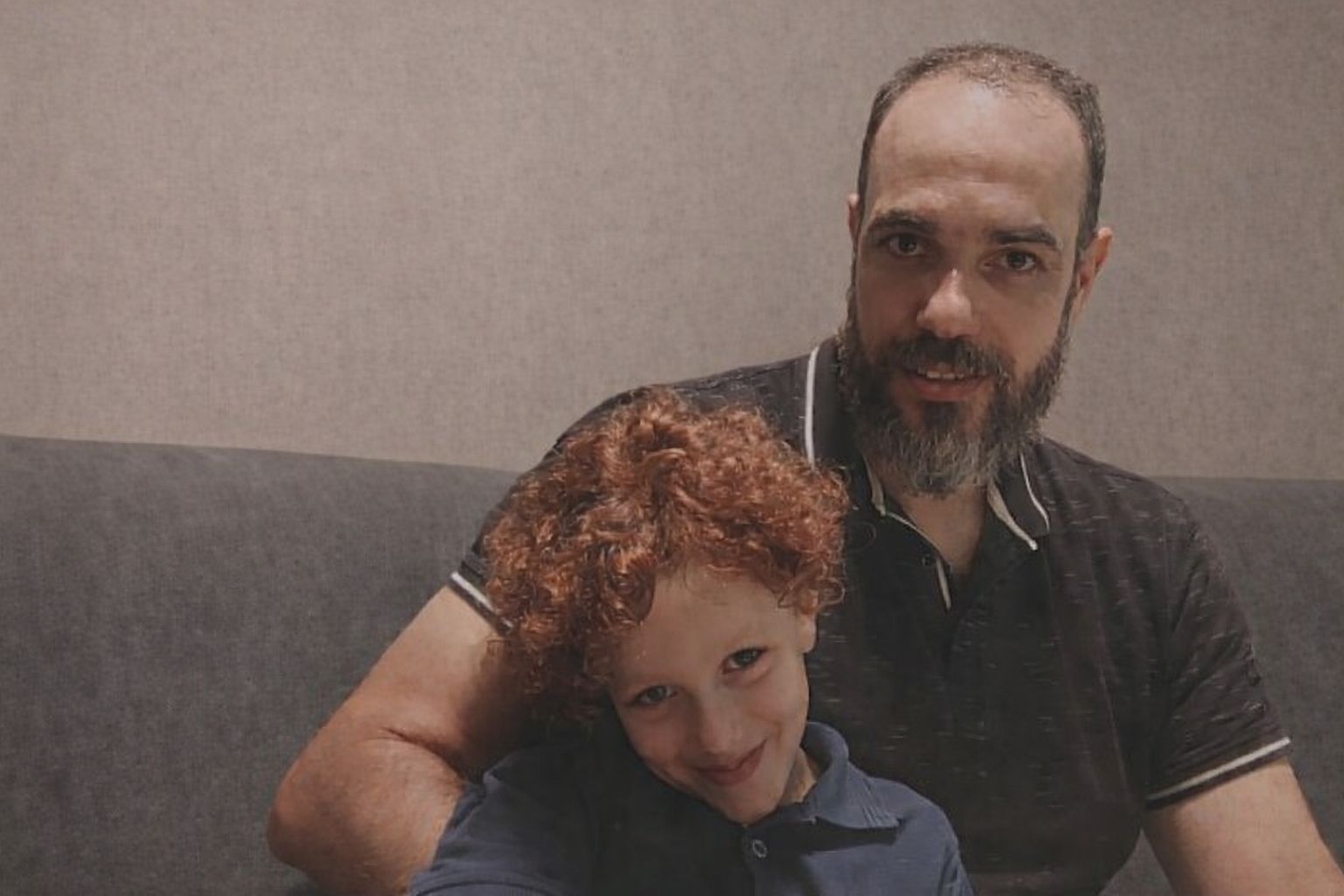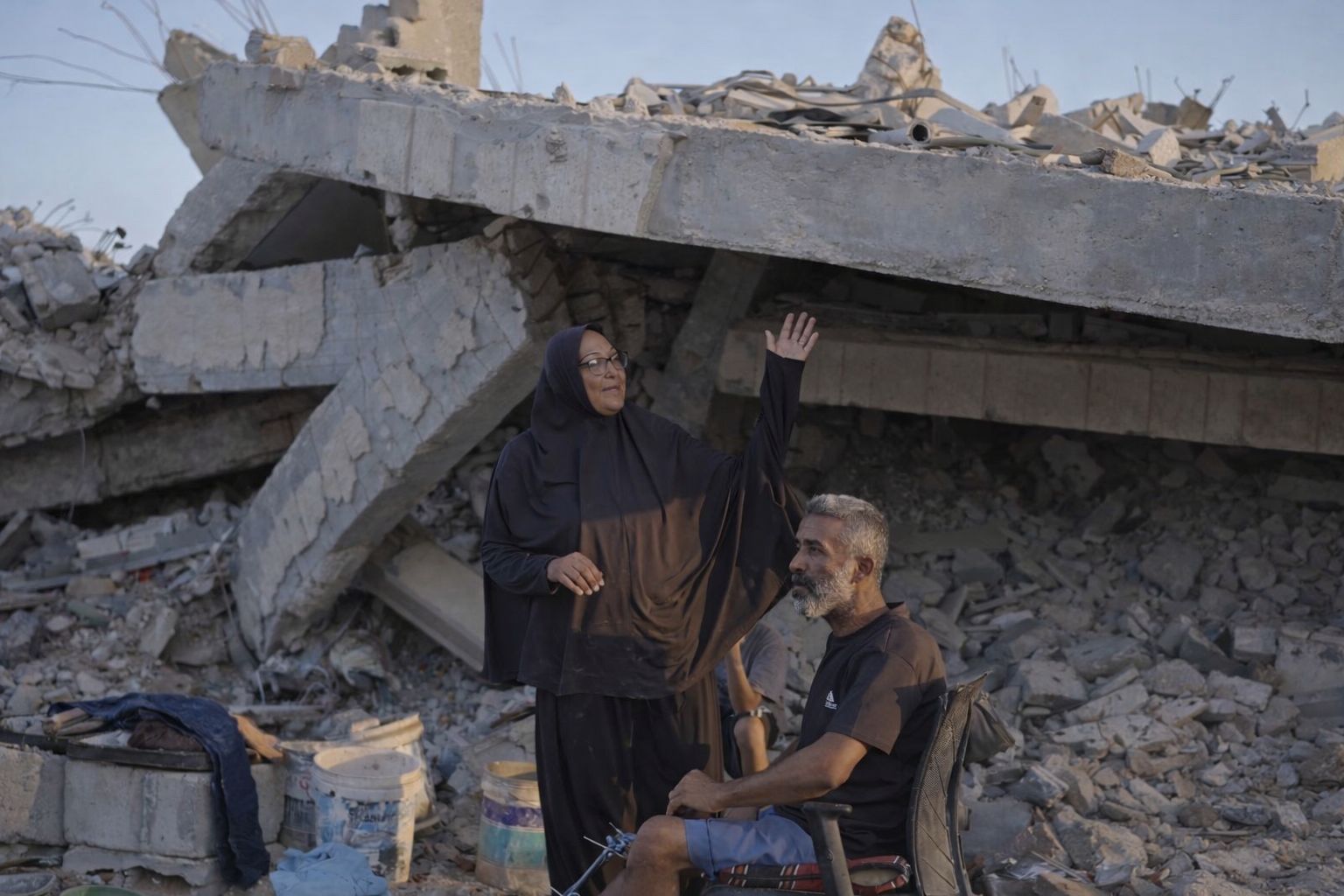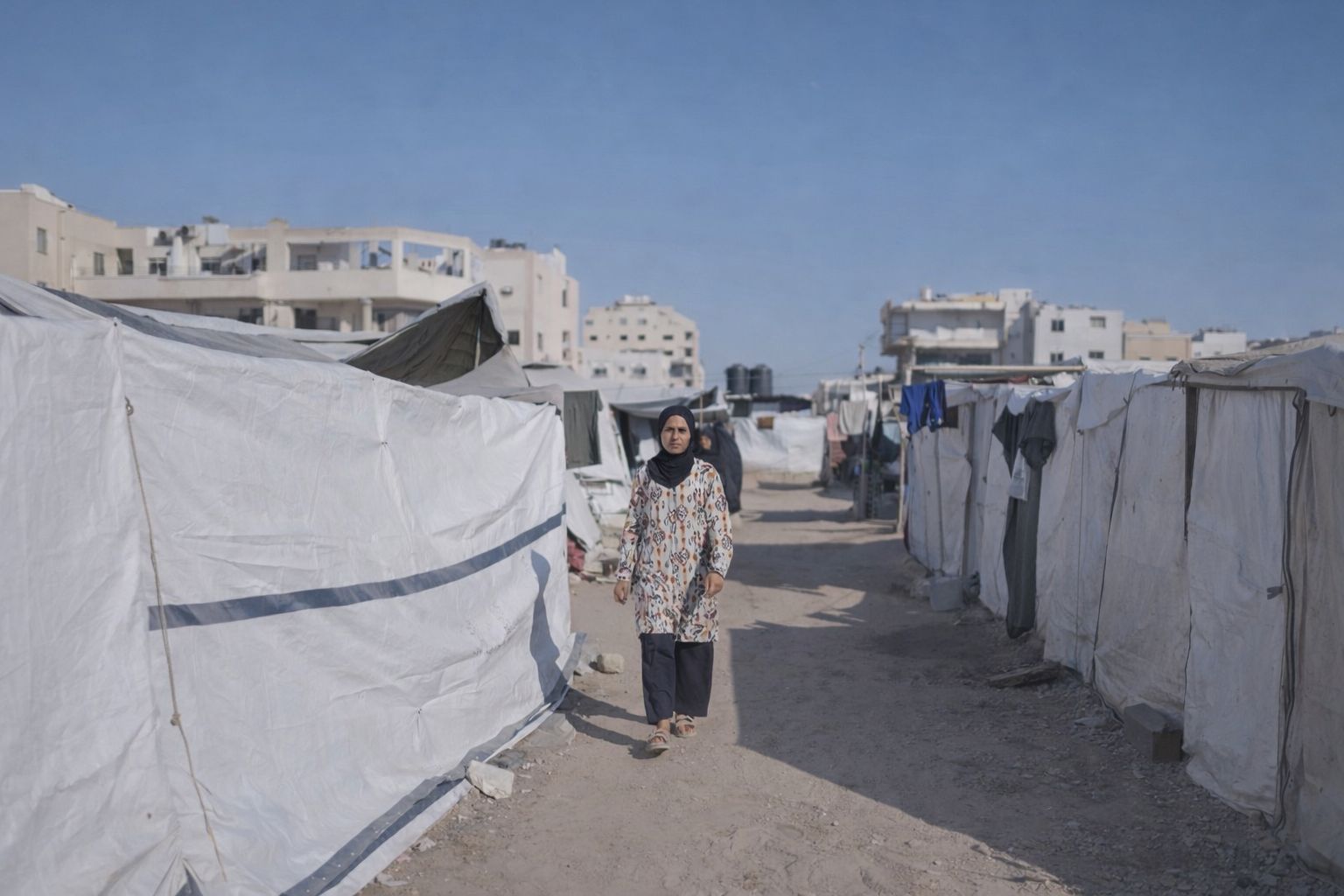
Solafah Mohammed Abu Kweik (53) was standing in the kitchen of her apartment in her husband’s five-storey family home, washing the dishes with her 13-year-old daughter, Haya, on the evening of 14 November 2023, when an Israeli airstrike hit a neighboring house just a few meters away. That moment opened up a new chapter of loss for the family, one that would unfold over two full years.
On that day, the kitchen violently shook as concrete blocks and shrapnel scattered through the window, striking Solafah and her daughter who would shortly become clear that she was killed. Solafah recalls the painful moments in her testimony to a PCHR field researcher:
“I heard the missile whistling overhead, followed by the sound of shrapnel scattering, as concrete blocks flew into the kitchen. I felt my hair burning and pain in my neck, as well as burns on my left shoulder. Amid the explosion and the scattering debris, dust filled the kitchen and got into my eyes, and I could barely see. I rushed out of the kitchen, feeling my way towards the apartment door, calling out for someone to come and help me and my daughter, as I did not yet know what had happened to her.”
On the stairs, Solafah met her sons, Mohammed (19) and Montaser (23), and asked each of them to go and check on their sister Haya, while she continued slowly down the stairs, gradually realizing the depth of her injuries to her neck and hands.
When her sons followed her carrying their sister, they asked her to turn away. She did not realize that they were carrying her daughter’s dead body until she heard a scream from one of her relatives on the second floor.
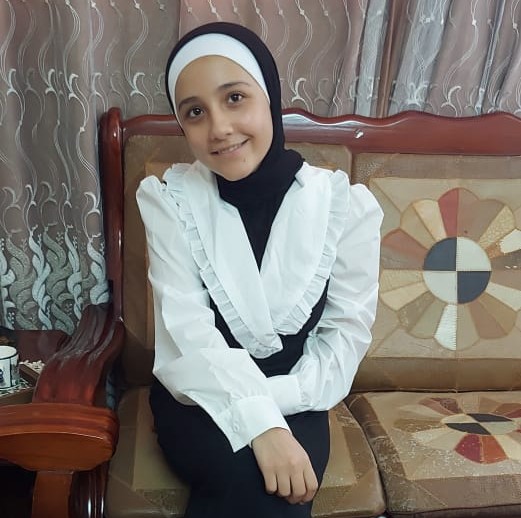
I Could Not Bid Her Farewell
Solafah was taken to Nasser Medical Hospital, where a CT scan revealed the extent of her neck injury. She was admitted to the operating room for wound cleaning and to stop the bleeding. Before undergoing surgery, she asked her husband, ‘Emad, about their daughter, but he avoided answering, as she had already realized the truth before he could say it. She recalls:
“Before I entered the operating room, my husband came to me, and his face was covered with tear marks. I asked him about Haya, and he said, ‘Haya is fine. Just take care of yourself.’ I told him that I knew she had been killed and asked him to bring her to me before the burial so I could bid farewell to her, but he remained silent and did not answer.”
When he told her the next day that their daughter had been buried without her being able to see her, she asked him: “Why didn’t you bring her to me so I could say goodbye to her?” One of her relatives later told her that, at the time, it was better for her to preserve in her mind the image she had of her daughter, as her face had been severely disfigured by the injuries.
Haya was killed in the incident along with five others, including the wife of the owner of the house targeted in the Israeli strike, her baby girl, and a woman and her two sons from al-Maasri family, who were renting an apartment in the building. Two floors of the building, which housed several tenant families, were completely destroyed in the strike.
After five days in the hospital, doctors had to urgently close Solafah’s open wound, fearing that the hospital would be evacuated and would have to receive patients transferred from al-Shifa Medical Complex, whose administration had already received an order from the Israeli Occupation Forces (IOF) to evacuate the facility.
With the assistance of an organization, Solafah was able to travel to Egypt in late November 2023, accompanied by one of her husband’s relatives, to receive medical treatment. She moved between al-‘Arish Hospital and al-Ismailia Hospital, where she remained for three months, in addition to staying at a dormitory for Palestinian patients. Overwhelmed by anxiety about her son Montaser, from whom she had heard nothing throughout her stay in Egypt, she eventually decided to return to Gaza on the eve of Ramadan.
Arrested at Checkpoint
When Solafah returned to Gaza in March 2024, she found not only the answer she had feared, but a much heavier one. Her husband told her that the IOF arrested their son, Montaser, after besieging the al-Amal neighborhood for four days and ordering its residents to evacuate westwards. The IOF had set up a checkpoint between the Sharia Court and al-Aqsa University on the road leading to the al-Mawasi area, west of Khan Younis, where Montaser was arrested.
Since then, Solafah says, she has known nothing about her son except that he remains detained. Anxiety has become a constant companion, alongside the grief she carries for her daughter. She says: “I worry about my detained son, Montaser, wondering how he sleeps and what he eats.”
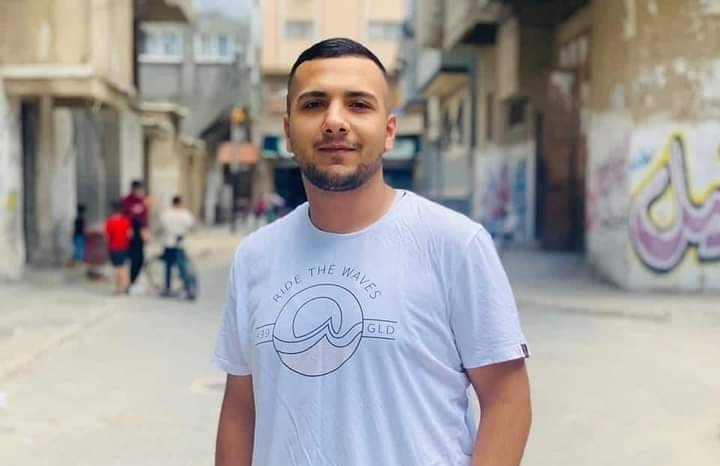
The family gradually settled back into life, and their son Mohammed started working with his cousins at a juice shop in the al-Mawasi area, west of Khan Younis, trying, like many other young men in the Gaza Strip, to find a foothold in an economy devastated by the war. However, on the morning of 13 July 2024, while Solafah was hanging laundry on the rooftop of the house, she heard three successive explosions resulting from an Israeli strike on a displacement tent near her son’s workplace. About 45 minutes later, devastating news arrived: her son Mohammed had been injured while helping those wounded in the first strike, before he was himself injured in the third explosion.
A Son Who Saved Others
When the bereaved mother arrived at Nasser Hospital, the ambulance did not stop at the reception department but continued directly to the morgue, where she found her husband standing beside a white body bag. She threw herself onto it and opened it, only to find her son’s body severely wounded and torn by shrapnel. Holding him tightly, she said:
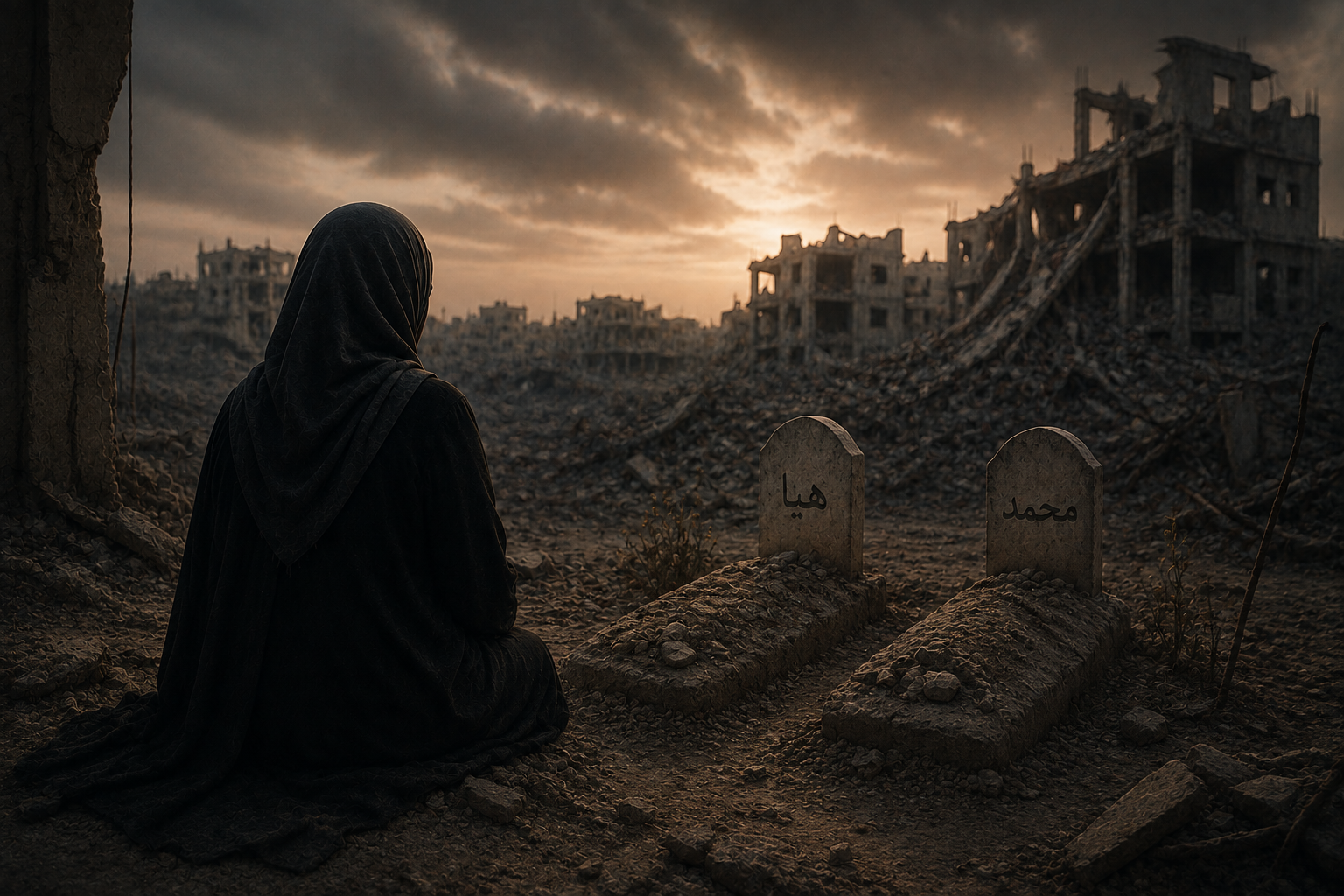
“You longed for martyrdom, and you have attained it. You have left me alone. You missed your sister Haya; now you will be with her, my beloved son. Until we meet again in Heaven, Inshallah.”
Since that day, Solafah has lived between grief and waiting. In March 2025, the IOF tightened restrictions on the entry of humanitarian aid into Gaza, contributing to the spread of starvation. In June of the same year, the IOF again ordered residents of the al-Amal neighborhood to evacuate, forcing the family to flee to al-Nos Street in the al-Mawasi area of Khan Younis, where her husband set up a small stall selling falafel to meet the family’s basic needs.
As September began, Solafah and her family returned to their apartment after the danger in the area had subsided. Her husband, however, had to move weekly between his stall on al-Nos Street and their home in the al-Amal neighborhood, leaving Solafah alone for most of the week, surrounded by walls that preserve the memories of her five children: her daughter, who had grown before her eyes from a child into her closest companion; her son Mohammed, who never stopped helping the injured; Montaser, detained behind bars; and Ahmed (31) and Montaser (27), who had traveled to Turkey before the war. Ahmed remained there, while Montaser later sought refuge in Belgium.
Solafah tries to console herself by thinking that her daughter and son are martyrs, “living a better life than ours,” but she admits that returning to a normal life has become extremely difficult. In a trembling voice, she continued:
“Sadness still consumes me, but I keep telling myself that martyrs are living a better life than ours. Yet I remain worried about my son Montaser: Does he sleep? What does he eat? It is difficult for me to return to a normal life. The war has taken from us the most beautiful things we had and left my soul aching with wounds that the passage of time will never heal.”
Solafah’s family, like thousands of other families in Gaza, remains scattered between two loved ones who were killed, one son in detention, family members who have sought refuge outside their homeland, and a couple enduring the hardship of displacement and siege amid an ongoing genocidal war. Her unspoken question remains: When will we be reunited with those of our family who are still with us?