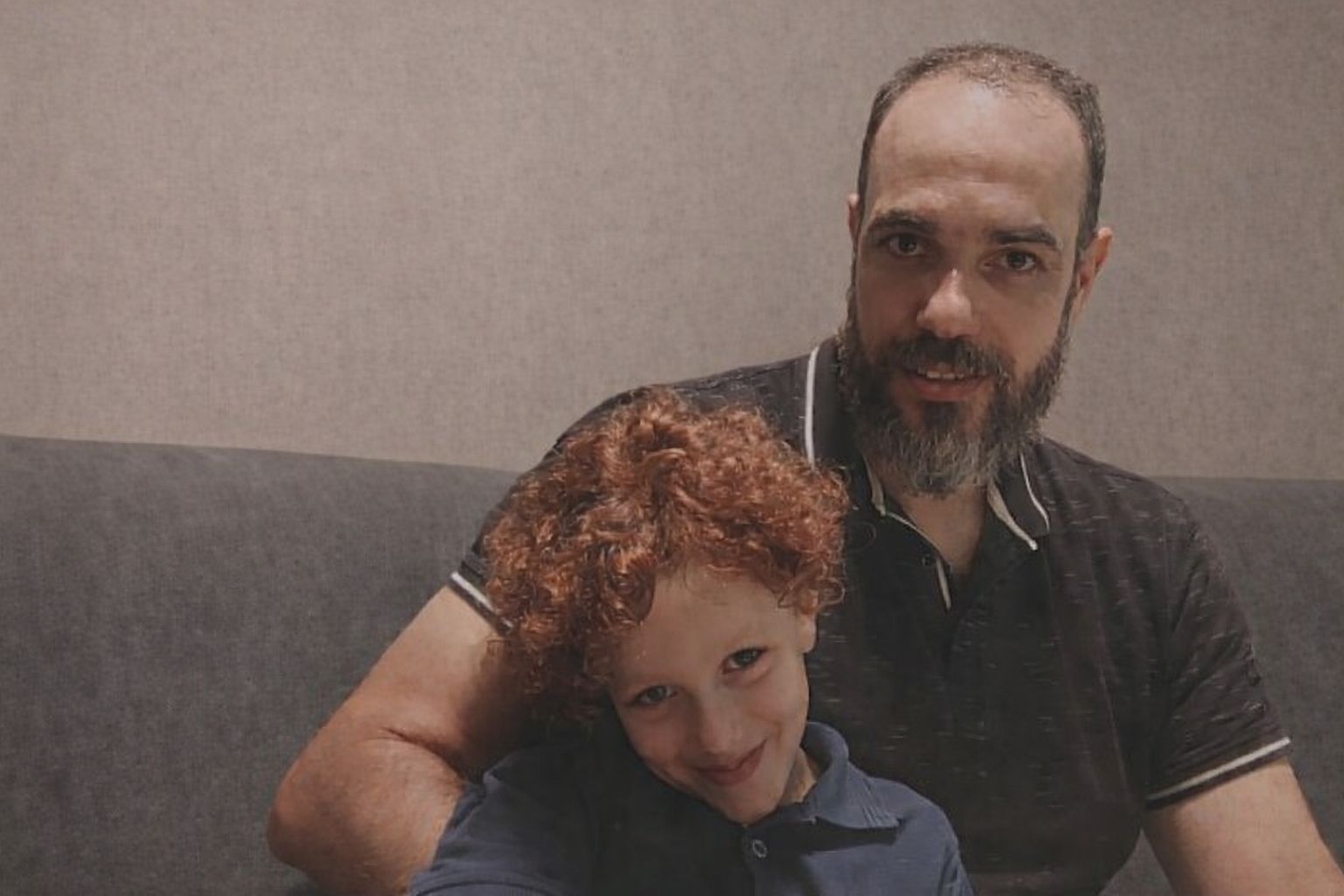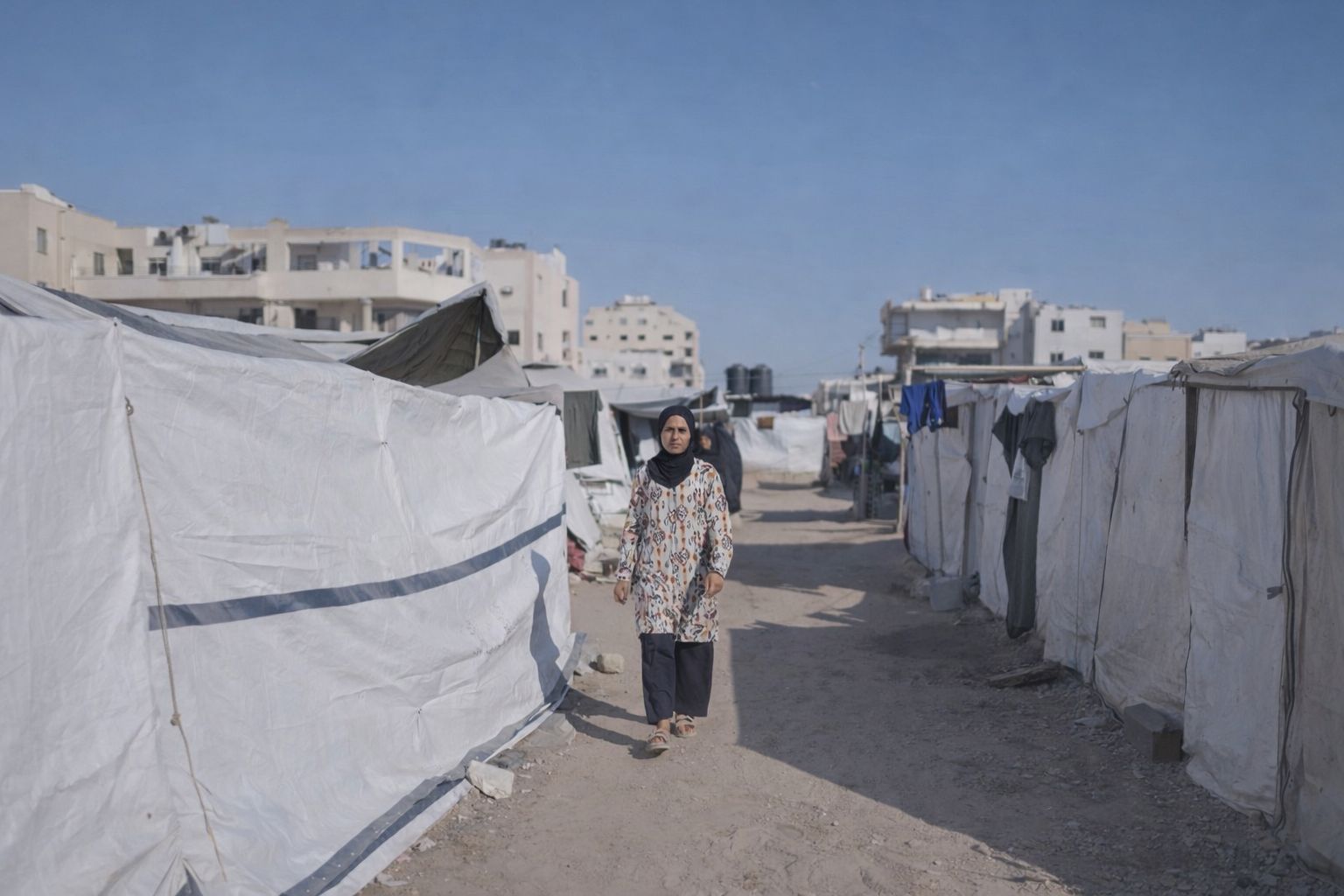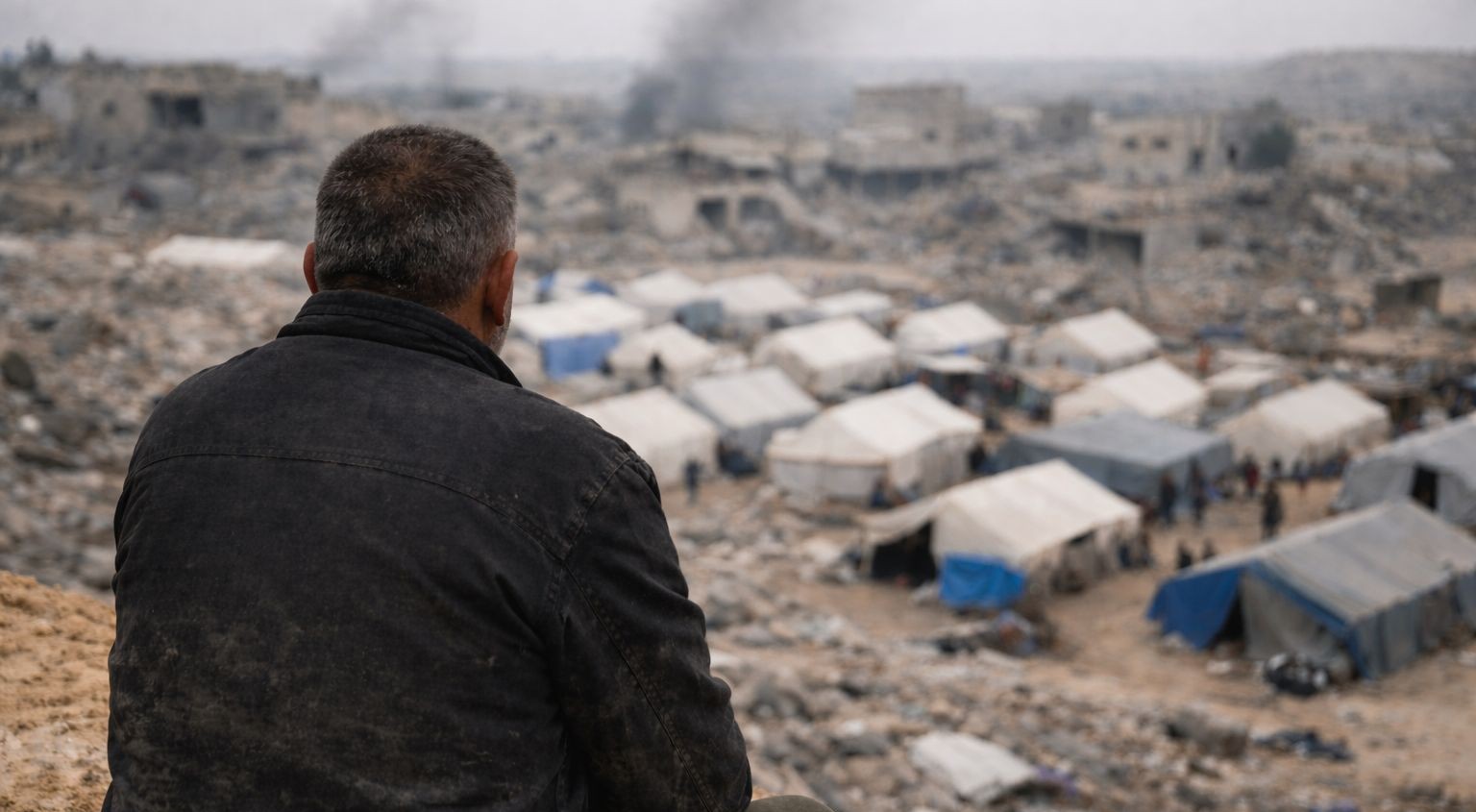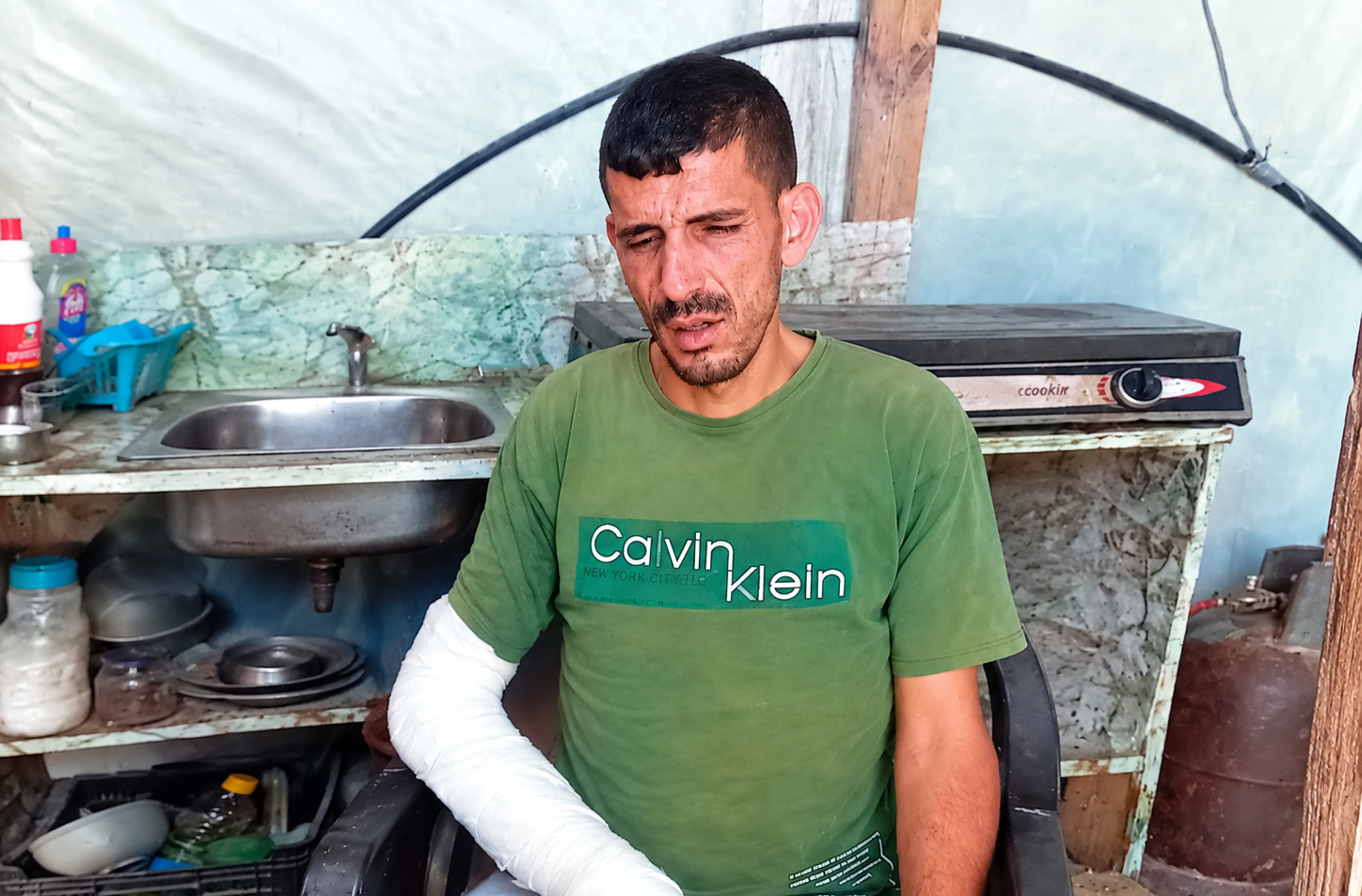
In a tent held together only by wooden poles and worn-out tarpaulin that barely protect from the bitter cold of winter or the scorching heat of summer, Lafi Mohammed al-Najjar (35), a Palestinian man who has been blind since birth and lives with hemophilia B, recounts a chapter of his life that is a reflection of the genocide itself. It began with his arrest while on his way to receive medical treatment and has yet to end, culminating most recently in the killing of his third child, ‘Adel, while the boy was collecting firewood to prepare the family’s only meal of the day.
Lafi married Sally Shehdah Hussein al-Najjar in 2011, and together they had five sons: Mohammed, Saber, ‘Adel, Ahmed, and ‘Omar. Before the Israeli military offensive, he lived a life dependent on aid from others and travelled regularly between a government hospital in Ramallah and Sheba Medical Center (Tel HaShomer) in Israel to receive treatment for a rare inherited blood disorder. That fragile balance was shattered after the outbreak of Israel’s genocidal war on the Gaza Strip in October 2023. On 10 October, while returning to the West Bank after receiving treatment at Sheba Medical Center (Tel HaShomer), Lafi was arrested by the Israeli Occupation Forces (IOF) at the Mitar checkpoint.
14 Days in Detention
In his testimony to the Palestinian Centre for Human Rights (PCHR) field researcher, Lafi recalled those days in a weary voice:
“I was taken, with my hands and feet bound and my eyes blindfolded, to the Anatot military camp, where I was held for 14 days in its barracks. I slept on a very thin mattress with a single blanket and spent the entire day sitting on gravel. I was given only one meal each morning and had to rely on other detainees to help me with even the simplest daily tasks because of my visual impairment.”
He said that the soldiers would tie his hands behind his back whenever the detainees were subjected to crackdowns. He added that the cold weather and the prolonged hours of sitting on the gravel ground left his body severely swollen and exhausted. He was examined by a doctor, who, after discovering that he had hemophilia B, decided to transfer him to a hospital in the West Bank.
At al-Jib Checkpoint, northwest of Jerusalem, the IOF handed Lafi over to the Palestinian authorities. He was then transferred to a government hospital in Ramallah, where he contacted his brother-in-law, Mahmoud al-Najjar, who was living there. After weeks of coordination, Lafi was finally able to return to the Gaza Strip on 20 November 2023. Upon his return, he found that his wife had been displaced to her family’s home in Bani Suhaila. Over the following six months, the family endured repeated displacement—from Irmidah to Rafah before eventually returning to Khan Younis. There, Lafi found their home damaged and burned after it had been used by the IOF as a military post. It was later completely destroyed during the ongoing military offensive.
One Displacement after Another
The genocidal war offered the al-Najjar family no relief. On 19 May 2024, an Israeli military officer called Lafi and ordered him to evacuate his home. The family fled first to the Bani Suhaila Intersection, then to al-Dawab Market, north of Asdaa Prison, before moving to al-Mawasi al-Qararah, where they were hosted by the al-Astal family for three months. They eventually settled in a tent east of Nasser Medical Complex, near the French Field Hospital. It was not a matter of choice but of necessity, as Lafi’s chronic disease required him to remain close to medical facilities in order to receive ongoing treatment.
At every stop along this seemingly endless journey of displacement, the family endured severe water shortages, the scorching heat of summer and the bitter cold of winter inside flimsy tents, while insects and rodents repeatedly invaded their cramped living space.
With the continued closure of the crossings by IOF, decreasing humanitarian aid, and soaring prices, cooking gas became unavailable. The family was forced to cook over firewood and survive on a single meal a day, usually consisting of lentils or beans. Even the flour they could obtain was often mixed with sand.
Mohammed Never Returned from the Aid Distribution Point
When the IOF established aid distribution points, Mohammed (13), Lafi’s eldest son, took on the responsibility of helping his family survive hunger. Relying on his young age to improve his chances of obtaining food, he would go to the distribution points in the hope of bringing something back for his family. On the morning of 3 August 2025, Mohammed left for the aid distribution point in the Mirage area, which separates southern Khan Younis from northern Rafah. He never returned. After hours of anxious waiting, Lafi learned that his son had been wounded and taken to Nasser Medical Complex.
Lafi described that moment as the hardest of his life:
“My wife arrived at the Reception and Emergency Department, where we were told that Mohammed had succumbed to his injuries.”
He recalled reaching out to touch his son’s face and body, unable to stop crying and screaming as those around him tried to comfort him and his wife.
Mohammed was laid to rest in a cemetery behind the al-Namsawi Towers. His father returned home consumed by a grief that, he says, has never left him, despite the condolences and support offered by relatives and neighbors. The pain of losing his son, Lafi recalled, has remained with him every day since.
Two bullets Struck Saber at Bani Suhaila Intersection
Fate gave the al-Najjar family no much time to recover from their first devastating loss. On 2 September 2025, while Lafi’s wife and their 11-year-old son, Saber, were trying to collect blankets to protect the family from the approaching winter, news came that the IOF opened fire on civilians at the Bani Suhaila Intersection. Saber was wounded and taken to the hospital. Lafi recalled rushing to the hospital, fearing that Saber had suffered the same fate as his brother Mohammed. He said he was terrified that those around him were hiding the truth to spare him the shock of learning that his son had been killed.
Saber was still alive, although his injuries were critical. He had been struck by two bullets- one passed through his left foot, leaving entry and exit wounds, while the other hit him in the abdomen. He was rushed into surgery, where doctors were forced to remove his spleen. Saber later recovered from his injuries and now lives with relatives in al-Qadisiyah Camp, near the Tiba Towers, where he is receiving better care than the family’s tent could provide.
‘Adel: Gathering Firewood for His Family
As the cooking gas crisis in the Gaza Strip deepened under Israel’s continued siege, 10-year-old ‘Adel regularly headed to the Bani Suhaila Intersection, east of Khan Younis, near the Yellow Zone where the IOF were stationed. There, he searched for firewood, plastic, or any flammable material that could be used to light a fire for boiling water or cooking food.
On 28 April 2026, an Israeli drone targeted 10-year-old ‘Adel while he was carrying out his daily task of collecting firewood. He was struck by shrapnel across his body and killed instantly.
The family learned what had happened from Lafi’s sister-in-law after her husband, Bilal, had carried ‘Adel on a motorcycle to Nasser Medical Complex. Lafi and his wife rushed to the hospital for the third time in less than a year, consumed by the same fear they had endured twice before. This time, however, no operating room awaited ‘Adel. Instead, he was taken to the morgue. His body was then carried on the shoulders of mourners in a funeral procession to a cemetery behind the al-Namsawi Towers, where he was laid to rest beside his brother, Mohammed.
He said, ” Those feelings have stayed with me and have never left me. I dreamed of seeing my children grow up and support me in my disability and disease. Instead, the IOF stole them from me—killing two of my sons and wounding a third.”
A Life Caught Between Illness and Waiting
Today, Lafi survives on monthly assistance from the World Food Programme (WFP), which is far from sufficient amid the soaring prices in Gaza’s markets. He continues to receive regular treatment for hemophilia B at a specialized clinic in Nasser Medical Complex. He is also living with a fracture in his right arm that he sustained 25 days ago and that has yet to heal because of his condition. Although doctors told him he would be able to travel abroad for treatment within a few days, that promise has yet to be fulfilled. He is still waiting.
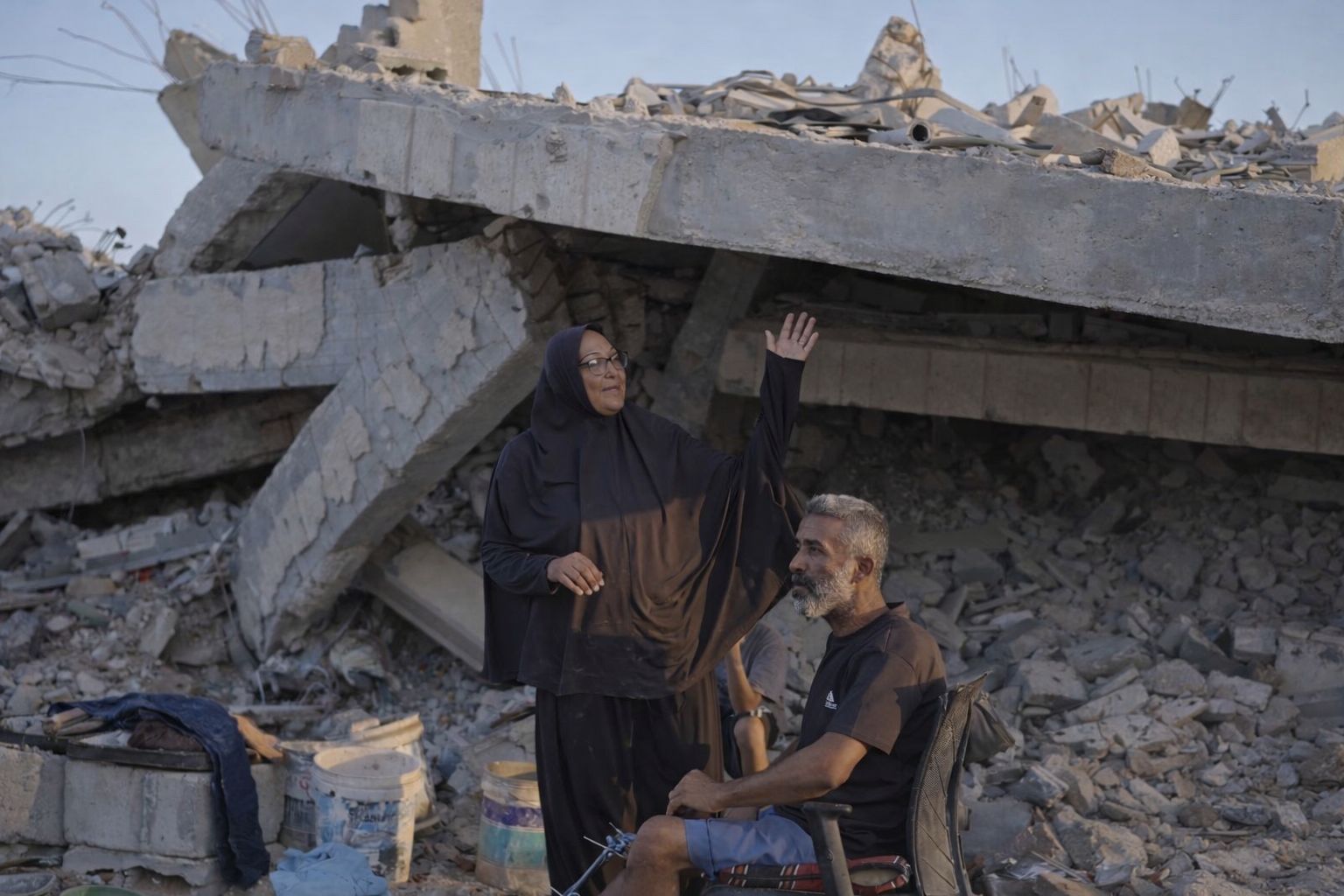
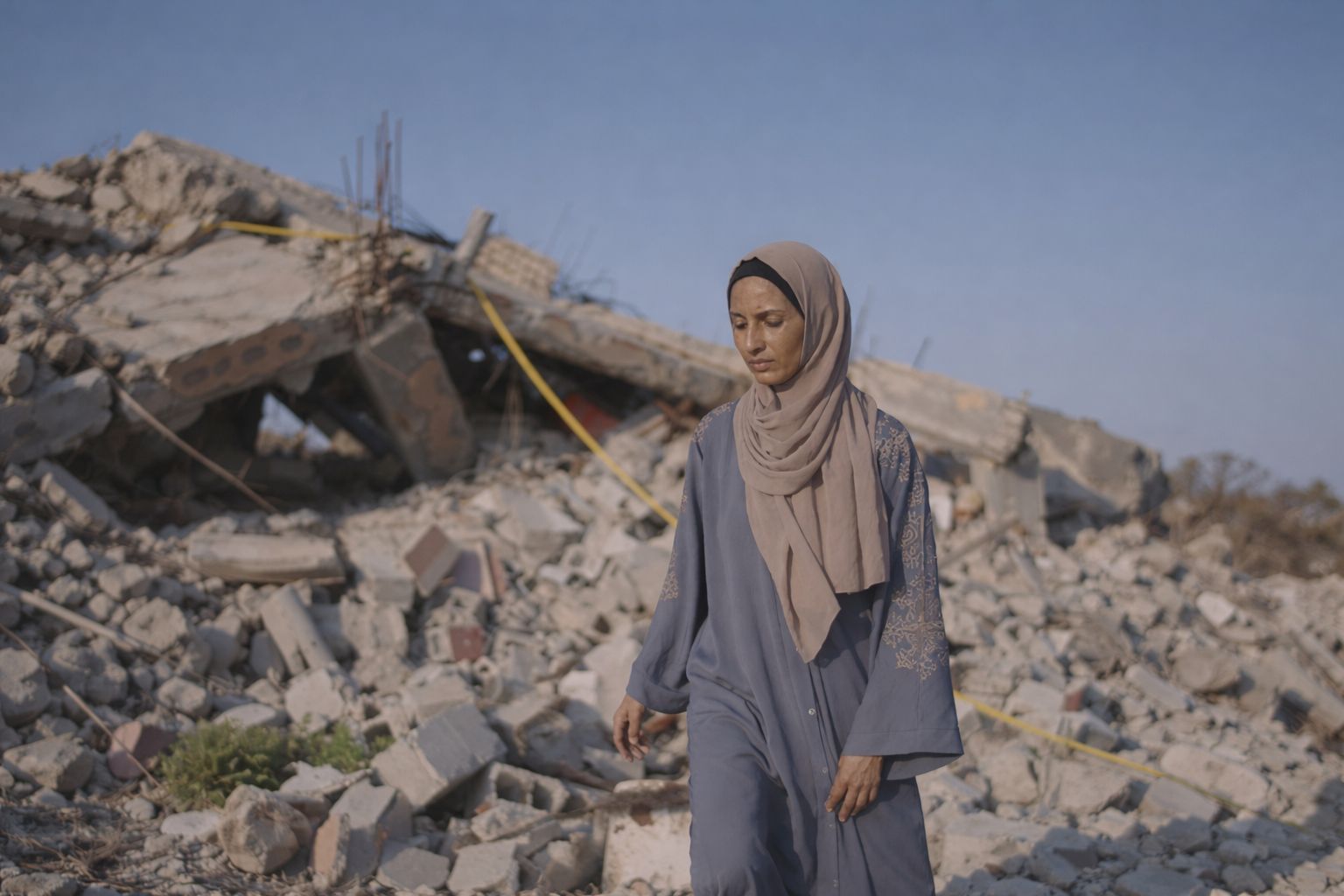
It was not until six months ago that Lafi’s wife was able to return to the area and discover the fate of their home. She found nothing but a pile of rubble in front of her. It no longer bore any resemblance to the house where she had raised their five sons.
As for Lafi himself, he no longer tries to put his life into words. He says that speaking about the details of his suffering reopens wounds he cannot bear to relive. He simply says that the grief of losing two of his sons, compounded by the burden of his disability and illness, is greater than words can express.