Date of Testimony: 9 January 2026
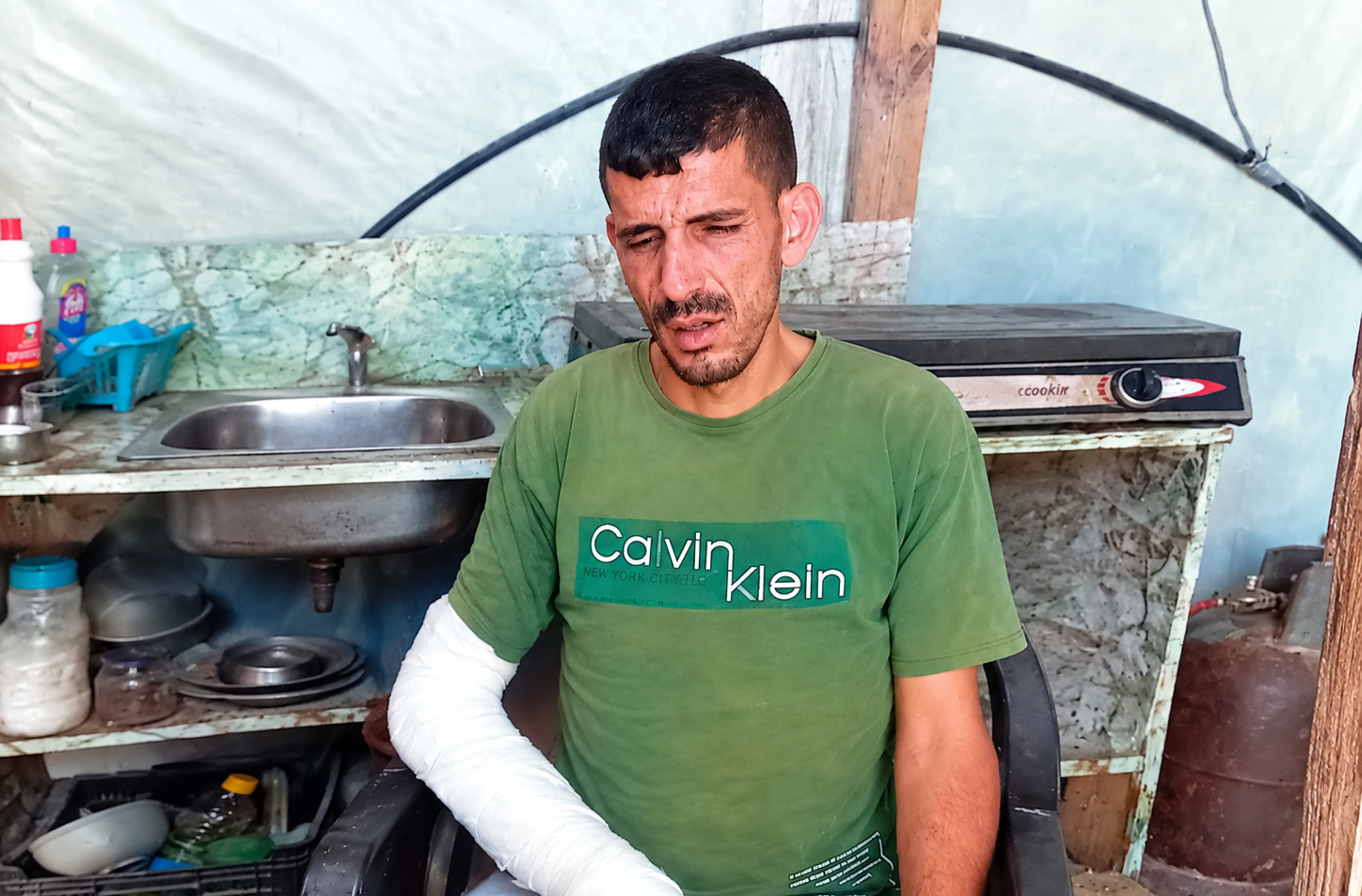
Name: Mohammad Hamid Salem Abu Mousa, 45, married, and I have three children, living in Khan Younis
I am married to Ms. Rawan Hassan Salha (36 years old). We have three children: Jouri (13 years old), Hamid (14 years old), and Yousef (7 years old). We reside in Al-Amal neighbourhood in Khan Younis. I have worked as a radiology and medical imaging specialist at the Ministry of Health since 2007.
I lived with my family in our apartment located on the third floor of our extended family home in Al-Amal neighbourhood, Khan Younis. We had been leading a stable life, marked by a sense of safety, reassurance, and family stability. On the morning of 7 October 2023, I was at home while my wife had finished preparing our children for school and they had already left. However, upon hearing the loud explosions that occurred that morning, my wife immediately went to the school and brought the children back home.
Approximately two hours later, the situation became clearer, as it was revealed that rockets had been launched toward the occupied territories and that the border fence had been breached. As events escalated and the Israeli army began carrying out intense airstrikes and bombardments targeting various areas of Khan Younis, a state of emergency was declared at Nasser Medical Complex. Accordingly, I was assigned to full duty under the emergency schedule, working 24-hour shifts for three days each week. I immediately complied with the decision. From the very first moments, I noticed that the Israeli response was extremely violent, as the nature of the injuries I dealt with during my work in the radiology and medical imaging department was severe and unusually complex.
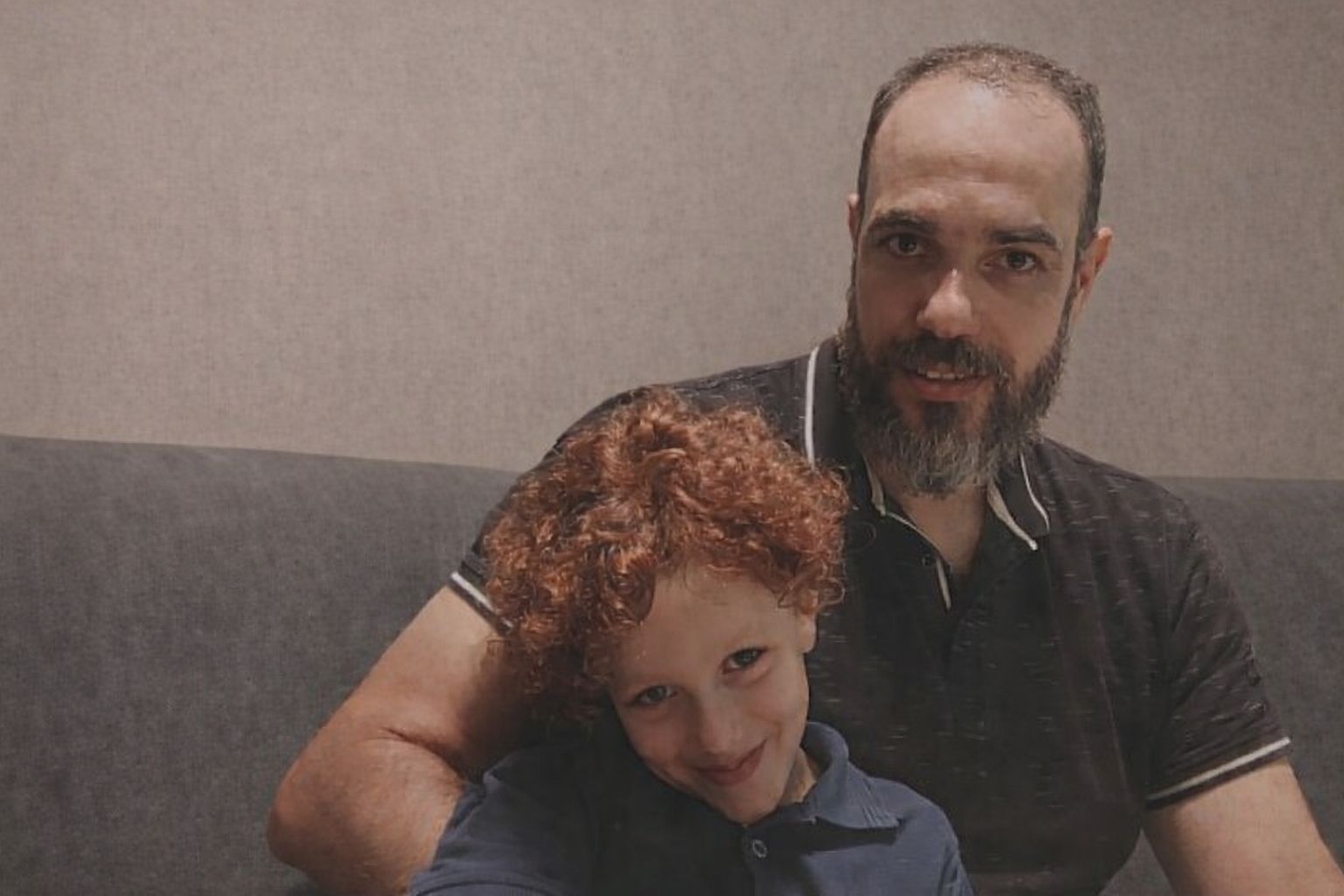
Yousef, the Handsome, fair-skinned Boy
I continued to carry out my duties normally and in full accordance with the assigned schedule until approximately 12:00 noon on Sunday, 15 October 2023. At that time, I was on duty at Nasser Medical Complex when I heard a powerful explosion. From the hospital courtyard, I observed that an airstrike had targeted the vicinity of my home in the Al-Amal neighbourhood, Khan Younis. I immediately attempted to contact my wife by mobile phone, but the call could not be completed due to the disruption of telecommunications. I then contacted her via WhatsApp; her phone rang twice, and on the second attempt the line connected. However, I could only hear intense screaming and crying, with no clear words. At that very moment, I heard one of the media correspondents inside the hospital report that the strike had targeted the home of the Abu Mousa family in Al-Amal neighbourhood, which plunged me into a state of extreme fear and panic.
As ambulances began arriving at the hospital, I rushed to the reception and emergency department. There, I heard the voices of my wife and my two children, Hamid and Jouri. Thank God, they were alive and had sustained moderate injuries. I tried to calm them, but I noticed that my son Yousef was not with them. I began searching for him inside the department, then in the intensive care unit, and afterward went to the radiology and medical imaging department, hoping to find him there, but to no avail.
I returned to the reception area, where my wife was describing Yousef’s features to the doctors, repeatedly saying: “My son is 7 years old, fair-skinned and handsome, with curly hair.” At that moment, I stopped one of the journalists who were documenting the arrival of the wounded and asked to see the photos he had taken. While reviewing the images, I recognised my son Yousef in one of them, even though his face was covered. One of the people present then informed me that the child shown in the photo had been transferred to the morgue.
I could not comprehend what I was told at that moment and rushed to the morgue, where the greatest shock awaited me: I identified my son Yousef there. Despite my pain and the devastating shock of loss, I tried to remain composed and to lessen the impact of the tragedy on my wife and children. Inside, however, I felt an intense grip around my heart and profound sorrow, especially as Yousef was a remarkable child—intelligent, cheerful, and full of life—whom I loved no differently from my other children.
In the same attack, my brother’s wife, Hiba Al-Madhoun (38 years old), and her sons, Hamid Jasser Hamid Abu Mousa (21 years old) and Abdulrahman Jasser Hamid Abu Mousa (8 years old), were killed. Six other family members were moderately injured as a result of the warplanes targeting the third and fourth floors of the house. The bombardment also resulted in the killing of one of my relatives, Hani Fathi Amer Abu Mousa (44 years old), who was struck by flying debris while standing in the street opposite the targeted home. All those killed were buried in Abu Mousa cemetery, located near the Austrian Towers area in Khan Younis.
Despite this painful incident, which tore a part of my heart and soul away, I continued working at the medical complex until the Israeli army invaded the city of Khan Younis on 1 December 2023, followed by the arrival of its forces and the imposition of a complete siege on the complex on 22 January 2024, at which time my family was sheltering with me inside the hospital.
Arrest Following Displacement from Nasser Medical Complex
At approximately 4:00 a.m. on Thursday, 15 February 2024, after the Israeli army issued instructions to the administration of the medical complex—represented by its director, Atef Al-Hout—ordering the evacuation of all displaced persons and patient companions, while allowing only non-ambulatory patients and medical staff to remain, he was informed of a specific route that must be followed. The designated route was to begin at the hospital gate, pass by the Jasser building, continue toward Al-Qal‘a in the city centre, and then proceed southward until reaching the road leading to the city of Rafah. As a result, I was forced to leave the complex along with my wife and children, together with hundreds of civilians.
We proceeded on foot toward the north-eastern gate of the complex overlooking Al-Bahr Street. As soon as we exited, I noticed a heavy presence of Israeli military vehicles, a large deployment of occupation soldiers on the ground, and snipers positioned on the rooftops of high buildings surrounding the complex.
Upon reaching the gate of the sports club located immediately east of the medical complex, all civilians were stopped. The occupation forces instructed that every five people advance toward a camera that had been set up in front of one of the shops beneath the stadium stands overlooking the main street. My identity card and my mobile phone, a POCO F3, were confiscated. I, along with two other individuals, was then ordered to enter the club. As soon as we entered, we were subjected to an initial interrogation about our personal details and the nature of our work. This was followed by a violent assault, during which occupation soldiers severely beat us with batons, accompanied by insults and degrading, obscene slurs that violated human dignity.
After that, I was ordered to completely remove my clothes. I had a sum of 600 shekels in my clothing, which I have not recovered since. I was subjected to a humiliating body search, during which I felt that one of the soldiers deliberately touched sensitive areas of my body with the clear intent of humiliation. I was then forced to wear only boxer shorts and a white overall. My hands were bound behind my back with plastic ties, and my eyes were fully blindfolded.
I was held inside one of the rooms beneath the stadium stands for approximately 15 hours. The forces then brought a military truck, into which we were loaded in a degrading and humiliating manner, and driven to an unknown location. During the journey, the driver deliberately inflicted as much physical harm as possible, intentionally taking rough roads, driving at excessive speed, and repeatedly stopping abruptly. This caused me severe and sharp pain in my feet.
Upon arrival at that location, I was immediately taken into an interrogation room, where the blindfold was removed. The room contained a desk and an interrogator wearing a military uniform. The interrogation began immediately and focused on the nature of my work, the individuals I had encountered inside the hospital during my shifts, and my whereabouts on 7 October. During the interrogation, I was accused of working with Hamas—accusations that I categorically denied.
Each time I denied these allegations, I was beaten. The interrogation lasted for approximately one hour, after which my eyes were blindfolded again and I was taken to an open area where a number of detainees were being held. I was forced to sit on a rough, abrasive surface, which was extremely painful.
I suffered from intense cold amid extremely harsh weather conditions, as heavy rain was falling, causing me to shiver violently due to the low temperature. In response, one of the soldiers placed a wet blanket over my body, which only worsened my suffering rather than alleviating it.
We remained detained at that location until the early morning hours. A military truck then arrived, and the soldiers carried me and violently threw me inside. I was forced to lie on my back while my hands were bound behind me—an extremely harsh and painful position that caused me severe physical suffering.
After travelling some distance, we arrived at another site where buses were waiting. We were taken down from the truck and forced onto the buses, after which we were transported to an unknown location. Throughout all stages of the transfer, and every time the means of transport was changed, all detainees were subjected to severe beatings carried out in a brutal manner, accompanied by continuous verbal abuse and insults.
Upon arrival at that location, we were unloaded, and the soldiers released muzzled dogs toward us. The dogs attacked us, striking us with their leashes in a highly professional and extremely painful manner. This assault lasted for several minutes, while the soldiers laughed and mocked us.
After that, the plastic restraints were removed and the blindfold was lifted, revealing a large number of heavily armed soldiers holding batons in their hands. They began shouting at us, ordering us to remove our clothes quickly. I was then given clothing consisting of grey pyjamas and an undergarment (boxer shorts).
Later, my hands were shackled with metal cuffs, my eyes were blindfolded again, and I was seated to await a medical examination. After approximately half an hour, I was taken to a doctor who asked whether I suffered from any chronic illnesses or took any medication. I answered in the negative, after which I was assigned a prisoner number: 017473.
I was then transferred to one of the sections while my hands were cuffed in front with metal restraints and my eyes blindfolded. I later learned from other detainees that I was being held in Section “A” of Sde Teiman detention facility, where I remained in this condition for three consecutive days.
Due to my good command of the Hebrew language, I was later assigned the role of a shawish within the section. One of the main privileges associated with this role was the removal of the metal cuffs and the blindfold, in exchange for assisting prisoners with distributing food and conveying the guards’ instructions to them.
The section in which I was held contained a large number of detainees, including 27 prisoners suffering from various illnesses. I assisted them in reaching the toilet, helped distribute food, and performed translation duties when needed.
I experienced extreme difficulty accessing the toilet, particularly in maintaining personal hygiene, given that my hands were cuffed and my eyes blindfolded. We were also prohibited from performing ablution and from praying, which further compounded our psychological and physical suffering.
Repression raids and the Targeting of Me
I remained in this section for 42 days, during which the section was subjected to four repression raids carried out by Israeli occupation soldiers. These campaigns involved the throwing of stun grenades, orders for all detainees to lie face down on the ground, and the use of dogs. During these operations, we were subjected to severe beatings by the soldiers. Often, each repression raid would deliberately target a specific detainee, who would then be brutally assaulted in front of the others.
During the final repression raid, I was personally targeted. I was directly attacked and subjected to a violent and indiscriminate beating with batons. One of the soldiers deliberately lifted me and threw me forcefully to the ground, resulting in the fracture of two ribs. The pain from these injuries persisted for three consecutive weeks. Another soldier struck me with a baton in the area of my testicles, causing severe pain that lasted for approximately four consecutive days. The entire assault lasted about five minutes.
I recall a prisoner identified as M.S., who appeared to be suffering from cerebral blood clots. He was among the 27 ill detainees in the section and wore an adult diaper. I assisted him with going to the toilet and with eating. Two weeks after I was appointed shawish, his health condition deteriorated significantly and he entered a state of delirium. He was subsequently transferred from the prison to an unknown location.
During the first 42 days of my detention, I was not subjected to any substantive interrogation, except for a single session that consisted of completing a statement form and did not exceed ten minutes. This session focused primarily on collecting personal information and occasionally touched upon military-related matters, as previously mentioned, in addition to details about the nature of my work, my whereabouts on 7 October 2023, and who had been present inside the hospital at that time.
I was then transferred to Section “C,” where I spent 21 days, during which I remained handcuffed and blindfolded for the entire period. While in that section, it was subjected to three repression campaigns, one of which specifically targeted a detainee identified as I.S. Three days later, his health began to deteriorate; he started to lose his memory and speak incoherently and required assistance when going to the toilet. On the final day, he collapsed to the ground and lost consciousness. It was evident that he had died, and I believe the cause was a brain haemorrhage resulting from the severe beating he had endured. The soldiers later came to the section and took him away.
In other repression raids, the soldiers focused on a young man identified as M.M., who was subjected to indescribable beatings, while another campaign targeted a young man from the H. family. After that, I was transferred to Ofer Prison. During the transfer, I was subjected to a brutal assault: one blow resulted in the fracture of a rib, and another punch broke my left jaw. After I was unloaded, I was placed in Room No. 10, which held 21 prisoners, where I remained for approximately ten days. During this period, I suffered severe pain in my chest and jaw that lasted for about a week, and I experienced great difficulty eating and breathing.
On 15 May 2024, I met with lawyer Nadia Daqa and lawyer Nadim Arafa from Al-Dameer Association inside a container. They reassured me about my family and conveyed a message of reassurance from me to them. I also informed them about what had happened to detainee I.S., and they confirmed to me that he had indeed passed away.
After that, I was transferred to another section in Ofer Prison until 17 June 2024, and then transferred to Negev Prison. The transfer involved severe beatings before I was placed in a vehicle belonging to the Prison Service. Upon arrival, I was placed in Tent No. 2 in Section 3, measuring approximately 5 × 10 metres, which housed around 28 prisoners and contained a dilapidated toilet.
The tents were raided without warning. Soldiers would force us out into the yard, and at times some of us were placed inside cages. The contents of the tent were completely ransacked, and in some cases water was deliberately poured over the bedding.
Punitive Measures Following the Hunger Strike
On 7 July 2024, we participated in a hunger strike in protest against the poor quality of the food provided to us, as well as the ill-treatment we were subjected to. As I was one of the organisers of the strike, I was transferred to solitary confinement for a period of nine days. The cell contained a bed and a bathroom, and during this period two other detainees were brought into the same room with me.
After the end of the solitary confinement period, I was transferred to Section 4, Tent No. 4. During my stay there, the tent was subjected to one repression raid by the Israeli occupation soldiers. I remained there for two weeks, after which I was again transferred to solitary confinement for five days. I was then moved to Tent No. 5 in Section 2, where I remained until mid-January 2025. This period coincided with transfers related to the deal concluded between the Palestinian factions and Israel. After that, I was transferred to a place known as “Al-Qal‘a B,” which consisted of a tent surrounded by iron fencing, measuring approximately 5 × 10 metres and housing around 40 prisoners. I remained there until 24 February 2025.
Subsequently, I was transferred to the section known as the “Cages,” referred to as “Al-Bakh.” This section consists of tents surrounded by wire mesh fencing. Detainees are prohibited from going to the toilet after 6:00 p.m., and if a detainee needs to relieve himself, he is forced to do so in a bucket.
During May 2025, there was a detainee with me identified as M.E.A., 44 years old, who was suffering from intestinal obstruction and complained of constant abdominal pain. He was later transferred to another section, after which we learned that he had passed away. I remained detained in the “Al-Bakh” section until August 2025.
Scabies was widespread among a large number of detainees, and I contracted it in February 2025. Due to the severe shortage of blankets and mattresses, we were forced to sleep pressed against one another, as a single blanket was shared by three detainees. The itching was extremely severe, sometimes causing the skin to break, leading to infections and ulcerations. I also heard of a detainee identified as M.A. who died as a result of severe scabies, infections, and ulcerations. He had been detained in Section 4 of Negev Prison. Medications were only sporadically provided, usually when talk of potential exchange deals began.
During my detention, I underwent four sessions conducted via computer, during which the charges in each instance related to alleged membership in a terrorist organisation. These sessions took place as follows:
Throughout my detention, I was subjected to sexual violence, including an attempt by one of the soldiers to insert a stick into my anus while I was clothed. In many instances, body searches appeared to be conducted solely for the purpose of harassment, without any legitimate security justification. In addition, during my transfer to Negev Prison, I was violently kicked in the testicles, causing severe pain that I continue to suffer from to this day.
Towards Freedom
On 10 October 2025, I was transferred to Section 4, which housed a number of detainees. We remained there until Saturday, 11 October 2025, at approximately 3:00 p.m., when a delegation from the International Committee of the Red Cross arrived and began filling out questionnaires. They informed us that a deal had been reached and that we would be released soon.
Indeed, on the morning of Monday, 13 October 2025, we were given grey uniforms bearing the logo of the Prison Service and placed on buses, where we waited until around noon. From there, we were transferred to the Kerem Shalom crossing, where we were handed over to a delegation from the International Committee of the Red Cross. The ICRC then transported us to Nasser Hospital in Khan Younis, where we arrived at approximately 3:30 p.m.
A Shocking Piece of News
Inside the hospital, my colleagues received me and I underwent initial medical examinations at the medical point. I then met my wife and children, and the joy was overwhelming. However, that joy was short-lived. I asked about my mother, Hajjah Hiyam Mohammad Abdel Razzaq Al-Madhoun (75 years old), and my wife informed me that she, along with my sister Aya Hamid Salem Abu Mousa (35 years old) and her children, Omar Fahd Abu Mousa (9 years old) and Mariam Fahd Abu Mousa (7 years old), had been killed during the Israeli incursion into the city of Deir al-Balah on 21 July 2025. After receiving this news, I left the hospital.
Before my arrest, my weight was 105 kilograms. At the moment of my release, my weight had dropped to 74 kilograms.