The Palestinian Centre for Human Rights (PCHR) strongly condemns the crime of enforced displacement affecting 20 Palestinian families from the Bedouin community of Shalal al-Auja, north of Jericho Governorate, on the morning of Thursday, 8 January 2026. This displacement comes as a result of escalating settler attacks and threats carried out under the protection and complicity of the Israeli occupation forces, within the context of a systematic policy aimed at depopulating the area of its indigenous population and imposing illegal colonial realities on the ground.
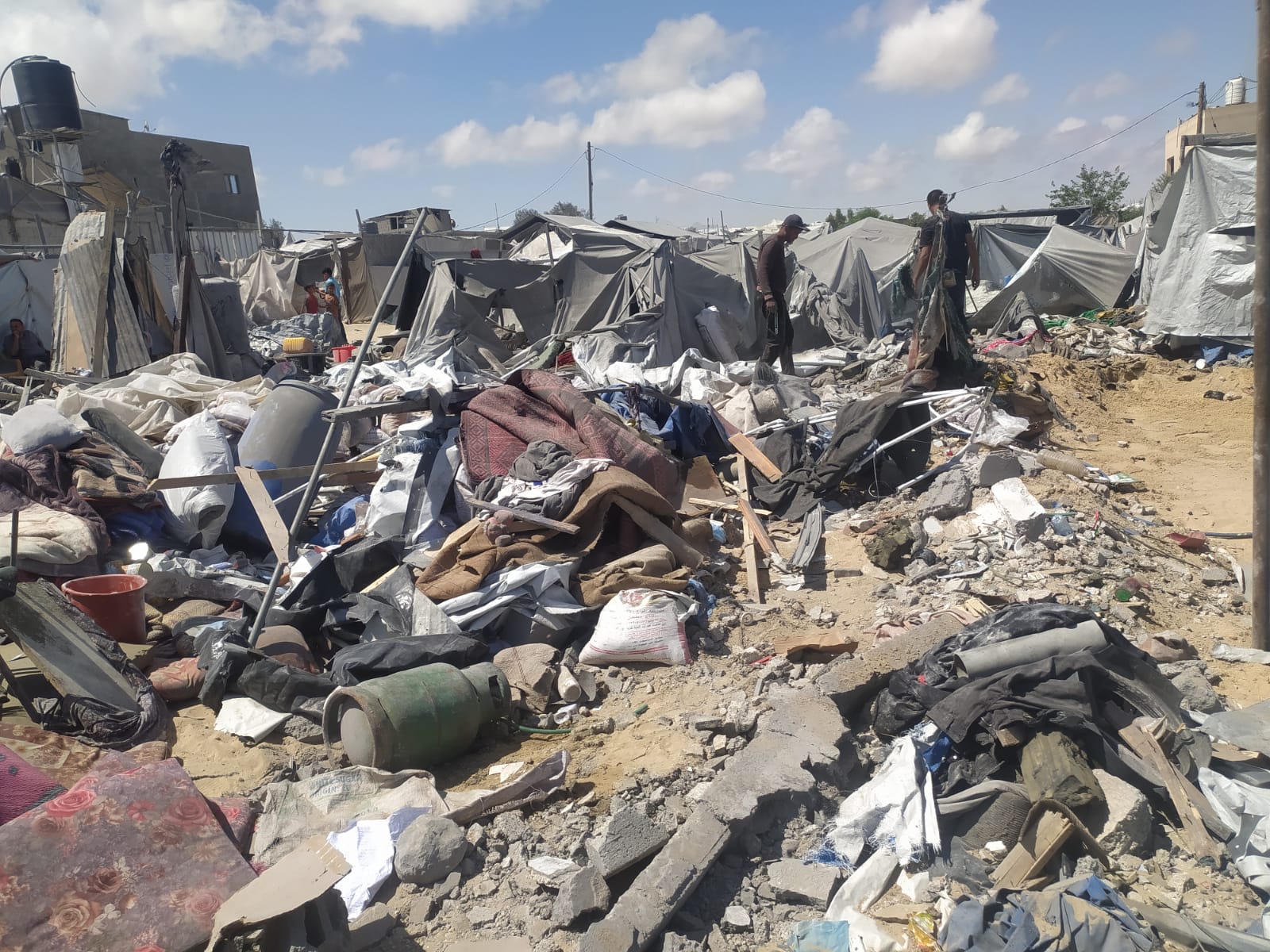
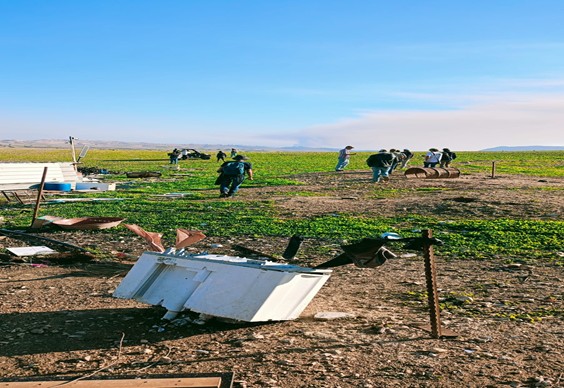
According to PCHR’s documentation, 20 families from the al-‘Amarin family, comprising 129 individuals—including 50 children and 25 women—who reside in the north-western part of the Shalal al-Auja Bedouin community, were forced to dismantle their makeshift tin shelters and leave the area. This followed a sustained campaign of attacks and direct threats by settlers targeting the families themselves and their sources of livelihood, in the complete absence of any form of protection.
The roots of this crime date back to approximately two years ago, when settlers seized lands adjacent to the community in the Ein al-Auja area. Since then, they have sought to impose control by force through grazing livestock on Palestinian lands and expanding assaults and harassment against residents. These attacks peaked on 31 December 2025, when settlers ploughed approximately 100 dunums of land directly in front of residents’ homes—land that constitutes their primary source of income—destroyed the only road leading to the community, and cut off electricity supplies. These actions clearly aimed to cripple the foundations of life and force residents into leaving.
One resident of the area, lawyer Haitham Suleiman Dahoud Zaidan (25), told PCHR’s field team that settlers routinely storm the community day and night, assault residents, and threaten them with death if they do not leave. He confirmed that these ongoing threats forced families—particularly those living near Ein al-Auja—to flee out of fear for their lives.
The Shalal al-Auja community is home to approximately 121 families, with a total population of around 800 people, the majority of whom are children. As a Bedouin community reliant on agriculture and livestock farming as their main means of subsistence, their forcible displacement constitutes a direct assault on their rights to housing, work, and a dignified life.
PCHR stresses that this pattern of settler violence is neither random nor individual in nature, but rather the result of deliberate and systematic coordination between the various arms of the Israeli occupation: the government, the military, and the settlers. This clear division of roles reflects an official policy aimed at entrenching Israeli control over West Bank land and emptying Palestinian areas through organised violence protected by legal and military cover, as part of a broader strategy of demographic transformation and de facto annexation.
PCHR has previously documented, in a field report, the grave escalation of violations in the Palestinian Jordan Valley—particularly east of Jericho—where Israeli occupation forces have intensified efforts to depopulate the land of its indigenous inhabitants through multiple forms of forcible displacement targeting Bedouin communities. Among the most prominent cases is that of the Arab al-Mleihat al-Tahta community, southeast of al-Auja village, which was subjected to systematic pressure that forced its residents to abandon their homes and grazing lands in one of the most dangerous forced displacement operations of 2025.
PCHR affirms that what occurred in the Shalal al-Auja community constitutes the crime of forcible transfer, prohibited under international humanitarian law, particularly Article 49 of the Fourth Geneva Convention, which prohibits the individual or mass forcible transfer of protected civilians from occupied territory.
These acts fall within a broader policy aimed at altering the demographic character of the West Bank and replacing the indigenous population with settlers. Such practices constitute war crimes under the Rome Statute of the International Criminal Court, as they involve the unlawful transfer of civilians, destruction of property, and attacks against civilians.
PCHR further emphasises that settler attacks—including physical violence, property destruction, and the severing of livelihoods—are carried out within the framework of an official policy adopted by the Israeli occupation authorities. This policy promotes pastoral settlement as a tool to impose forcible displacement and expand colonial control over Palestinian land, thereby engaging the direct legal responsibility of the occupying power.
PCHR holds the Israeli occupation authorities fully responsible for the crime of forcible displacement suffered by the residents of the Shalal al-Auja community, as well as for the safety of those who remain under imminent threat of displacement.
PCHR calls on the international community, particularly the High Contracting Parties to the Geneva Conventions, to take urgent action to halt settler violence, stop forcible displacement, and provide immediate international protection for the civilian population.
PCHR also urges the International Criminal Court to accelerate its investigations into war crimes committed in the occupied Palestinian territory, including the crime of forcible displacement, and to expand accountability to include those responsible for settlement and displacement policies.
Finally, PCHR warns that the continued culture of impunity encourages the escalation of these crimes and undermines the foundations of international civilian protection. The Centre cautions that international silence regarding what is taking place in the West Bank amounts to indirect complicity in policies of forcible displacement and demographic cleansing.