Date of Testimony: 29 July 2025
Hala Al-Ayyam Iyad Walid Shalabiya, 16 years old, from Shuja’iyya, Gaza City, currently displaced in Mawasi Khan Younis.
We are a family of seven, including three children: my father, Iyad Shalabiya (49), my mother, Houriya Shalabiya (44), my siblings Nour Al-Iman (19), Walid (18), Wasim (14), and Mohammed (8).
Since the beginning of the war, we have lived under harsh and unbearable conditions, suffering from severe shortages of food and water. My father is unemployed and cannot provide even the most basic necessities. For long days, we went without food or flour, and my father often had not even one shekel in his pocket.
Recently, as the siege tightened and food supplies dwindled, we began eating only one meal a day without bread, and on some days we did not eat at all. We relied on whatever food was available at the Takiya [a local aid distribution point], which was often lentil soup. The situation in our family became unbearable.
On Wednesday, 23 July 2025, we heard from some neighbors that the following day, Thursday, 24 July 2025, would be designated for women only to receive flour and food at the American aid center in western Rafah (the Shakoush point). The neighbors said the Americans had posted this information online. My mother, Houriya Mahmoud Shalabiya (44), and I decided to go to the Shakoush point, hoping that God would provide us with flour or some food to ease our hunger.
On Thursday, 24 July 2025, my mother and I left our tent around 12:00 PM to reach the aid center during its second opening for women. We had heard that the center had opened at 6:00 AM for the first session and would open again at 4:00 PM.
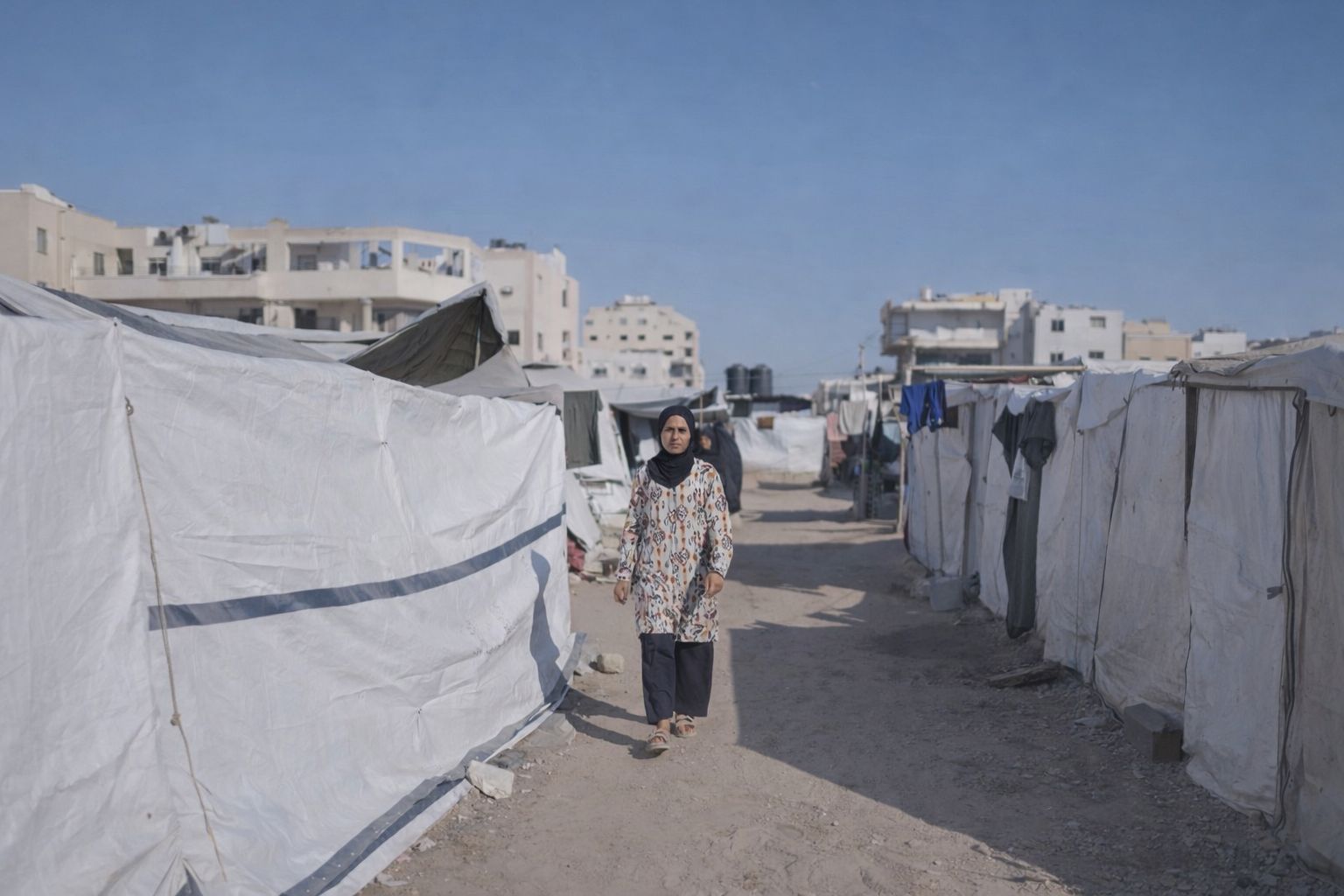
We walked from our displacement site near Al-Qadisiyya, east of the Dome Mosque in Mawasi Khan Younis. Despite the extreme heat, hunger, and thirst, we continued along the main road until we reached the Al-Joura area, a pit between sand dunes near the aid center. It was around 2:00 PM. We rested there briefly before approaching the fence surrounding the aid point.
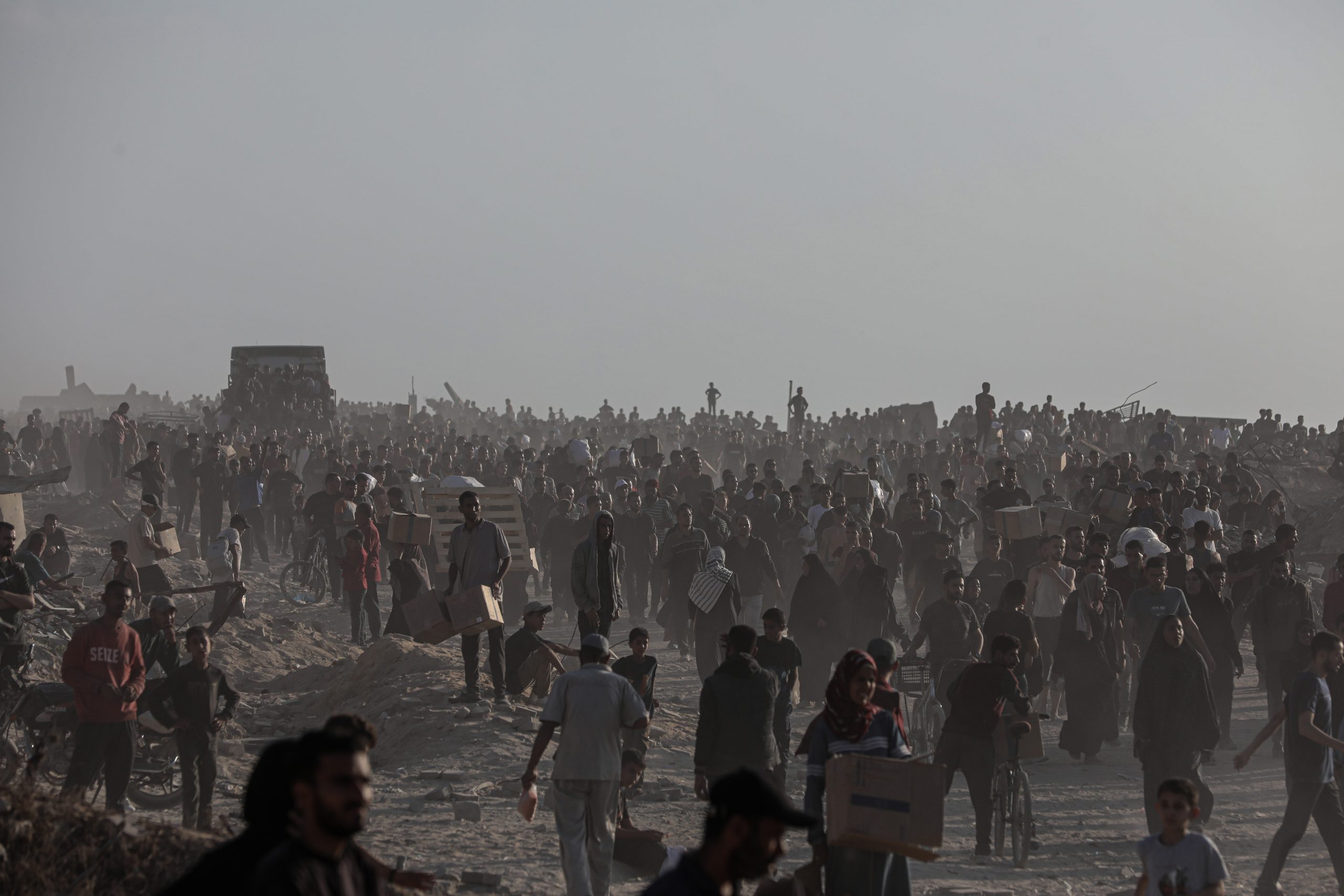
At that time, intermittent gunfire occurred. Near the barbed-wire fence was a burned-out bus, which we used for cover. There were more than 50 women and four young men near the entrance, while the rest of the women—numbering in the thousands—remained further back. We stayed for about half an hour amid the gunfire without seeing any injuries.
As my mother stood up, heavy gunfire erupted. Women began fleeing or lying on the ground. My mother fell on her back and did not utter a word; I realized she had been hit and saw her head bleeding heavily.
I, along with two young men nearby, dragged her back. During this, I saw people running while carrying a woman, saying she was a martyr. My mother’s blood poured from her head, nose, and mouth. We carried her about 200 meters behind concrete blocks in front of the aid center, then placed her on a donkey cart for about 300 meters, and later onto a tuk-tuk for faster transport. She was still breathing, but no medical assistance was available. The time of her injury was approximately 2:30 PM.
We reached the Red Crescent field Hospital in Mawasi Rafah, and she was admitted to the reception for an immediate examination, which lasted about three minutes. I was standing at the door when a doctor came out and asked about my relation to her. I said I was her daughter. He said, “Your mother has been martyred. May God have mercy on her.” I was shocked and collapsed, crying and screaming. Some people came to calm me. A doctor gave me his phone and told me to inform my family. I called my brother-in-law, who in turn informed my father and siblings. I was later told that my mother’s body would be transferred to Nasser Hospital in Khan Younis.
My brother Walid, my brother-in-law, and my father waited for her at Nasser Hospital. I walked back to our tent in Mawasi Khan Younis around 7:00 PM because I had no money for transport, as did my father and brother. We reached our tent around 9:00 PM. According to my father and brother, my mother’s body arrived at Nasser Hospital after Maghrib, where they viewed her and said their final farewells before returning to the tent.
The following morning, Friday, 25 July 2025, my father, brother Walid, and brother-in-law went to Nasser Hospital to complete burial arrangements. My siblings and I did not go due to lack of transportation.
According to my brother Walid, no other family members were present to bid farewell. They searched for a grave at Al-Namsawi Cemetery and received assistance from relatives of the martyr Maria Sheikh Al-Eid, who had also been killed by Israeli forces while attempting to receive aid. They helped dig a grave and find materials, including metal sheets and cement, to prepare my mother’s grave.
The burial took place around 9:30 AM, following prayers. We are now without a mother, without food, and without flour. May God protect us from dying of hunger. May He have mercy on my mother. Indeed, to God we belong and to Him we shall return.